
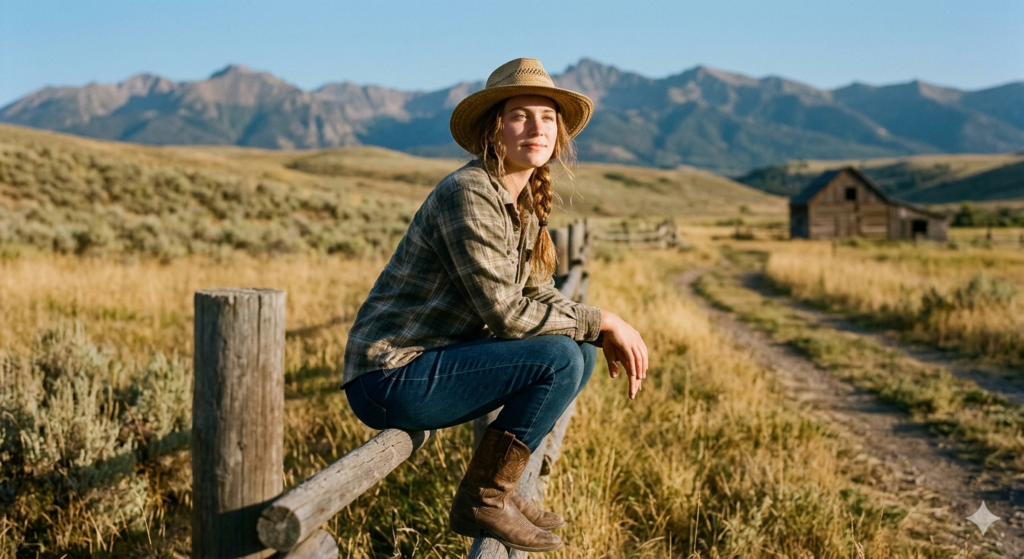
The morning did not break so much as it dissolved, the ink of the night thinning into a bruised, translucent violet. There was a particular cold that lived in the floorboards of that cabin, a sharp, wooden scent that pulled at the lungs before the first coffee had even begun to steam. To move was to disrupt a heavy, ancient silence that had settled over the valley like silt at the bottom of a lake. Through the frosted pane, the Tetons were merely jagged silhouettes, indifferent and immense, holding back the rest of the world with their granite teeth.
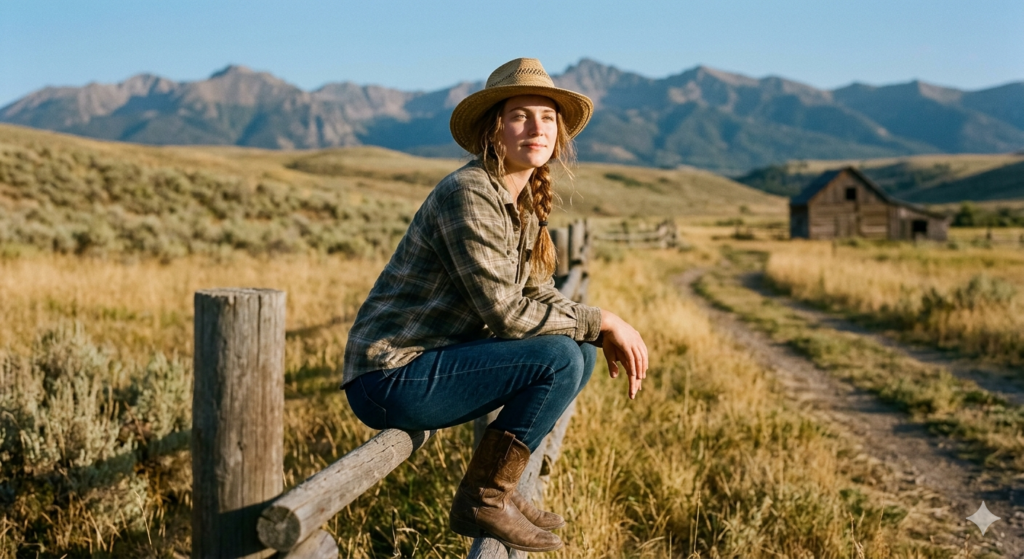
By the time the sun finally cleared the ridge, the light was not yellow but a searing, pale silver. It caught the breath of the horses in the corral, turning their exhalations into momentary ghosts that vanished against the blue-shadowed snow. There was no sound but the rhythmic crunch-slide of boots on frozen crust, a lonely, percussion-less beat that echoed off the barn’s weathered cedar. To stand there was to feel the staggering weight of the sky, a vastness so absolute it made the heartbeat feel like a frantic, private secret.
Midday brought a stillness that felt like indrawn breath. The wind, usually a restless tenant of the plains, had retreated, leaving the tall, golden grasses of the meadow frozen in a state of perpetual leaning. The light had deepened into something thick and honeyed, pooling in the ruts of the dirt road and catching the iridescent flash of a magpie’s wing. It was the kind of quiet that allowed a person to hear the distant, metallic snap of a fence wire contracting in the cold—a reminder that even the earth itself was under tension.
Inside the kitchen, the air tasted of dried sage and woodsmoke, a warmth that felt hard-earned and fragile. There was a slow, deliberate grace to the way the sunlight moved across the scarred pine table, illuminating a stray ceramic mug and the fine, white dust of flour. To sit there was to watch the hours measured not by a clock, but by the shifting angle of a shadow against the wall. It was a reclamation of time, a realization that the day was not something to be used, but something to be endured and witnessed.
Late afternoon saw the world begin to bleed color, the pale gold deepening into a fierce, desperate ochre. Out in the pasture, the cattle moved like slow-motion inkblots, their heads bowed to the earth, their movements dictated by an internal, seasonal compass. There was a profound humility in their presence, a quiet acceptance of the wind that had begun to pick up again, whistling through the gaps in the stones. The horizon seemed to stretch, pulling the eyes toward an impossible distance where the earth finally surrendered to the sky.
The transition to evening was marked by a sudden, sharp drop in temperature that felt like a physical weight. The sky turned a violent, bruised crimson, the clouds streaked with embers as if the sun were dragging the last of the heat down behind the peaks. In that transition, there was a fleeting sense of mourning, a quiet grief for the day that was being folded away. The light hit the weathered grain of the porch railing one last time, turning the splinters into filaments of gold before the grey reclaimed them.
Solitude, in those hours, was not a lack of company but a crowded, living thing. It sat in the corner of the room, watched from the dark edge of the treeline, and breathed in the space between thoughts. It demanded an accounting of oneself, a stripping away of the noise that usually masks the soul’s rougher edges. In the fading light, the vanity of ambition felt as thin as the mountain air, replaced by a grounded, bone-deep recognition of one’s own insignificance against the landscape.
As the first stars began to pierce the canopy, the cold became an architect, carving the world into sharp, crystalline lines. The blue of the dusk was so deep it felt underwater, a submerged world where the only light came from the glowing orange heart of the woodstove. The fire crackled with a dry, frantic energy, its warmth a small, defiant circle against the encroaching frost. To watch the embers was to understand the oldest human story—the desperate, beautiful necessity of a hearth in a wilderness that does not know your name.
Night eventually fell with a finality that felt like a heavy velvet curtain. The mountains disappeared, leaving only a void where the stars seemed to hang lower than they should, bright and cold enough to shatter. The wind returned in earnest then, a low, melodic moan that searched the eaves of the house for a way in. It was a sound that spoke of centuries, of migrations and erosion, of a world that continued its slow, grand work long after the lanterns were blown out.
In the end, as sleep pulled at the edges of consciousness, there remained only the sensation of being held. It was a strange, paradoxical peace—the knowledge that the vast, freezing indifference of the plains was not a threat, but a sanctuary. The heart slowed to the pace of the shifting ice, finding a quiet resolution in the dark. To live a day there was to be unmade and reassembled, leaving behind only what was essential, until all that was left was a steady breath in the dark and the promise of the frost.