

The night felt ordinary in the way small-town nights always do. Porch lights glowed softly against the dark, the air carrying the faint rustle of leaves and the distant hum of a passing car. Somewhere in Gainesville, Georgia, the quiet was broken by the kind of laughter that usually means nothing more than teenagers being teenagers. The sound drifted across the street, light and careless, the way moments often are before anyone knows they will be remembered forever.
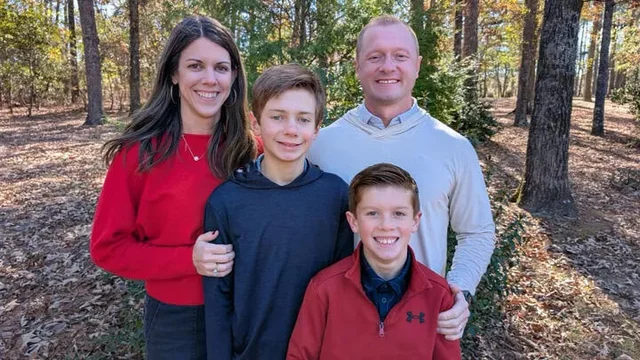
Inside his home, Jason Ryan Hughes had been living the kind of evening that never makes the news. A math teacher. A coach. A man used to the rhythm of school days and practice fields, of chalk dust and whistles and the familiar voices of students calling his name in the hallway. The people who knew him would later say he carried himself with a calm steadiness, the kind that makes a classroom feel safe without anyone noticing why.
Outside, the prank had already begun. Rolls of paper unraveling into the night, white strands catching the porch light as they drifted through the air. It was the kind of scene that might have ended in laughter, the kind of story students tell the next day at school with embarrassed smiles. For a moment, everything still belonged to that world — harmless, forgettable, ordinary.
Then the sound came.
Not loud at first. Just the sudden, wrong noise that makes time hesitate. Tires on pavement. A shout that didn’t sound like a joke anymore. The kind of moment where everyone knows something has changed, even before anyone understands what.
In the days that followed, the town moved differently. Hallways that once echoed with easy conversation felt quieter, as if voices didn’t want to rise too high. Students stood in small groups, hands in their pockets, eyes lowered, speaking in softer tones than usual. The empty space left behind was not something anyone could point to, yet everyone seemed to feel it at the same time.
At the school, his classroom sat still under the fluorescent lights. Desks in their rows. Notes still on the board. The ordinary details looked almost untouched, as if the room was waiting for the door to open the way it always had. People stepped inside carefully, the way you do when a place suddenly feels like it holds more than memories.

When news spread about the petition, the signatures began to appear one by one. Names written by people who had sat in his class, walked his halls, stood on the sidelines while he coached. Each name felt less like a statement and more like a quiet attempt to hold on to something that had slipped away too quickly.
In living rooms across the community, conversations lingered longer than usual. Parents speaking softly after the kids had gone to bed. Students staring at their phones, reading the same lines again and again, as if the story might change if they looked one more time. No one seemed sure what the right words were, so most of them said very little.
Time moved forward the way it always does, even when people wish it wouldn’t. The school bell rang again. The streets filled with cars again. The porch lights came on at night just like before. But something in the air felt different, as if the town itself had learned how fragile an ordinary evening can be.
And long after the headlines fade, the moment people remember will not be the petition, or the statements, or the questions that followed. It will be the quiet image of a porch light glowing in the dark, a laugh carried on the night air, and the sudden stillness that came after — the kind of stillness that stays with a place long after the night itself is gone.