
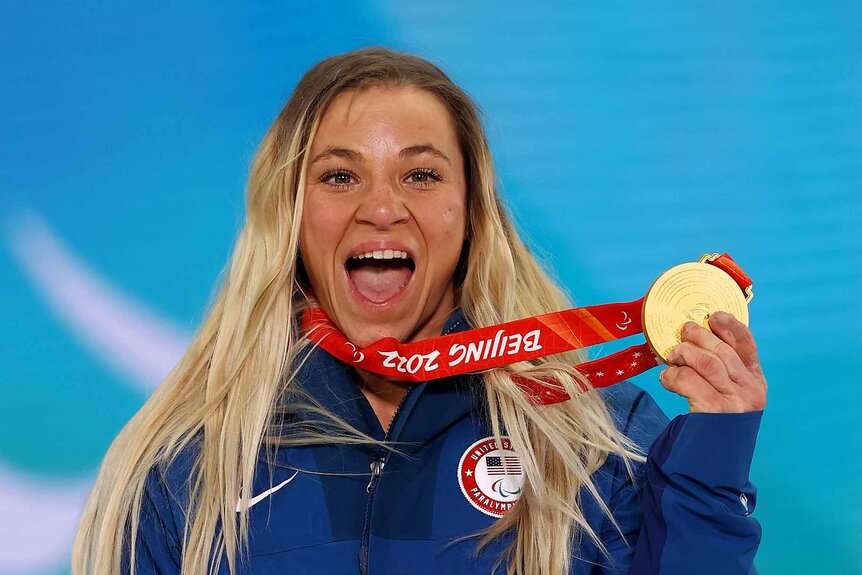
The snow that evening fell in slow, patient flakes, the kind that soften the edges of everything they touch. Stadium lights glowed through the cold air like lanterns in a quiet field, and the track looked almost too still for a race meant to decide the strongest in the world. Somewhere behind the stands, far from the cameras, Oksana Masters sat with her gloves in her hands, turning them over as if they belonged to someone else. The noise of the crowd reached her only as a distant hum. Weeks earlier, rooms filled with white walls and the smell of antiseptic had felt louder than this arena ever could.
She had learned the sound of hospital machines the way other athletes learned the rhythm of their stride. A bone infection that refused to let go. A concussion that blurred the world at the worst possible time. Words from doctors spoken carefully, as if even hope needed to be handled gently. No one said she wouldn’t try. But the silence after those conversations said enough.
When she finally stepped out onto the snow, the cold air moved through her like a memory she knew well. Every breath felt sharper, cleaner, almost painful, the way it always does when you come back to something you thought you might lose. Other athletes stretched and shook out their arms, eyes fixed forward. Masters stood still for a moment longer than the rest, looking down the track as if she were measuring more than distance.
The start came without drama, just the sudden release of motion. Skis cutting through packed snow. The low scrape of poles digging in. The crowd’s roar rising and falling like wind over water. For the first stretch she stayed behind, her movements steady but careful, as if she were listening to her own body with every push. The gap ahead of her grew, small at first, then large enough for anyone watching to think the story was already written.
Snow sprayed behind the leaders in bright white arcs under the lights. Masters kept her head low, shoulders tight, her breath visible in short bursts that disappeared before they reached the ground. There was no panic in her face, only a kind of quiet stubbornness, the look of someone who had spent too much of her life learning how to keep going after the moment most people stop.
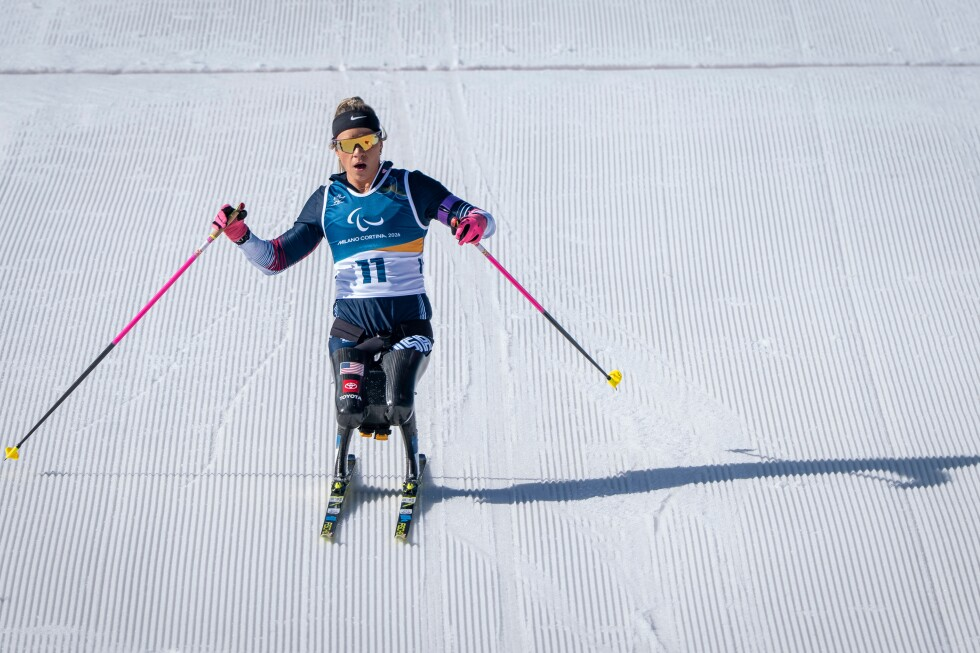
Halfway down the final stretch, something shifted so subtly it was almost impossible to see. Her rhythm changed first, then her speed, then the space between her and the others began to close like a door moving on its own. The crowd noticed before the announcers did. A ripple of sound moved across the stadium, growing louder with every push of her poles.
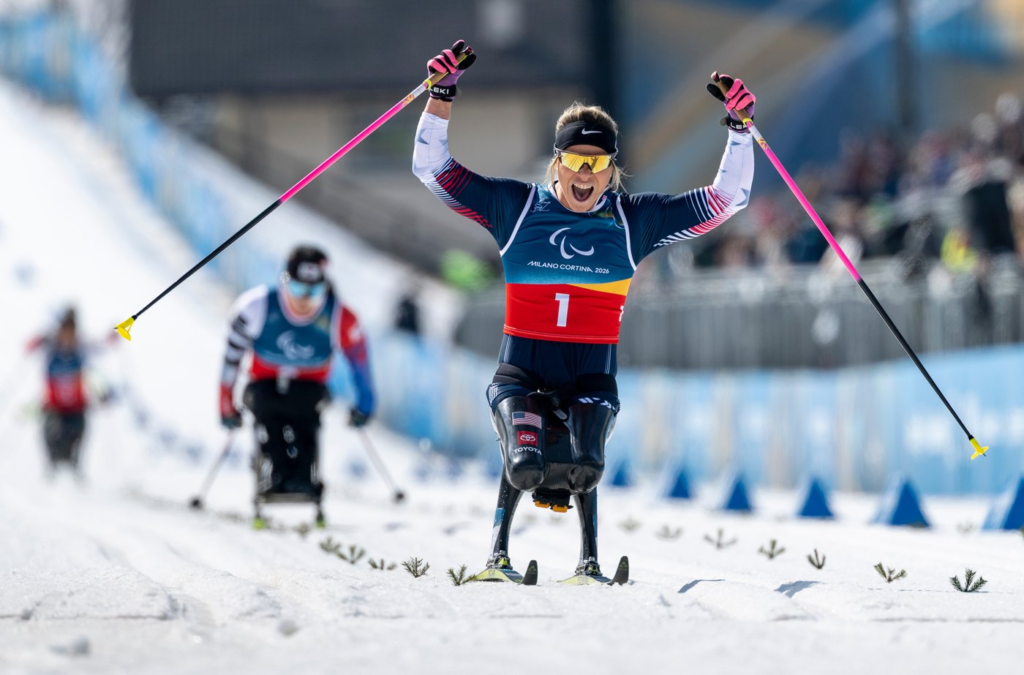
By the time the finish line came into view, the race no longer looked the way it had a minute earlier. Snow flew beneath her skis, breath burning in her chest, arms moving with the kind of force that comes from somewhere deeper than strength. One by one the athletes ahead of her slipped into the corner of her vision and then disappeared behind it, until there was nothing left in front of her but the line itself.
She crossed it without raising her arms right away. For a moment she only slowed, letting the momentum carry her forward, her shoulders rising and falling as she tried to catch a breath that didn’t want to come back. Then the sound reached her — the full weight of the crowd, the echo of it bouncing off the metal stands, the kind of noise that feels less like cheering and more like relief.
When the cameras found her, she was already looking toward the edge of the track, past the flags and the officials, toward a place where the lights didn’t reach as brightly. Aaron Pike stood there, hands in his pockets, watching the way someone watches when they already know how hard the road has been. She said his name quietly when they came close enough to hear each other, and whatever she whispered after that made him smile in a way that didn’t look like celebration so much as understanding.
Later, long after the stadium emptied and the snow settled back into its soft, untouched shape, the race felt less like a victory and more like a song that had been playing for years without anyone noticing. The kind of song about long roads, about falling and standing again, about two people walking through the same winters without knowing where they will end up. And somewhere in the silence that followed, it felt certain that the gold medal was only one verse — not the ending, just the moment the music finally learned how to breathe.