
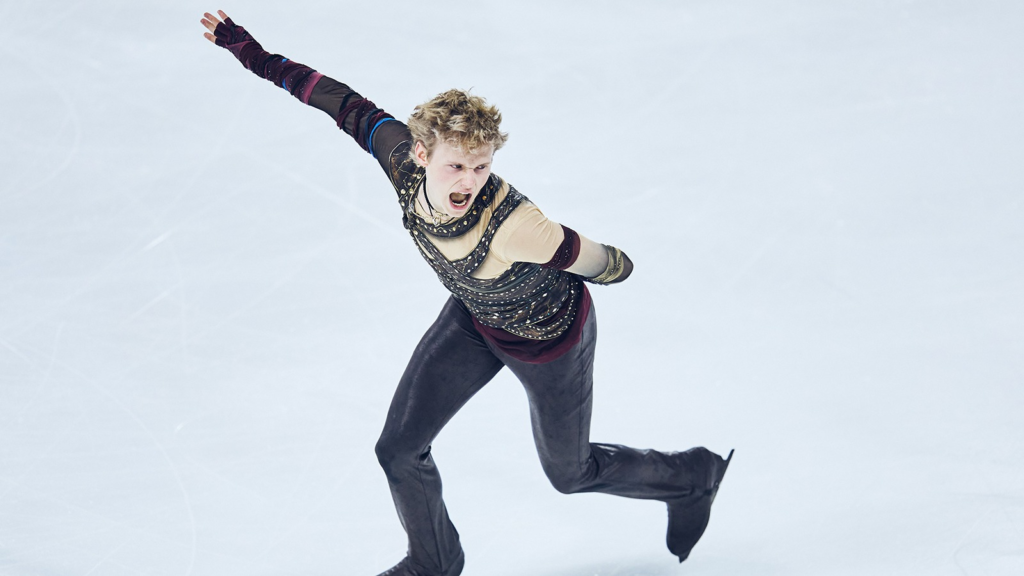
The rink was almost empty when the rumor began to move, not with noise but with a kind of quiet that felt heavier than sound. The lights above the ice hummed softly, reflecting in long pale lines across the frozen surface. Somewhere near the boards, a phone screen glowed for a second, showing a single sentence from Ilia Malinin — a tease, barely more than a whisper. What if the next jump is something no one has ever landed? No announcement. No explanation. Just words that hung in the air like cold breath.
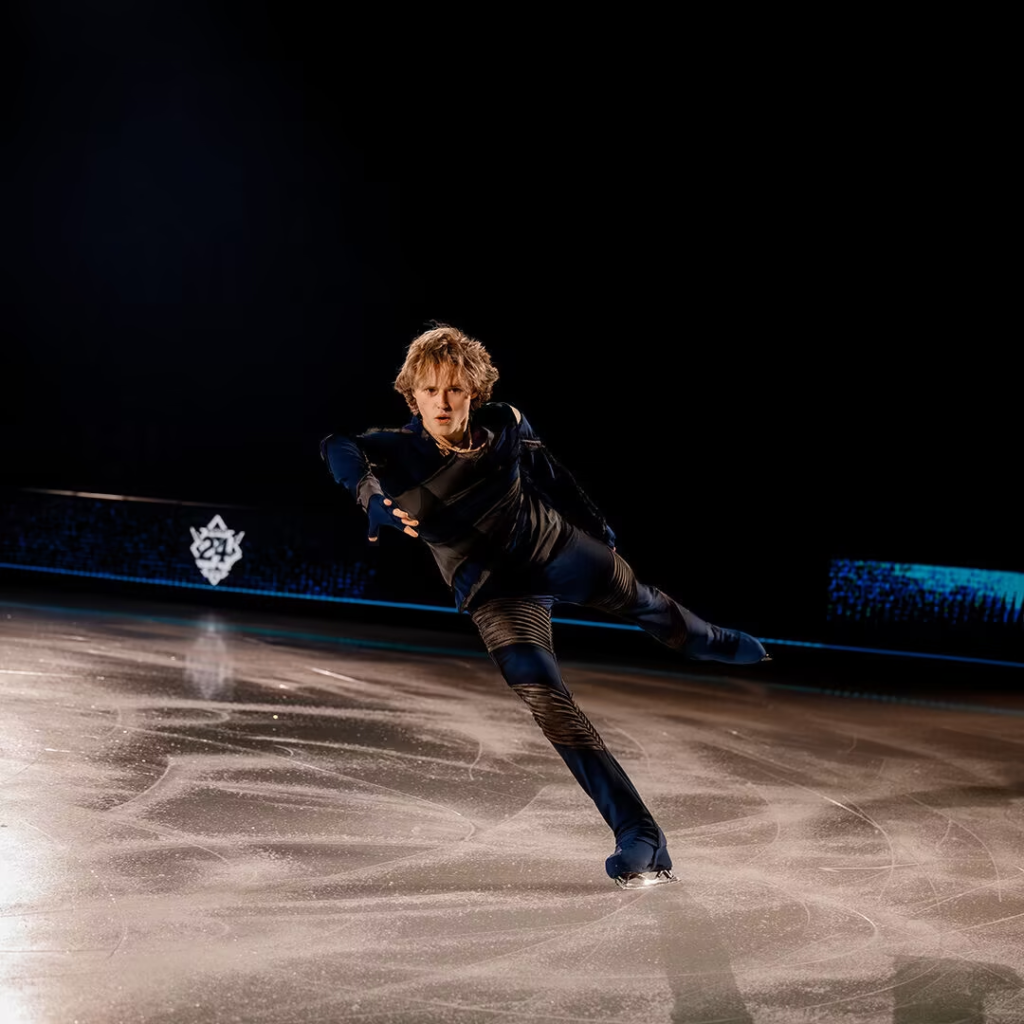
People didn’t react right away. They read it once, then again, as if the meaning might change the second time. In skating, everyone knows the limits, or at least they think they do. The body can only spin so fast. The air can only hold you for so long. And yet the same skater who once stepped past those limits without warning had just suggested there might be another edge no one had seen yet.
Somewhere far from the noise of competition, the sound of blades carving into fresh ice echoed through a quiet practice rink. No audience, no cameras, only the sharp rhythm of push, glide, stop. Malinin moved the way he always does when no one is watching — shoulders relaxed, eyes focused somewhere far ahead, as if the jump already existed and he was only trying to reach the place where it lives.
He circled once, then again, faster each time, the air around him tightening with that familiar tension that comes before takeoff. Anyone who has ever watched skating closely knows that moment. The split second when the body goes still even while moving. The breath that doesn’t finish. The silence that feels louder than applause.
He didn’t jump that time. He slowed, let the speed fade, and drifted to the boards, resting his hands on the barrier as if listening to something only he could hear. A coach said nothing. No corrections, no instructions. Just a nod, the kind given when the work happening inside the mind matters more than what happens on the ice.
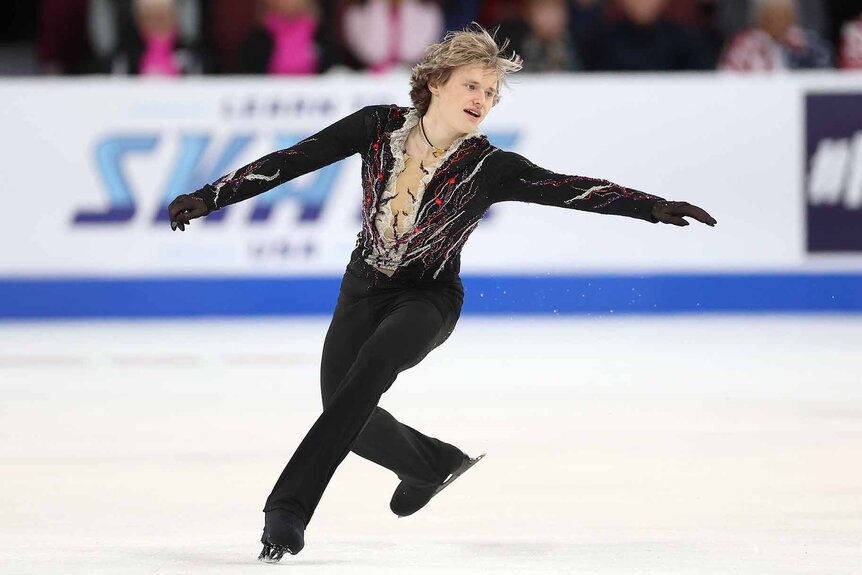
The idea of a new jump spread the way stories always do in this sport — quietly, from one conversation to another, from one late-night practice clip to a message passed between skaters who know exactly how hard it is to leave the ground at all. Nobody laughed. Nobody dismissed it. They just looked at each other with the same expression, the one that says if anyone could try… it would be him.
There is a strange loneliness in chasing something that doesn’t exist yet. No footage to study. No footsteps to follow. Only the feeling that the edge of the possible is somewhere just ahead, hidden in the space between fear and instinct. Malinin has stood in that space before, long enough to know how quiet it becomes when you get close.
The rink lights flicker slightly as the resurfacer passes, leaving behind a sheet of ice so smooth it almost looks unreal. For a moment, the building feels like it’s holding its breath. The kind of stillness that comes before a storm, or before history, when nobody knows which one is coming.
He skates back to center, slow this time, tracing the same path again and again as if memorizing the distance. His arms lift, then fall. A small shake of the head. Another circle. Nothing dramatic, nothing rushed — only the patience of someone who understands that the biggest moments never arrive when you force them.
Somewhere in the future, maybe under bright arena lights, maybe in a rink just like this one, there will be a takeoff that feels different from all the others. The kind where the crowd doesn’t cheer right away because they don’t understand what they just saw. The kind that takes a second to reach the heart.
And when that moment comes, people will remember this silence first — the empty rink, the unfinished jump, the quiet sentence that sounded almost impossible…
and the feeling that the sport was already changing, even before anyone left the ice.