
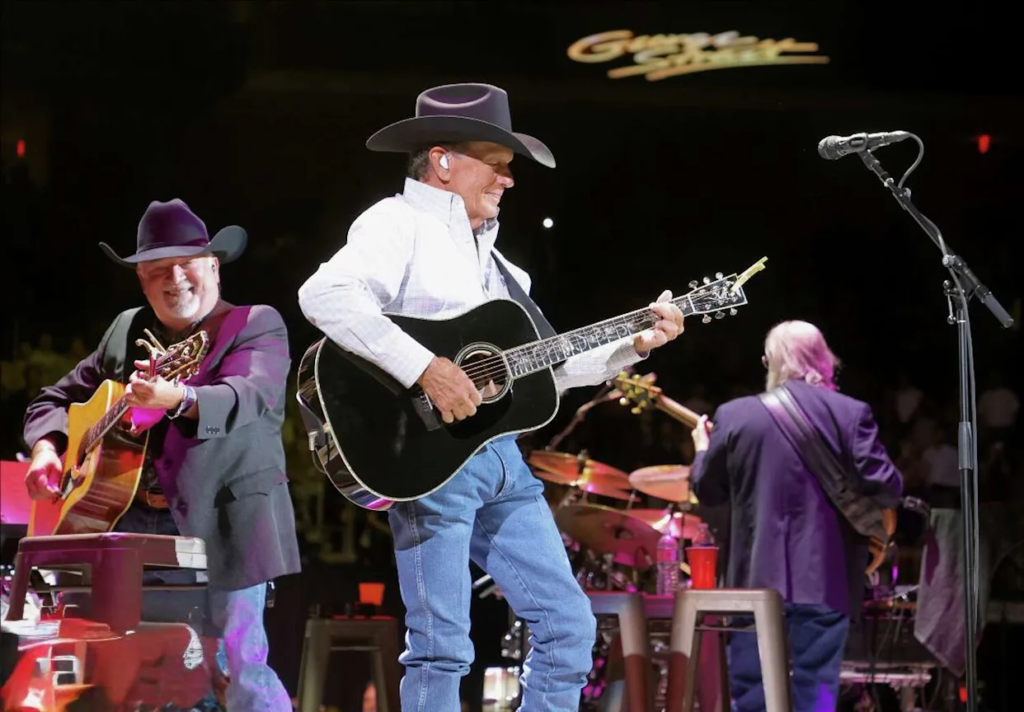
You could feel it long before the lights shifted. Not excitement—the kind that builds from promotion or hype—but something older, deeper, almost instinctive. The kind of anticipation that doesn’t need explanation. Because when a figure like George Strait steps back into the spotlight, it isn’t just a performance. It’s a moment reclaiming its place.
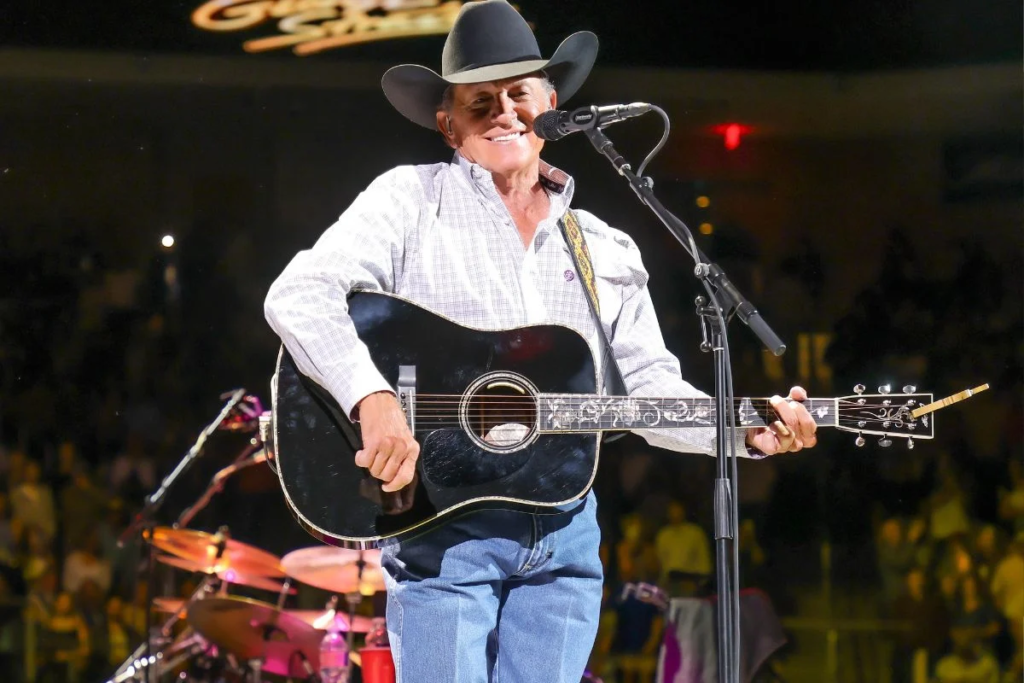
There was no countdown loud enough to match what the crowd already knew. The air inside Moody Center held a tension that didn’t come from production—it came from memory. From years of songs that had quietly lived in people’s lives, waiting for a night like this to come back to them.
And then he walked out.
No dramatic entrance. No need for spectacle. Just presence. And somehow, that was louder than anything else in the room. The reaction wasn’t delayed—it erupted. Not because people were surprised, but because they recognized something they hadn’t felt in a long time: certainty.
This is who he is.
What makes this return different—what makes it almost myth-like—is its rarity. This isn’t a tour stretched across cities and seasons. There’s no repetition to dilute it, no abundance to make it casual. Just a handful of appearances, chosen with intention, scattered like rare opportunities rather than scheduled obligations.
That scarcity changes everything.
When something becomes rare, it stops being entertainment and starts becoming experience. Fans don’t just buy tickets—they chase moments. They rearrange plans, justify impossible prices, and travel distances that don’t make sense on paper. Because deep down, they understand something simple: this might not happen again.
And when it does, you don’t miss it.
Inside the arena, the design erased distance. The stage didn’t separate him from the crowd—it placed him among them. There were no “far seats,” no corners where the moment felt smaller. Every angle carried the same weight, the same closeness, the same undeniable presence of a man who never needed to prove anything.
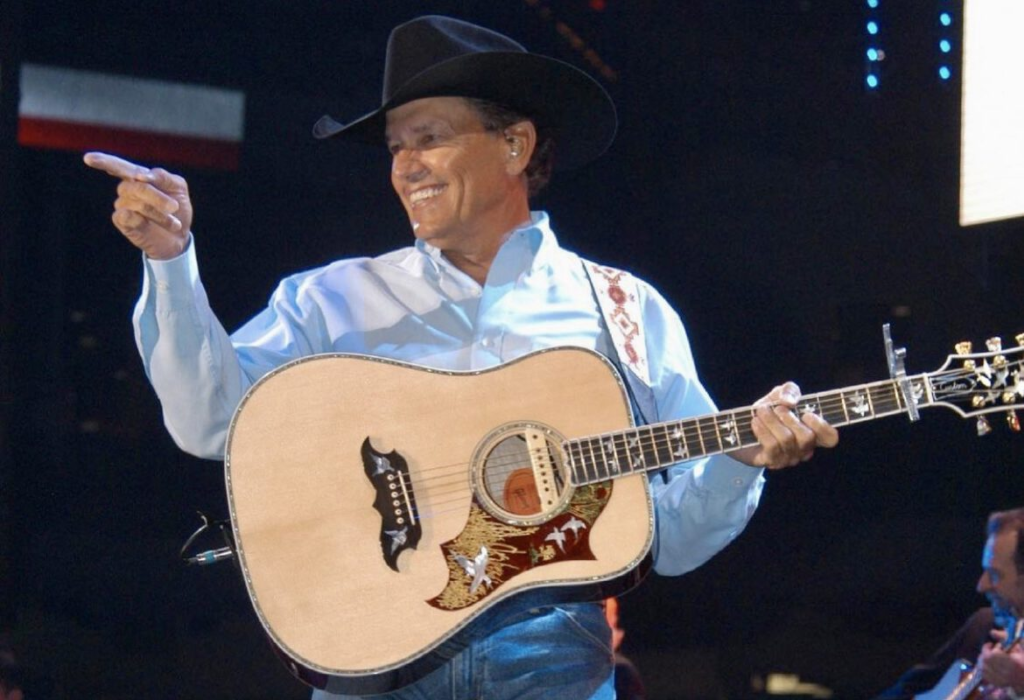
That intimacy is rare at this scale.
But what truly defined the night wasn’t just the setup or the setlist—it was the way time seemed to bend. Songs that once belonged to different years, different versions of people’s lives, all came rushing back at once. Not as nostalgia, but as something alive again.
That’s the power he carries.
Because George Strait doesn’t perform like someone trying to stay relevant. He performs like someone who already is. There’s no urgency in his delivery, no need to chase trends or reinvent identity. He stands in his music the same way he always has—steady, grounded, unchanged.
And somehow, that makes everything else feel temporary.
In a world that constantly moves forward, there’s something almost radical about that kind of consistency. It reminds people of a version of music—and maybe even of themselves—that hasn’t been reshaped by time. It offers a pause, a return, a sense that not everything meaningful has to evolve to survive.
Some things just endure.
That’s why the energy in the room didn’t fade after the first song. It didn’t peak and drop like a typical show. It held. It deepened. It became something shared, something collective, something that felt less like watching and more like belonging.
And belonging is something you can’t manufacture.
By the time the night settled, there was no grand finale needed to define it. No single moment to point to and say, “That was it.” Because the truth is, the entire experience was the moment. From the first breath of anticipation to the last lingering note, it never broke.
It stayed.
And maybe that’s why people are willing to pay what seems unreasonable, to go where it seems inconvenient, to choose presence over practicality. Because when a legend like George Strait decides to show up—not often, not everywhere, but just enough—you don’t measure the cost.
You measure the memory.