
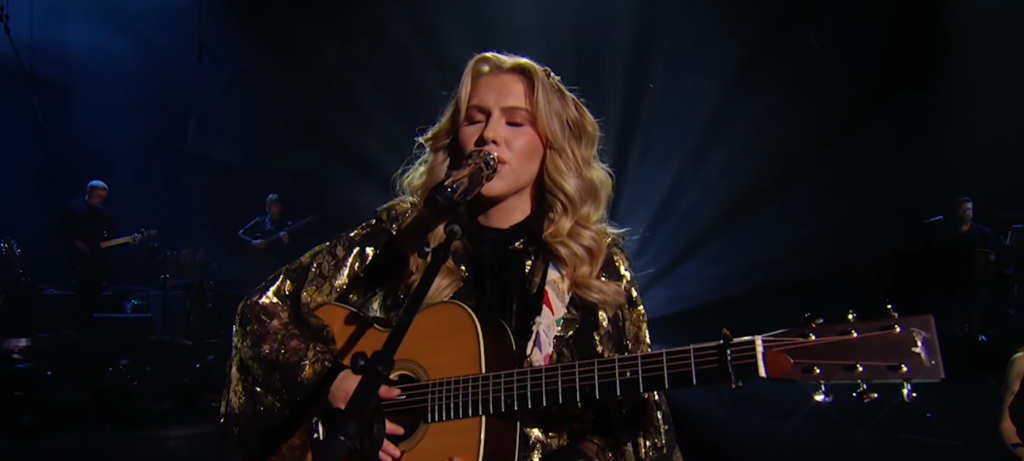
There are performances that impress, and then there are performances that rearrange something inside you without asking permission. What Hannah Harper did with Landslide on American Idol did not arrive loudly—it unfolded like a memory you didn’t realize you had been carrying. The moment she began, there was no rush to prove anything. No urgency to impress. Just a stillness so intentional, it almost felt like time itself had agreed to slow down for her.
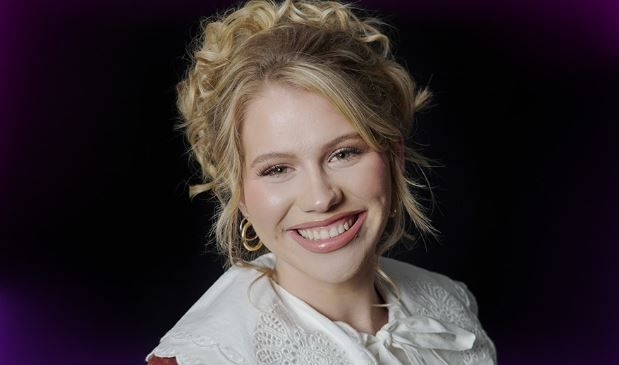
What made it different wasn’t the song choice. It wasn’t even the familiarity of Fleetwood Mac’s timeless classic. It was the way Hannah approached it—not as a song to be delivered, but as a story to be remembered. Her voice didn’t climb for applause; it settled into the spaces between notes, letting silence do as much work as sound. That’s where the shift began. That’s where it stopped being a cover.
There’s a misconception in performance culture that bigger is always better—that louder notes, stronger belts, and dramatic builds define greatness. Hannah dismantled that idea in real time. She didn’t compete with the song. She surrendered to it. And in doing so, she unlocked something far more powerful than vocal gymnastics: emotional ownership.
By the halfway mark, something subtle but undeniable had changed. The audience wasn’t listening anymore—they were leaning in. There’s a difference. Listening is passive. Leaning in is instinctive. It happens when something feels real enough that you don’t want to miss even a breath of it. That’s the exact moment when Landslide quietly stopped belonging to its past and began living in her present.
The brilliance of her performance wasn’t just in what she sang, but in what she chose not to do. No unnecessary runs. No exaggerated moments. Just restraint, carefully measured and deeply felt. It’s a rare discipline, especially on a stage built for spectacle. But Hannah understood something many performers don’t: restraint isn’t limitation—it’s control.
And control, when paired with authenticity, becomes something magnetic.
The judges felt it before they verbalized it. You could see it in their posture—the way they sat differently, the way their expressions softened. There’s an unspoken language in moments like that. A recognition that what they’re witnessing isn’t just technically good—it’s rare. The kind of rare that doesn’t rely on perfection, but on truth.
When the praise came, it didn’t feel exaggerated. It felt inevitable.
“This song sounded like you produced it.”
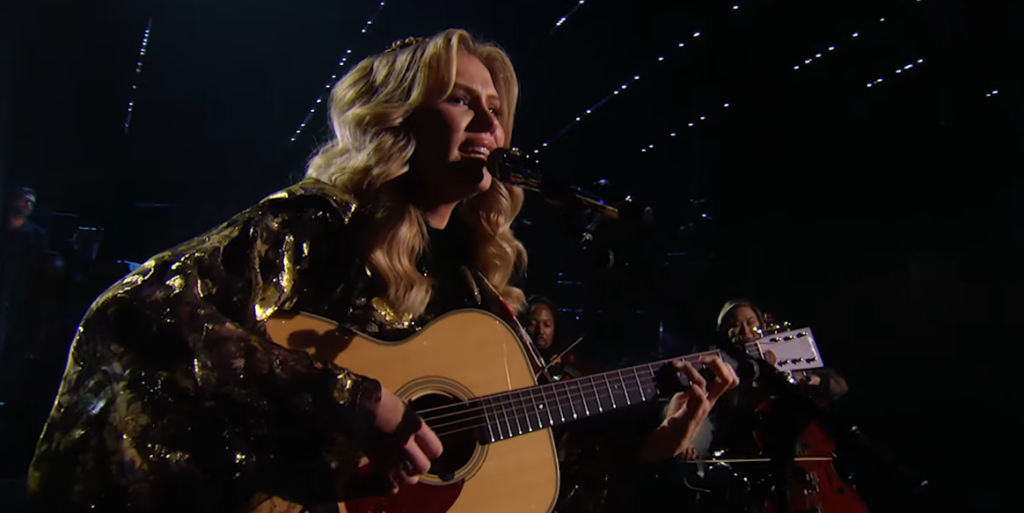
That line didn’t just compliment her vocal—it acknowledged her interpretation. Because producing a song isn’t just about sound; it’s about perspective. It’s about deciding how a story should feel when it reaches someone else. And Hannah made a decades-old song feel like it had been waiting for her all along.
Then came the statement that sealed the moment: “This just might be the greatest performance of all time.”
In another context, it might have sounded like hyperbole. But here, it didn’t. Because greatness isn’t always about scale—it’s about impact. And what Hannah delivered wasn’t just a performance that filled a room. It was one that lingered after it ended.
That’s the difference between being remembered and being felt.
What makes this moment even more significant is where she stands in the competition. At a stage where performers often feel pressured to outdo one another, Hannah chose a different path. She didn’t escalate. She refined. She didn’t overpower. She revealed. And in doing so, she may have quietly redefined what winning actually looks like.
Because sometimes, the loudest voice in the room isn’t the one people carry with them.
Sometimes, it’s the one that barely raised itself above a whisper—and still managed to echo long after the stage lights faded.