
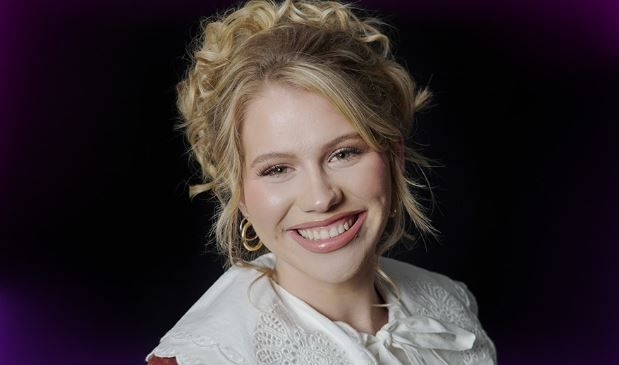
There are nights in a competition that feel routine—and then there are nights that quietly redraw the entire map. For Hannah Harper, stepping into the Top 9 of American Idol wasn’t just another milestone. It was a moment that tested everything she had built so far, and more importantly, everything she was willing to risk.
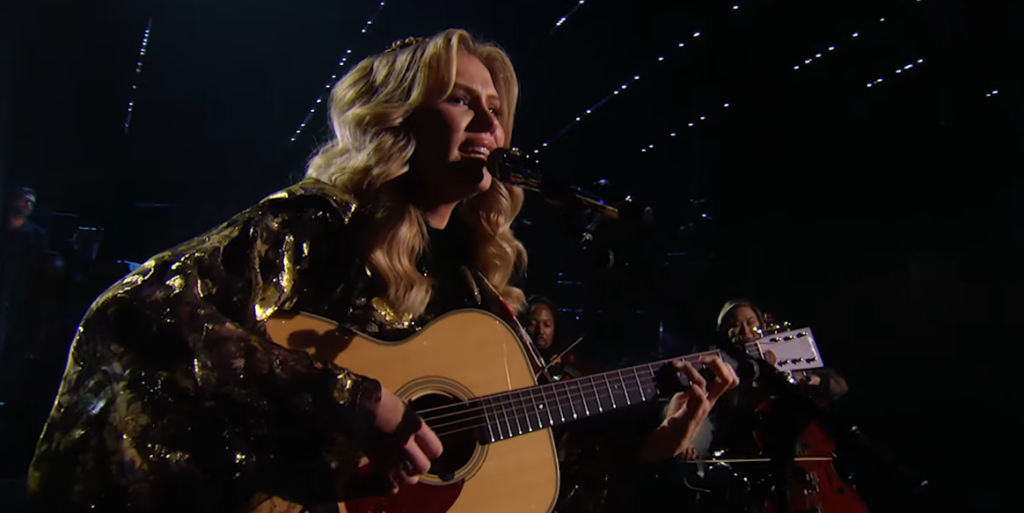
Because this wasn’t her comfort zone.
This was Rock & Roll Night.
A theme built on edge, grit, and explosive energy—worlds away from the controlled warmth of country storytelling that has defined Hannah’s journey. For many contestants, that shift demands reinvention. For Hannah, it demanded something far more delicate: adaptation without losing identity.
And that’s where the night became interesting.
From the moment she chose Landslide, there was a quiet question hanging in the air. Not about whether she could sing it—but whether she could translate it. Could she take a song rooted in rock history and filter it through her own emotional language without stripping away its essence?
That’s a harder challenge than it sounds.
Because when artists step outside their genre, they often overcompensate. They push harder, sing louder, perform bigger—trying to match what they believe the moment demands. But Hannah didn’t do that.
She did the opposite.
She softened.
And in doing so, she didn’t step away from rock—she revealed something many forget about it. At its core, rock isn’t just about volume or attitude. It’s about truth. Raw, unfiltered, and often uncomfortable truth. And Hannah found that truth not by changing who she was, but by leaning deeper into it.
The performance didn’t begin with power.
It began with presence.
Each note carried intention, not urgency. Each pause felt deliberate, not empty. And slowly, almost invisibly, the room began to shift. This wasn’t a contestant trying to survive a theme. This was an artist reshaping it.
That’s when the real transformation happened.

By the halfway mark, the performance stopped feeling like a strategic choice and started feeling inevitable. The song didn’t clash with her style—it merged with it. Country sensitivity met rock vulnerability, and somewhere in between, something entirely new was born.
And the judges felt it.
You could see it before they even spoke. The kind of stillness that settles over people when they realize they’re not just evaluating anymore—they’re experiencing something. Carrie Underwood, a powerhouse in her own right, sat visibly moved, her reaction saying more than any critique could.
Because sometimes, the absence of words is the loudest response.
When the final note faded, the silence wasn’t uncertainty.
It was impact.
That’s the kind of silence performers chase their entire careers—the one that means the audience isn’t ready to let go of what they just felt. And when the applause finally came, it wasn’t just approval. It was recognition.
Recognition that Hannah Harper had done something rare.
She didn’t just meet the challenge.
She redefined it.
Making it to the Top 9 is, on paper, a step forward. But in reality, it’s a narrowing of space. The margin for error disappears. The expectations rise. And every performance carries more weight than the last. At this stage, it’s no longer about proving you belong.
It’s about proving you can’t be ignored.
And that’s exactly what Hannah did.
What makes this moment even more significant is how it reshapes her narrative in the competition. She’s no longer just the contestant with a soft, emotionally rich voice. She’s no longer confined to a single lane. She’s becoming something more dynamic—an artist capable of crossing boundaries without losing herself.
That evolution is what separates contenders from winners.
Because winning American Idol isn’t just about vocal ability. It’s about connection. Consistency. And most importantly, identity. The ability to walk onto a stage, no matter the theme, and still feel unmistakably like yourself.
Hannah is getting closer to that point.
Closer to becoming not just a favorite—but a frontrunner.
And yet, what makes her journey compelling isn’t certainty. It’s tension. The quiet question that still lingers beneath every performance: how far can she go by staying true to who she is?
Because in a competition where bigger often feels better, Hannah continues to prove that restraint can be just as powerful.
Maybe even more.
This wasn’t just a performance that went viral overnight.
It was a performance that shifted perception.
And as the competition moves forward, one thing is becoming increasingly clear:
Hannah Harper isn’t just moving closer to winning American Idol.
She’s moving closer to becoming the kind of artist people don’t just vote for—
They remember.