
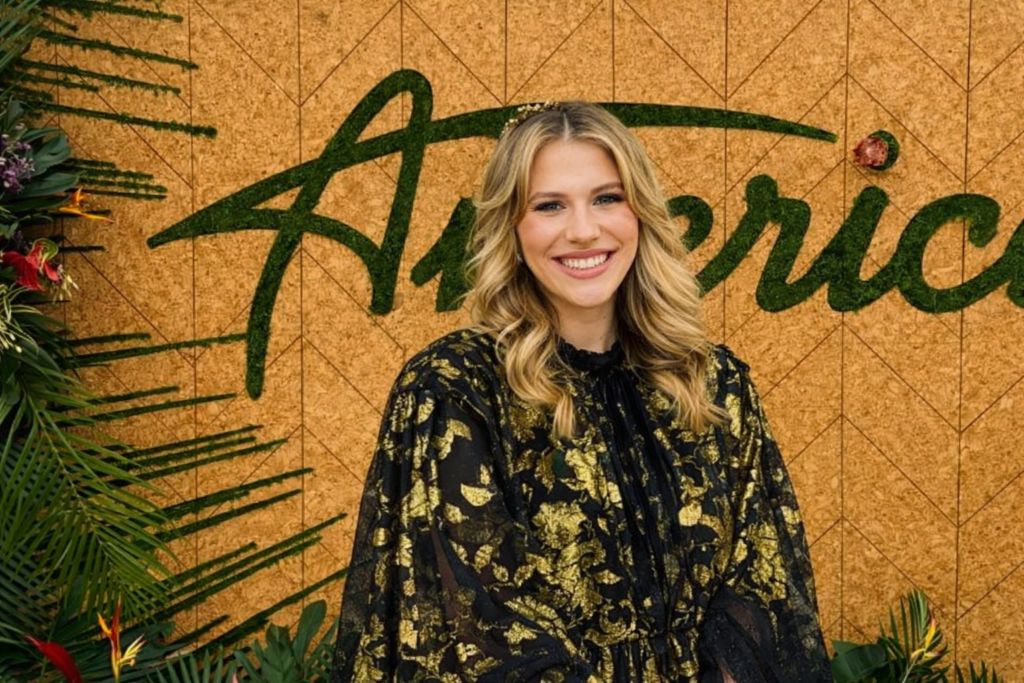
There are moments in a competition that look small on paper but feel enormous in reality. Advancing to the Top 9 of American Idol is one of them. It sounds like progression—but for Hannah Harper, it felt more like transformation. Because this wasn’t just about moving forward. It was about stepping into a version of herself no one had fully seen yet.
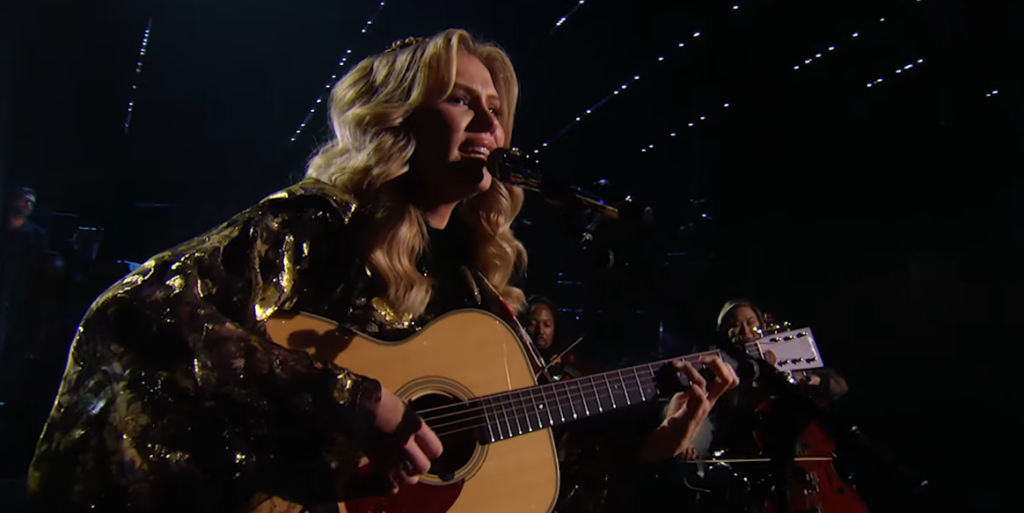
And she chose to do it on Rock & Roll Night.
A theme that doesn’t naturally belong to her.
Or at least, that’s what people assumed.
Hannah’s journey up to this point had been defined by control, warmth, and emotional subtlety—qualities deeply rooted in country storytelling. Rock, on the other hand, demands something different. It calls for edge. Risk. A kind of unapologetic presence that doesn’t ask for permission.
So when Hannah chose Landslide, it raised a quiet question.
Not whether she could sing it.
But whether she could translate it into her own truth.
That’s a far more complex challenge.
Because stepping outside your comfort zone in a competition often leads to overcompensation. Contestants push harder, aim bigger, and try to match the perceived energy of the theme. But Hannah didn’t chase that expectation.
She dismantled it.
From the first note, it was clear she wasn’t trying to become a rock artist.
She was trying to remain herself—inside a different frame.
That distinction is where the performance found its power.
Instead of amplifying volume, she amplified emotion. Instead of chasing dramatic peaks, she focused on emotional consistency. Every note felt placed, not forced. Every pause carried intention, not hesitation. It wasn’t loud.
But it was undeniable.
And slowly, something remarkable began to happen.
The room didn’t react.
It stilled.
There’s a difference between silence born from disinterest and silence born from immersion. This was the latter. The kind where people stop shifting in their seats. Stop whispering. Stop thinking about what comes next. They lean in, almost subconsciously, because something in front of them feels too real to miss.
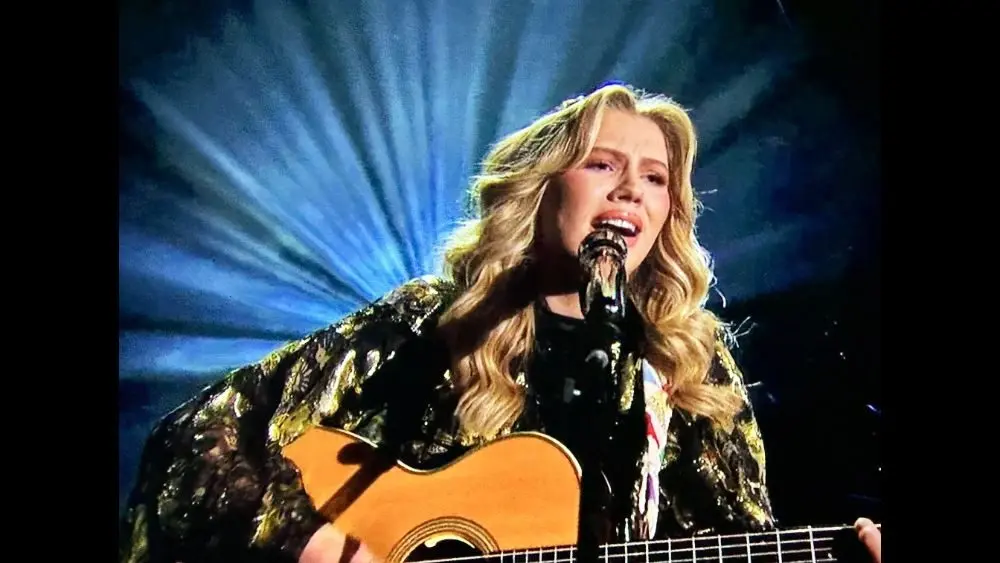
That’s when you know a performance has crossed a threshold.
It’s no longer being observed.
It’s being felt.
By the halfway mark, Landslide no longer belonged to its original identity. It wasn’t competing with its legacy. It wasn’t imitating its past. It was existing, fully, in Hannah’s present. And that’s a rare achievement—especially on a stage where comparisons are inevitable.
But Hannah didn’t invite comparison.
She invited connection.
And the judges felt it.
Before any words were spoken, before any critique was offered, their reactions had already revealed everything. Carrie Underwood, known for her own commanding stage presence, sat visibly affected. Not evaluating. Not analyzing.
Just feeling.
That’s not a common response in a competition setting.
Because judges are trained to dissect performances—to separate technical ability from emotional impact, to measure precision, to identify flaws. But moments like this disrupt that process. They bypass the analytical and go straight to something more instinctive.
That’s why Carrie’s silence mattered.
It wasn’t absence.
It was recognition.
When the final note faded, the room held onto the moment just a second longer than expected. No immediate eruption. No rushed applause. Just a pause—subtle, but significant. The kind that tells you people are still inside what they just experienced.
And then, the reaction came.
Not as noise.
But as acknowledgment.
Advancing to the Top 9 confirmed what many had already begun to sense. Hannah Harper isn’t just progressing through the competition—she’s evolving within it. She’s not relying on a single identity or a fixed style. She’s expanding, carefully, without losing the core of what makes her distinct.
And that’s what separates contestants from contenders.
Because at this stage, it’s no longer about proving you can sing.
It’s about proving you can adapt without disappearing.
It’s about showing that no matter the theme, no matter the expectation, there is something unmistakably you at the center of it.
Hannah is getting closer to that clarity.
Closer to becoming not just a participant in the competition, but a defining presence within it.
The viral reaction to her performance only reinforces that shift. Clips spread quickly, comments flooded in, and a pattern emerged. People weren’t just praising her voice.
They were describing how she made them feel.
That’s the metric that matters most.
Because technical excellence can impress in the moment.
But emotional resonance lasts.
And if there’s one thing this performance proved, it’s that Hannah Harper is no longer just building a track record of strong performances.
She’s building moments.
The kind that linger.
The kind that reshape expectations.
The kind that quietly move someone one step closer—not just to winning a show—
But to becoming something unforgettable.