
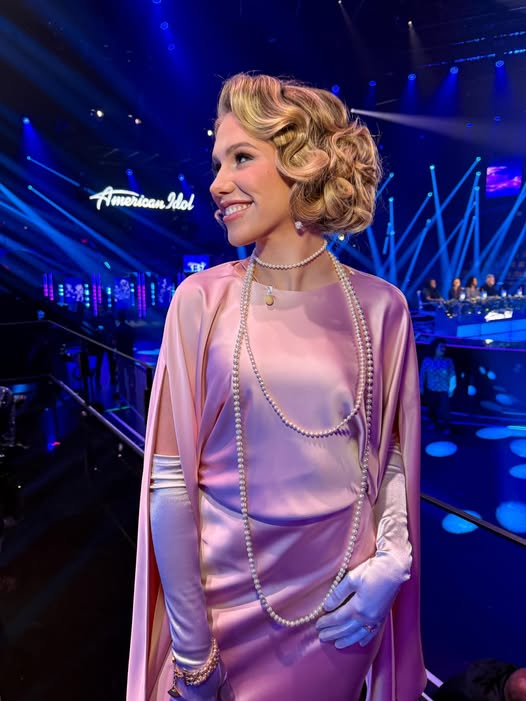
Every competition season creates narratives. Some contestants are labeled early favorites, others become underdogs, and a few are boxed into criticism before they ever get the chance to grow. For Hannah Harper, one of the loudest criticisms had centered on her stage presence. Some viewers saw awkwardness, hesitation, or a performer still searching for confidence under the lights. Then Disney Night arrived—and the entire conversation changed.
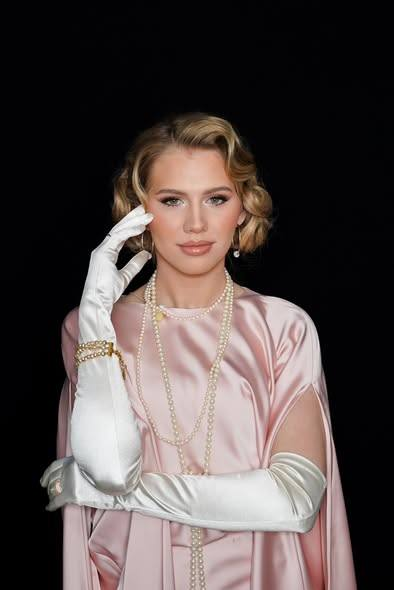
There are moments in entertainment when an artist stops answering criticism with words and starts answering it with performance. Hannah’s Disney Night appearance felt exactly like that kind of moment. Rather than trying to defend herself in interviews or force a reinvention, she walked onto the stage and let the work speak.
And it spoke loudly.
Taking on material inspired by The Princess and the Frog, Hannah stepped into the spotlight with a version of herself many viewers had not yet seen. Gone was the sense of uncertainty some critics had focused on. In its place stood a performer who looked composed, intentional, and fully in command of the moment.
That transformation is what stunned people first.
Confidence changes everything on stage. The same voice sounds bigger. The same movement feels sharper. The same performer appears transformed simply because belief has replaced hesitation. Hannah carried herself with a new authority, and the audience could sense it immediately. She was not trying to survive the round. She looked like someone determined to own it.
Vocally, the performance gave her confidence an even stronger foundation. She delivered lines with clarity, warmth, and conviction, making the song feel like more than a themed television number. Instead of leaning only on nostalgia or costume energy, she treated the performance like a real artistic opportunity. That seriousness elevated the entire moment.
But what truly turned the performance into a headline moment was how complete it felt.
Great performances often combine multiple elements at once: voice, presence, storytelling, timing, and emotional connection. Hannah suddenly looked like a contestant who had figured out how to merge them. She was no longer being judged solely as a singer. She was being seen as a performer.
That shift matters enormously in public competitions.
Many contestants can sing well. Fewer can command a stage. Fewer still can reverse public perception in a single night. Hannah managed something difficult: she made previous criticism feel outdated. By the end of the performance, people were no longer discussing what she lacked. They were reacting to what she had just revealed.
Carrie Underwood’s visible emotional response only intensified the moment. When respected artists react genuinely, audiences notice. It suggests something deeper than polite praise. It implies that what happened onstage carried authenticity strong enough to cut through industry polish and land directly.
Those reactions often become part of a contestant’s mythology. Fans replay the judge’s expression, the standing ovation, the key note, the closing pose. It becomes shorthand for the night everything changed. Hannah’s Disney Night performance now appears to be entering that category.
Then came the internet comparisons.
Whenever viewers invoke names like Reba McEntire, they are not simply talking about sound. They are referencing confidence, command, identity, and star presence. Comparing Hannah to a young Reba is less about declaring equivalence and more about recognizing qualities audiences associate with iconic country performers: charm, strength, wit, and the ability to own a room.
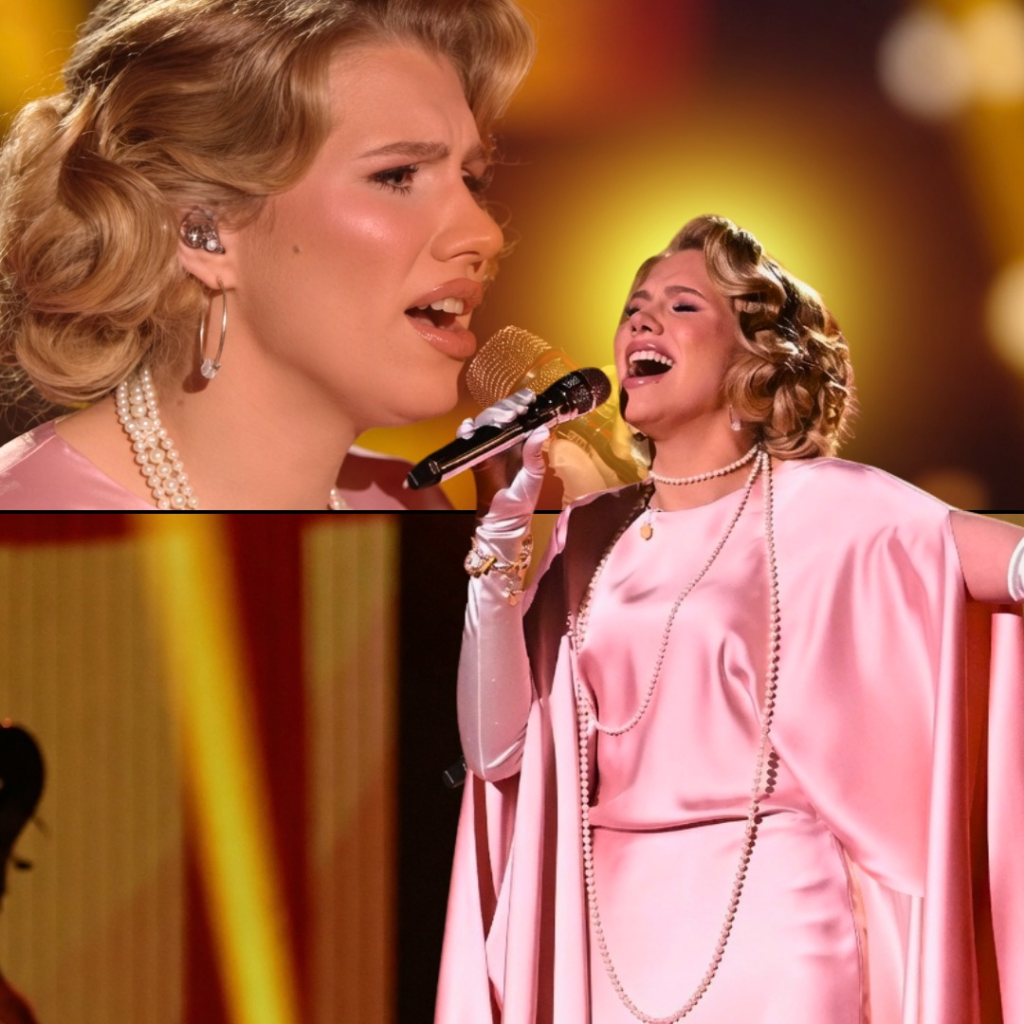
Whether those comparisons are fair or premature is almost secondary. The important truth is that people are now speaking about Hannah in a completely different language. She is no longer being framed by limitations. She is being discussed in terms of potential.
That is a powerful transition.
The most compelling part of Hannah’s story may be how naturally it happened. This did not feel like a desperate attempt to overcorrect criticism. It felt like growth arriving at the right time. Sometimes contestants need weeks to settle into themselves. Sometimes pressure reveals hidden strength. Sometimes one theme night unlocks a new level.
Disney Night may have done all three.
There is also a lesson here about criticism itself. Early judgments in competition shows are often snapshots mistaken for permanent truths. A nervous week becomes a reputation. A rough performance becomes an identity. Hannah’s breakout reminds viewers that artists are evolving in real time, not frozen in first impressions.
What comes next will matter. One great night can ignite momentum, but sustaining it requires consistency. The challenge for Hannah now is to build on this confidence, keep surprising audiences, and prove the breakthrough was not an exception—it was the beginning.
Still, even before the next performance arrives, something has already shifted. She changed the conversation. She silenced the loudest doubts not by arguing with them, but by outperforming them.
That is how real breakthroughs happen.
Not with noise.
With proof.