
Some songs don’t just exist in time—they travel through it. They pass from one voice to another, collecting meaning, memory, and emotion along the way. “That’s the Way Love Goes” is one of those rare pieces. It isn’t just a song anymore. It’s a legacy.
When Johnny Rodriguez first gave it life, there was a simplicity to it. A kind of effortless storytelling that country music has always thrived on. No excess. No distraction. Just a melody that carried truth and a voice that delivered it with honesty. It wasn’t trying to be timeless—but somehow, it became exactly that.
Then came Merle Haggard. And when Merle touched a song, he didn’t just sing it—he lived it. His version didn’t replace what came before; it deepened it. He added weight, soul, and a kind of emotional gravity that only comes from experience. Under his voice, the song became less about telling a story and more about feeling it.
That’s the beauty of country music at its core—it doesn’t erase history; it builds on it. Every artist becomes a bridge between what was and what could be.
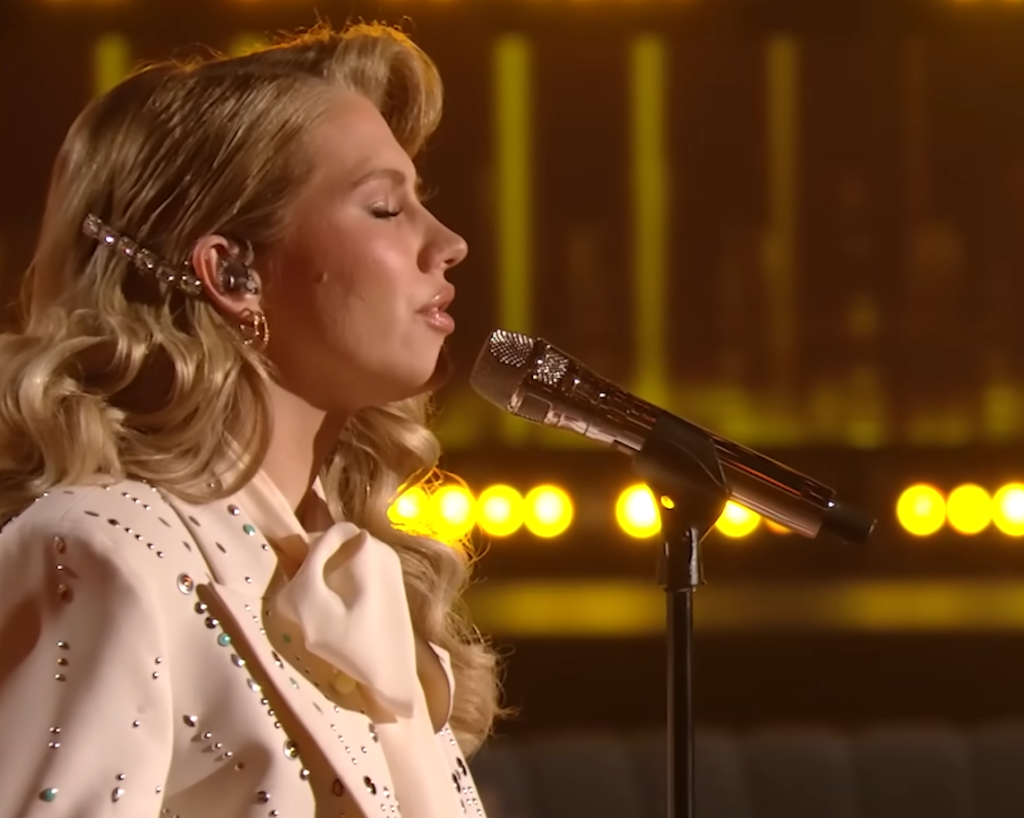
Now, decades later, the song finds itself in the hands of Hannah Harper on the stage of American Idol. And suddenly, something remarkable happens. The past and present collide—not in conflict, but in harmony.
Hannah doesn’t approach the song as something to outperform. She approaches it as something to understand. That distinction changes everything. Because instead of trying to make it bigger, she makes it closer. More intimate. More personal.
Her voice carries a softness that feels intentional. Not weak—controlled. She doesn’t rush the lyrics; she lets them breathe. And in those spaces, you can almost hear the echoes of those who sang it before her—not as shadows, but as quiet companions.
What makes her interpretation so compelling is the way she honors without imitating. She doesn’t try to be Johnny. She doesn’t try to be Merle. She stays rooted in who she is, and that authenticity becomes her greatest strength. It’s a delicate balance, and she walks it with surprising confidence.
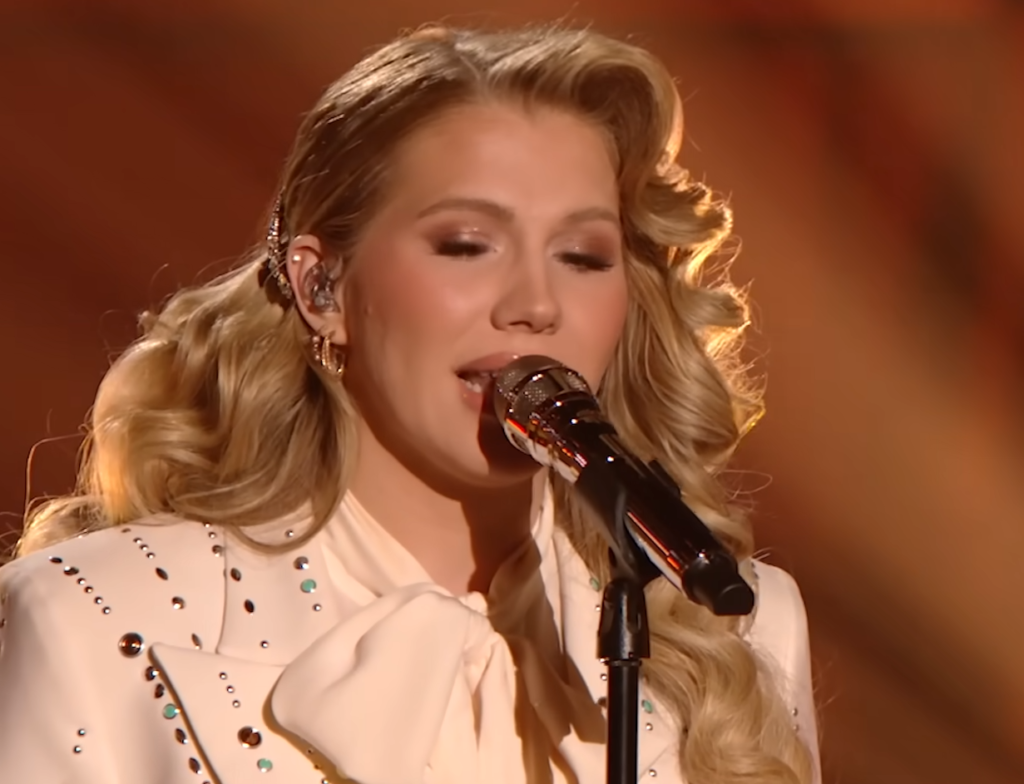
There’s also something poetic about where she is in her journey. A competition stage, filled with pressure, expectation, and noise—yet she chooses a song that thrives on stillness. That choice alone speaks volumes. It tells you she isn’t chasing moments; she’s building meaning.
And meaning is what turns a performance into memory.
The audience doesn’t just hear the song—they recognize it. Not just as a melody, but as a feeling that has been carried through generations. Some hear nostalgia. Others hear something new. But everyone hears something real.
That’s the power of a song like this. It adapts without losing itself. It evolves without forgetting where it came from.
Hannah’s version becomes another chapter in that evolution. Not a replacement. Not a reinvention. But a continuation. A reminder that music doesn’t belong to one moment—it belongs to all the moments it touches.
There’s also a quiet symbolism in the way she delivers it. Much like the song itself, her journey reflects something shared—support, sacrifice, love that exists behind the scenes. When she sings, it doesn’t feel isolated. It feels connected. To her story. To the past. To the people who believe in her.
And maybe that’s why it resonates so deeply.
Because at its heart, “That’s the Way Love Goes” isn’t just about romance. It’s about continuity. About the way things move forward without losing their essence. About how something simple can carry so much weight over time.
From Johnny Rodriguez to Merle Haggard, and now to Hannah Harper, the song has never stayed the same—and yet, it has never stopped being itself.
That’s not just a legacy.
That’s something much rarer.
That’s a song finding new life, again and again, in voices brave enough to carry it forward.