
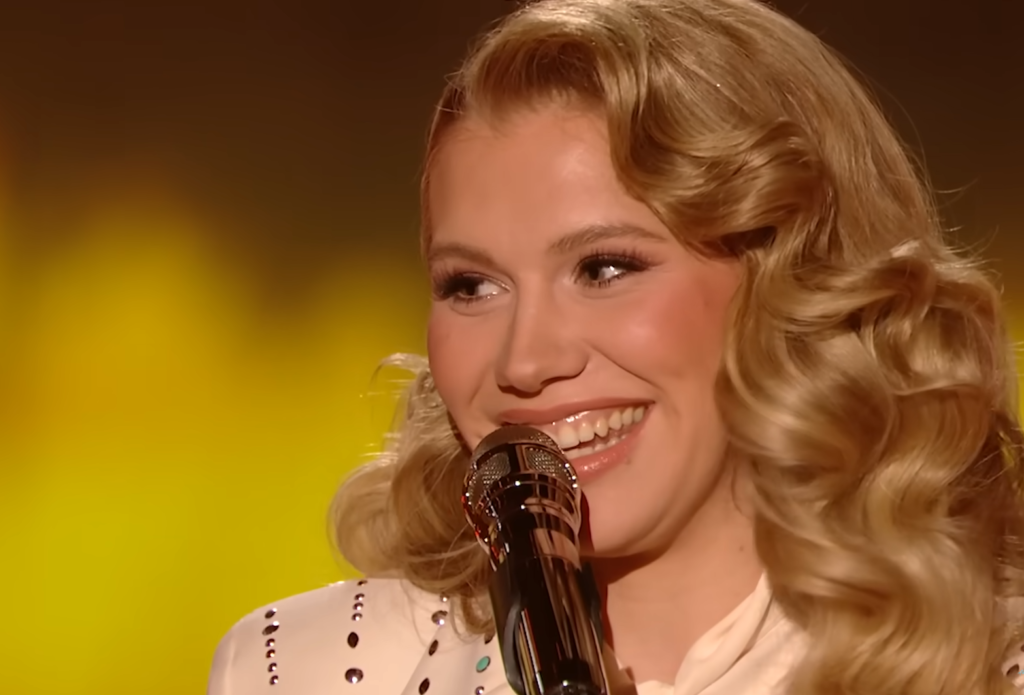
There are performances that aim to impress—and then there are those that simply belong. On the stage of American Idol, Hannah Harper didn’t just deliver a song; she stepped into a tradition that few dare to carry. And in that moment, it didn’t feel like a competition—it felt like a continuation.
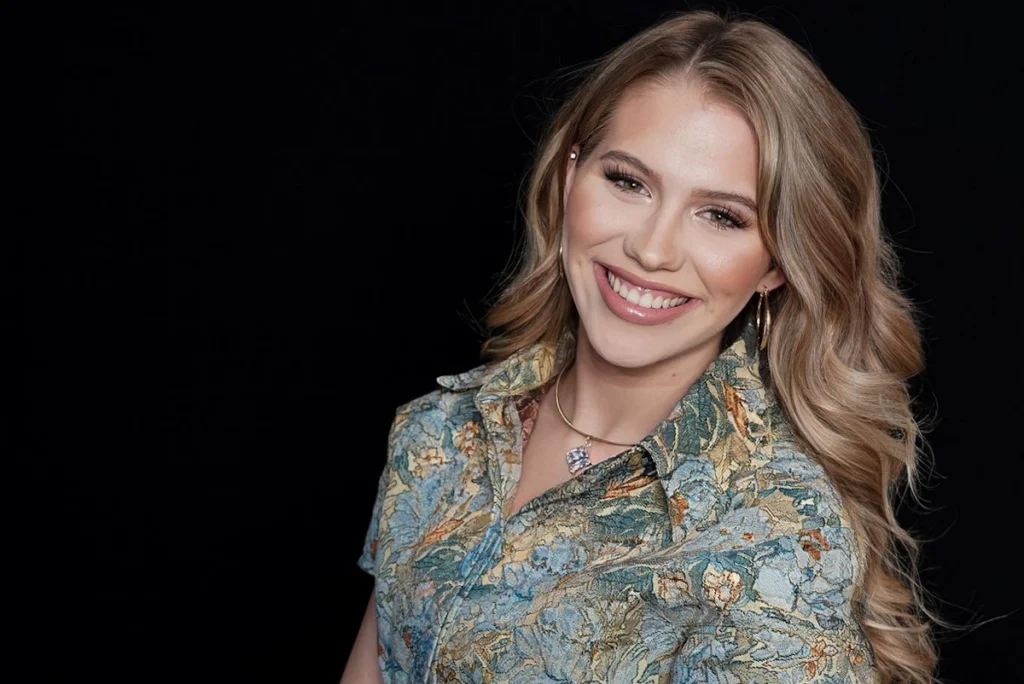
It’s easy to imagine Merle Haggard watching from afar, not with loud applause, but with something far more meaningful—a quiet, knowing nod. Because what Hannah brought wasn’t imitation. It was understanding. And in country music, that difference means everything.
Merle’s legacy was built on truth. Not polished perfection, not theatrical delivery—but lived experience poured into melody. His voice carried the weight of real life, and every note felt like it had a story behind it. That’s the standard he set. And that’s the space Hannah stepped into.
What makes her performance so striking is not what she adds, but what she refuses to overdo. In an era where vocal gymnastics often dominate the stage, she chooses restraint. She allows the song to breathe. She lets silence carry as much meaning as sound. That’s not a weakness—it’s a rare kind of strength.
Hannah doesn’t sing to prove she can. She sings because she has something to say.
That distinction changes how every note lands. Instead of chasing applause, she builds connection. Instead of performing at the audience, she invites them into something personal. And when that connection happens, it doesn’t feel temporary—it lingers.
There’s also a quiet courage in the way she approaches classic country. She doesn’t try to modernize it beyond recognition. She doesn’t dilute it to fit trends. She respects it. And in doing so, she proves that authenticity still has a place on today’s biggest stages.
Merle Haggard understood that better than anyone. His music wasn’t designed to follow the moment—it defined it. And when Hannah sings, there’s a similar sense of grounding. A feeling that the song isn’t just being performed—it’s being lived through.
That’s why her delivery feels so natural. She doesn’t force emotion; she allows it to rise. You can hear it in the softness of her phrasing, in the patience of her timing, in the way she trusts the song to do its work without interference.
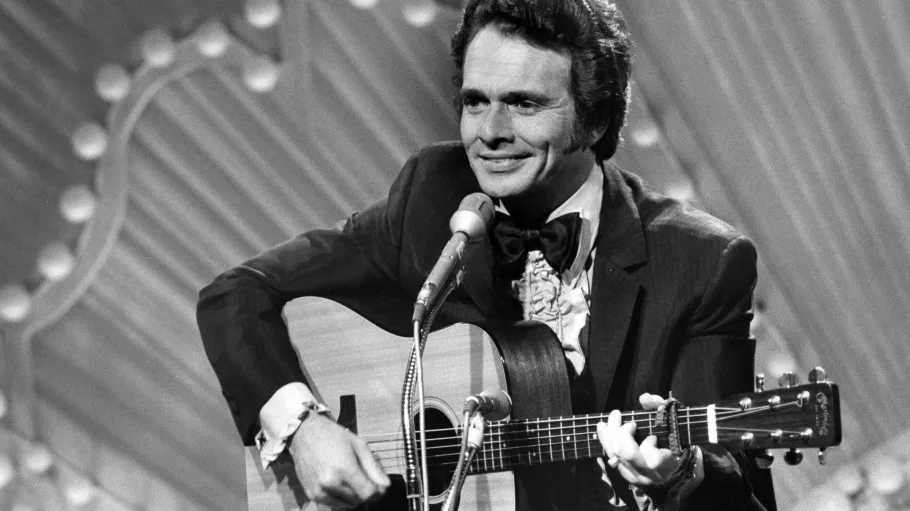
It’s a delicate balance—honoring a legend without becoming overshadowed by him. But Hannah manages it with surprising grace. She doesn’t disappear into the song’s history; she adds to it. She becomes part of its journey.
And that’s where something truly special happens.
Because country music, at its core, is about continuity. It’s about voices passing stories forward, each adding their own truth without erasing what came before. From Merle’s era to now, that thread remains unbroken—and Hannah is holding onto it.
There’s also an emotional sincerity in her presence that can’t be taught. It comes from experience, from life outside the spotlight. When she sings, it doesn’t feel like a performance constructed for television. It feels like a moment borrowed from real life.
That authenticity is what audiences recognize, even if they can’t always explain it. It’s why some performances fade, while others stay with you long after the lights go down. Hannah’s belongs to the latter.
And perhaps that’s why the idea of Merle Haggard being proud doesn’t feel like an exaggeration—it feels inevitable.
Not because she tried to sound like him.
But because she understood what he stood for.
In a competition filled with noise, Hannah Harper chose truth.
And in doing so, she didn’t just honor a legend—she reminded everyone why legends exist in the first place.