
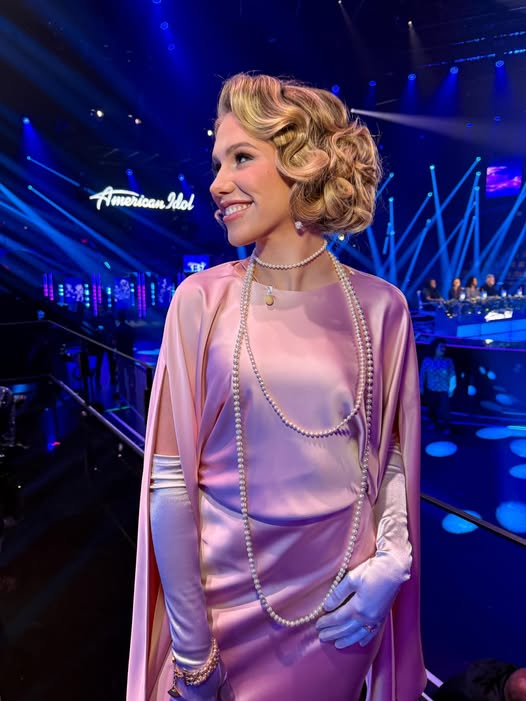
There are performances that entertain, and then there are performances that test fate. When Hannah Harper stepped into a Merle Haggard classic, it wasn’t just a song choice—it was a risk wrapped in history. For a brief, fragile moment, it felt like the kind of decision that could either elevate her or quietly undo everything she had built.
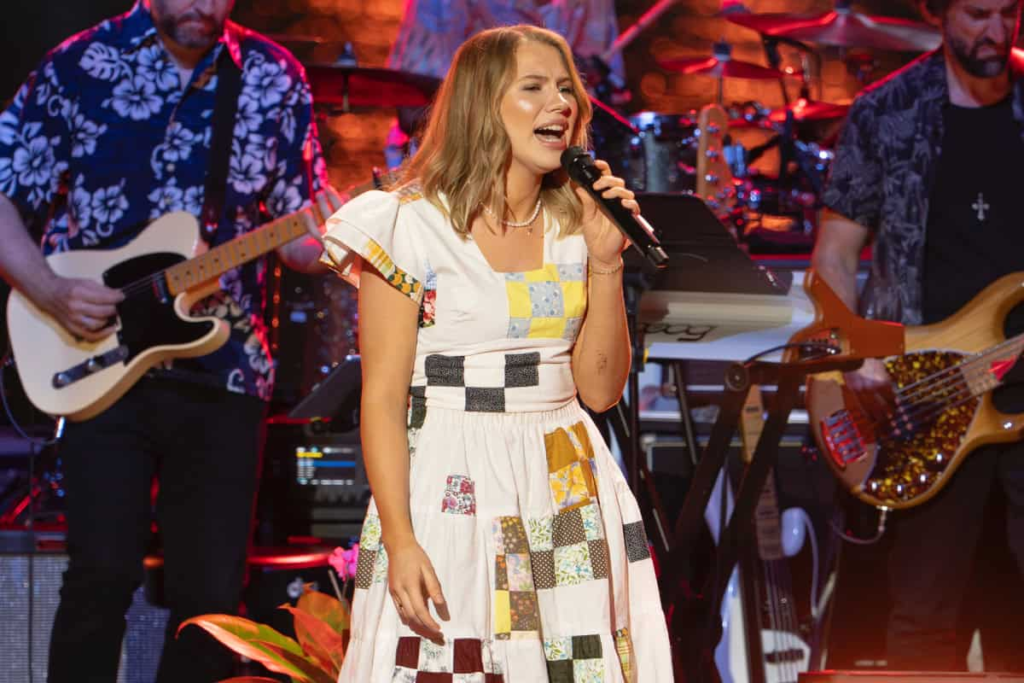
Because classics don’t bend easily. They carry weight, expectation, and memory. And when a rising artist touches something so deeply rooted, the margin for error disappears. The audience doesn’t just listen—they compare, they measure, they remember. That’s what made the moment so uncertain as Hannah took her first breath on that stage.
But then, something shifted.
It wasn’t loud or dramatic. It didn’t announce itself with a sudden high note or a show-stopping run. Instead, it unfolded slowly, almost invisibly. Her voice settled into the song like it had always belonged there. The tension that filled the room didn’t vanish—it transformed. And suddenly, the performance wasn’t about risk anymore. It was about control.
What followed felt less like singing and more like storytelling. Every lyric carried a sense of lived experience, as if Hannah wasn’t interpreting the song—she was remembering it. That distinction is subtle, but it changes everything. Because audiences don’t just respond to sound; they respond to truth.
And in that moment, truth became her strongest instrument.
There’s a difference between honoring a legend and getting lost in one. Many artists lean too heavily on imitation when faced with iconic material, hoping accuracy will translate into impact. But Hannah chose a different path. She didn’t mimic—she translated. She took something familiar and filtered it through her own emotional lens, creating a version that felt both respectful and entirely new.
That’s where the performance crossed a line.
It stopped being a tribute and started becoming a statement. Not about the past, but about her place in it. And once that line is crossed, it’s nearly impossible to go back to being “just another contestant.” The narrative changes. The expectations shift. The audience starts watching with a different kind of attention.
What makes this moment even more significant is its timing. In a competition where every round narrows the field and sharpens the stakes, artists are expected to peak at just the right moment. Too early, and the momentum fades. Too late, and there’s no time left to capitalize. Hannah’s performance didn’t just land—it arrived exactly when it needed to.
That precision isn’t accidental. It’s the result of growth, restraint, and an understanding of when to hold back and when to let go. And for the first time, it felt like all of those elements aligned in a single performance. Not perfectly—but powerfully.
The aftermath told its own story.
There was a quiet shift in how people reacted. Not louder applause, not exaggerated praise—but something deeper. A kind of stillness that lingers after a moment truly connects. It’s the kind of reaction that doesn’t fade with the next performance, because it rewrites how the audience sees everything that follows.
And that’s where the real impact lies.
Because once an artist proves they can carry that kind of weight, every future performance is measured differently. The baseline changes. The expectations rise—not as pressure, but as recognition. Hannah didn’t just deliver a strong performance; she reset the standard she’ll now be held to.
Of course, the competition isn’t over. Titles are still undecided, votes still to be cast, and outcomes still uncertain. But something important has already taken place—something that doesn’t depend on a final result.
She’s no longer chasing a defining moment.
She may have already lived it.
And now, the question echoing through every conversation isn’t just whether Hannah Harper can win. It’s whether anyone else can match what she’s already set in motion.