

Some nights feel routine. Others arrive carrying a pulse of nostalgia so strong, it almost bends time. Tonight’s “Party Like It’s 2006” celebration isn’t just another themed episode—it’s a doorway back to one of the most emotionally charged eras of American Idol.
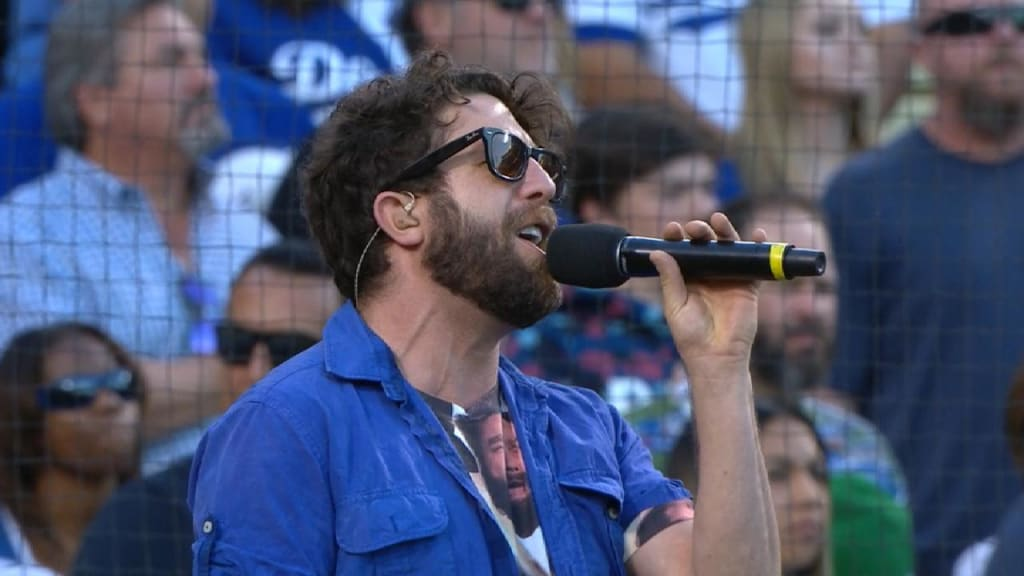
And right at the center of it stands Elliott Yamin.
For those who remember 2006, Elliott wasn’t just a contestant—he was a feeling. A voice that didn’t rely on flash but instead leaned into something deeper, something raw and unmistakably human. Week after week, he proved that perfection wasn’t the goal—connection was. And that’s exactly why his return matters.
But this isn’t just about revisiting the past.
Because tonight, Elliott doesn’t walk the stage alone. He’s paired with Jordan McCullough, a rising voice stepping into a moment that could redefine how audiences see him. And when a legacy artist meets a current contender, the stage becomes more than a performance space—it becomes a bridge.
A bridge between eras.
A bridge between experience and ambition.
A bridge between what was and what could be.
The real intrigue lies in that intersection. Elliott Yamin represents a time when storytelling ruled over spectacle, when a single note—delivered with honesty—could quiet an entire room. Jordan, on the other hand, carries the energy of now: sharper competition, faster expectations, and a need to stand out instantly.
So what happens when those two worlds collide?
The answer isn’t simple—but it’s powerful.
Duets like this are rarely about balance. They’re about revelation. They show whether a rising artist can not only hold their ground, but also adapt, absorb, and elevate alongside someone who has already lived the pressure they’re still navigating.

And Jordan McCullough now stands at that exact crossroads.
There’s a quiet weight to sharing a stage with someone like Elliott Yamin. Not because of intimidation—but because of standard. Elliott doesn’t just sing songs; he inhabits them. His phrasing, his restraint, the way he lets emotion linger just a second longer than expected—it all creates a blueprint.
And tonight, Jordan steps inside that blueprint.
But here’s where things become unpredictable.
Jordan isn’t trying to become Elliott. And that’s what makes this pairing compelling. Because the most unforgettable Idol duets don’t happen when one artist mirrors another—they happen when both voices remain distinct, yet somehow find harmony in contrast.
That tension is where magic lives.
Picture it: the lights dim slightly, the first chord rings out, and there’s a brief pause—the kind that carries anticipation more than silence. Elliott leans into the opening with that familiar, soul-soaked tone. Then Jordan answers—not by copying, but by carving his own space in the song.
That moment—that exchange—is what viewers will hold onto.
Because in that instant, the audience decides something crucial. Not just whether the performance is good, but whether Jordan belongs in conversations that extend beyond this season. Whether he can exist in the same emotional universe as someone whose performances still echo years later.
That’s the test no one says out loud.
And yet, it’s the one that matters most.
“Party Like It’s 2006” may sound like a celebration, but beneath it lies something more intentional. It’s a reminder of what made the show resonate in the first place: authenticity, vulnerability, and voices that didn’t just entertain—but stayed.
Elliott Yamin embodies that legacy.
Jordan McCullough is chasing it.
And tonight, for a few minutes under those lights, their journeys overlap.
But here’s the truth about moments like this—they don’t announce themselves as iconic while they’re happening. They unfold quietly, almost subtly, until something clicks. A note lands differently. A harmony hits deeper. A silence stretches just long enough for the audience to feel it.
And suddenly, it’s no longer just a duet.
It becomes a memory in the making.
So when the clock hits 8/7c and the stage resets for this pairing, the real question won’t be whether they sound good together. That’s expected. The real question is whether something shifts—in the room, in the audience, and most importantly, in how Jordan McCullough is seen from this moment forward.
Because if it does…

Then tonight won’t just bring back 2006.
It will quietly create something that lasts far beyond it.