
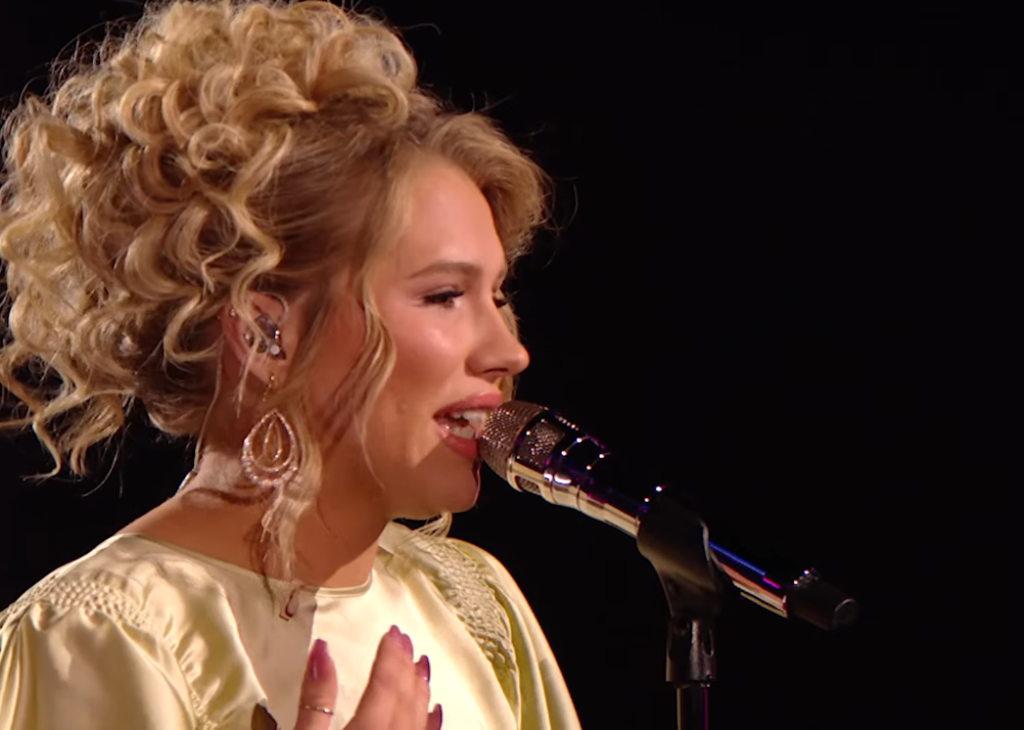
There’s a certain kind of silence that follows a bold decision—the kind where people aren’t sure whether to applaud or question what they just witnessed. That’s exactly where Hannah Harper left the audience after her striking performance on American Idol. It wasn’t just a song. It was a shift.

For weeks, Hannah had built her identity around a grounded, country-rooted sound. It was familiar. It was safe. And it worked. But safe doesn’t always win—not when the finish line is this close. So when she stepped into the smoky, jazz-infused world of “Fever,” it wasn’t just a genre change. It was a statement.
And statements come with consequences.
From the very first note, it was clear she wasn’t trying to replicate the original—she was reinterpreting it. The tempo, the tone, the attitude—it all carried a deliberate sense of control. She wasn’t just singing; she was inhabiting the performance. The stage presence that once felt restrained now felt calculated, almost magnetic.
But risk has a way of dividing perception.
Some viewers saw evolution. They saw an artist stretching beyond her comfort zone, proving she could do more than what people expected of her. They admired the confidence, the willingness to challenge her own narrative, and the courage to take that leap at such a critical stage.
Others weren’t so convinced.
For them, the shift felt abrupt. Almost unfamiliar. They questioned whether the performance aligned with who Hannah had been throughout the competition. Was this growth—or was it a gamble that risked losing her identity?
And then came the moment that truly ignited the conversation.
Somewhere between the applause and the echo of the final note, a judge made an off-the-cuff comment—quick, unscripted, and just ambiguous enough to leave room for interpretation. It wasn’t loud. It wasn’t dramatic. But it landed.
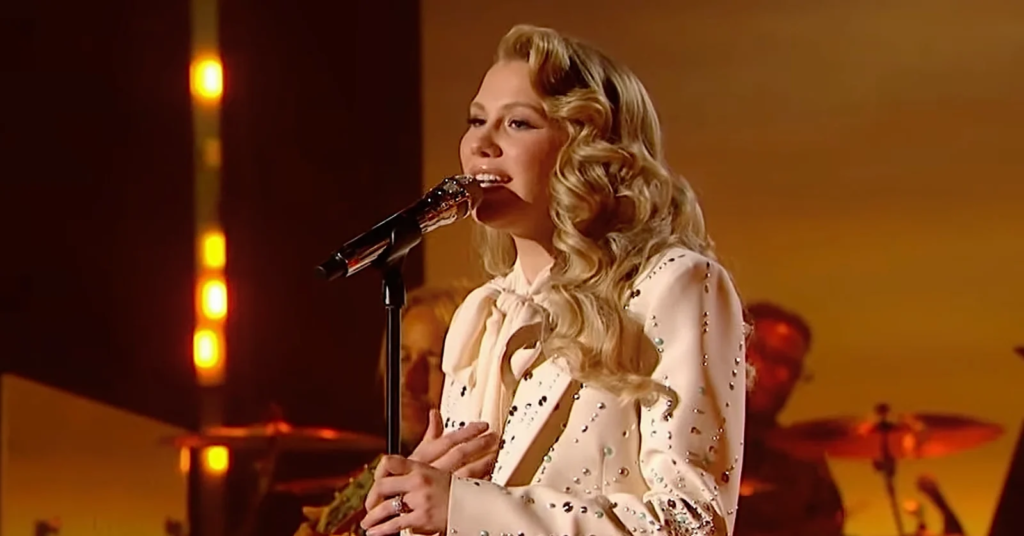
And fans caught it.
Almost instantly, the focus shifted. The performance was no longer the only topic—it became the center of a wider debate. What did the comment mean? Was it praise disguised as critique? Or critique softened as praise? Social media began dissecting every word, every tone, every possible implication.
Because at this stage of the competition, nothing is casual.
Every reaction matters. Every nuance can influence perception. And perception, ultimately, shapes votes.
What makes this moment so compelling is how it reflects the reality of competition at its highest level. Talent alone isn’t enough anymore. It’s about timing, strategy, and the ability to surprise without disconnecting. It’s about knowing when to stay true—and when to evolve.
Hannah chose to evolve.
And whether that choice pays off depends not just on what she did, but on how it’s received. Because audiences don’t just vote for voices—they vote for journeys. They invest in stories. And when a story takes an unexpected turn, it forces them to reassess everything they thought they knew.
That’s where Hannah stands right now.
At the intersection of admiration and uncertainty. Growth and risk. Familiarity and reinvention.
But here’s the truth: moments like this are what define seasons.
Not the predictable performances. Not the safe choices. But the ones that spark conversation, that divide opinion, that make people lean in and care enough to debate. Because indifference is the real danger—and Hannah Harper is anything but ignored right now.
She’s being watched more closely than ever.
As the finale approaches and the margin between contestants narrows, the impact of this performance will become clearer. It could solidify her as a fearless artist willing to take chances. Or it could challenge her connection with voters who preferred the version of her they already knew.
Either way, one thing is certain.
Hannah Harper didn’t just perform “Fever.”
She created a moment that refuses to cool down.