
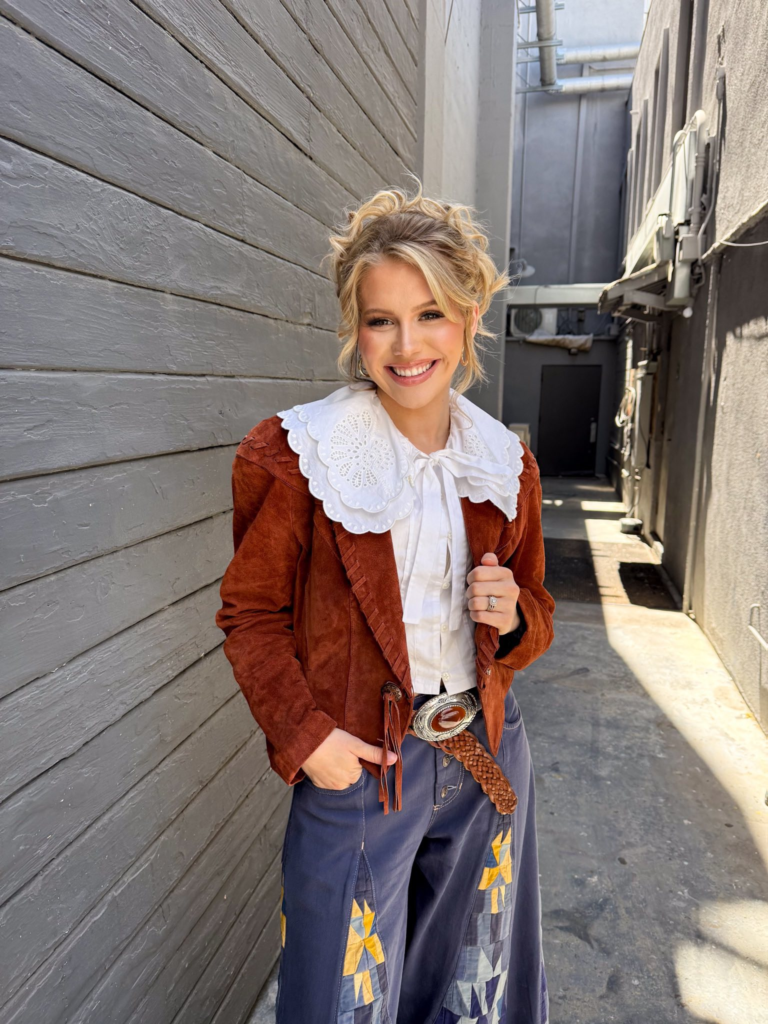
There are performances that play it safe… and then there are moments that quietly rewrite the room. When Hannah Harper stepped into her version of “Heads Carolina, Tails California” on American Idol, it didn’t feel like a nostalgic throwback—it felt like a decision. A choice to walk a line most contestants avoid.
Because nostalgia is dangerous.
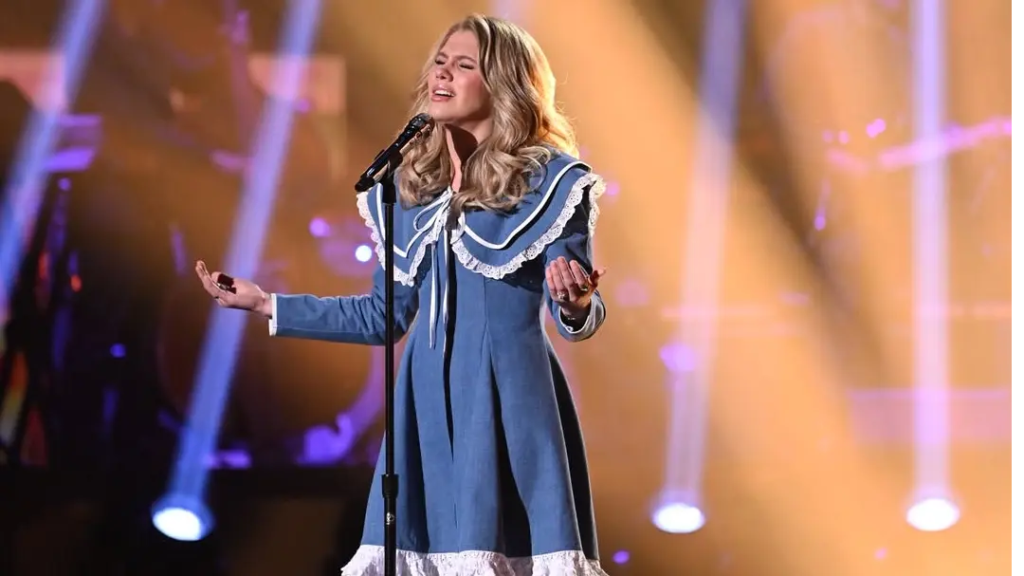
It comes with memory. Expectation. Ownership. The audience doesn’t just hear the song—they remember it. They compare it. They measure every note against something already loved. And in a competition where originality is currency, leaning into familiarity can either elevate you… or quietly expose you.
Hannah understood that.
You could see it in the way she didn’t imitate the original rhythm but reshaped it—subtly at first, almost like testing the waters. Her tone carried a grounded warmth, something rooted in her country and gospel influences, but there was also a slight edge—an intention to make the song hers without forcing it.
And that’s where the shift began.
The audience didn’t erupt immediately. Instead, they leaned in. The clapping came naturally, not because it was expected, but because the energy invited it. It wasn’t overpowering—it was steady, controlled, and quietly confident. The kind of performance that doesn’t demand attention, but earns it.
But while the crowd moved with her… the judges watched differently.
They weren’t just listening for sound—they were listening for risk.
Because this wasn’t just a cover. It was a statement. Taking a song so deeply embedded in country culture and reshaping it on a stage like this meant one thing: she was willing to be judged not just on vocals, but on interpretation. And interpretation is where most performances either rise… or collapse.
There were moments—small, almost unnoticeable—where she stretched a note just enough to make it feel new. Where she pulled back instead of pushing forward. Where restraint became more powerful than volume. Those moments didn’t scream for attention, but they lingered.
And that’s what made it complicated.
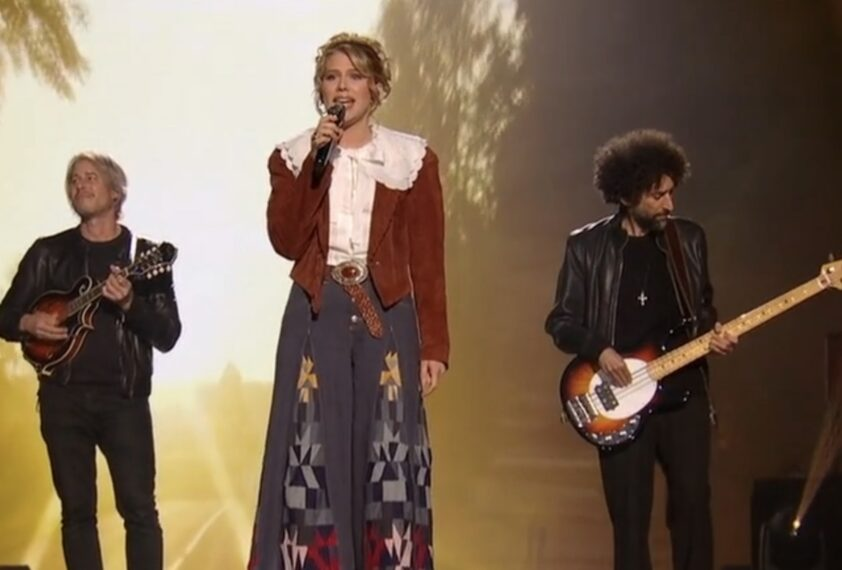
Because not everyone responds to subtlety the same way. Some viewers smiled, caught in the familiarity, enjoying the freshness without overthinking it. Others listened more critically, asking quieter questions—Was it bold enough? Did it honor the original too much… or not enough?
That tension didn’t weaken the performance.
It defined it.
Great performances don’t always divide because they fail. Sometimes, they divide because they challenge expectations. Hannah didn’t choose the safest version of the song, nor did she completely reinvent it. She existed in between—and that space is uncomfortable, but powerful.
What made the moment unforgettable wasn’t perfection.
It was intention.
You could feel that she wasn’t trying to prove something loudly. She was trusting something quietly. Trusting her tone. Her instincts. Her ability to carry a familiar song without losing herself inside it. And that kind of confidence doesn’t always translate instantly—it grows on you.
By the time the final note settled, the reaction wasn’t explosive.
It was reflective.
The kind of silence that doesn’t come from confusion, but from processing. From people trying to understand what they just felt, rather than just what they heard. And in a competition built on quick impressions and instant reactions, that kind of pause is rare.
Because it means something stayed.
Not just the melody. Not just the performance. But the question it left behind—whether playing it safe is really safer than taking a risk that doesn’t fully resolve.
And maybe that was the point all along.
Hannah Harper didn’t just sing a song that night.
She created a moment where certainty slipped just enough to make people look closer—and sometimes, that’s far more powerful than immediate applause.