
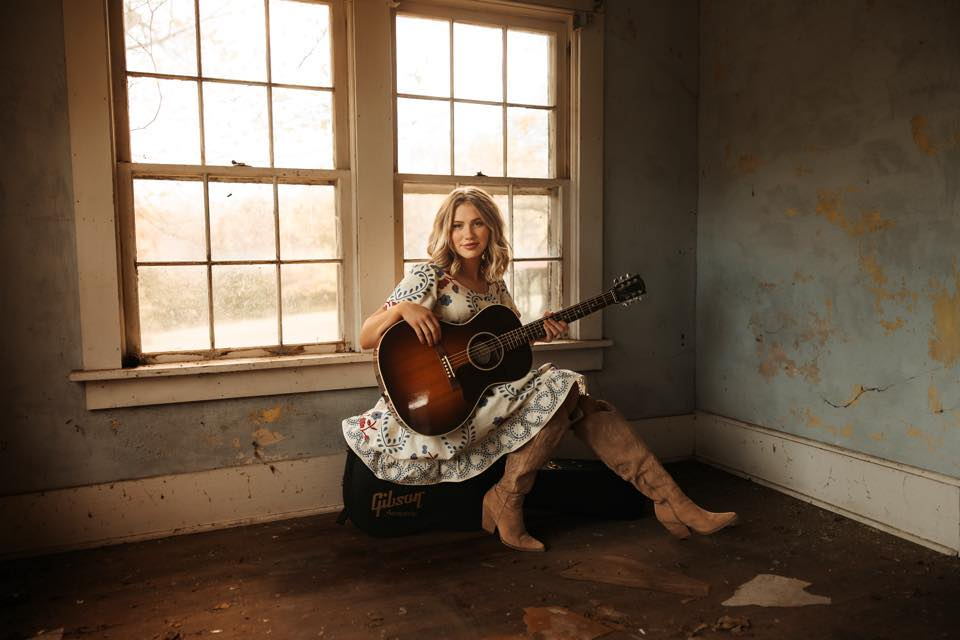
She didn’t just learn to sing in a room filled with music—she learned it in a room filled with meaning. Every note carried more than melody; it carried belief, discipline, and a quiet understanding of what should be said… and what should never be spoken.
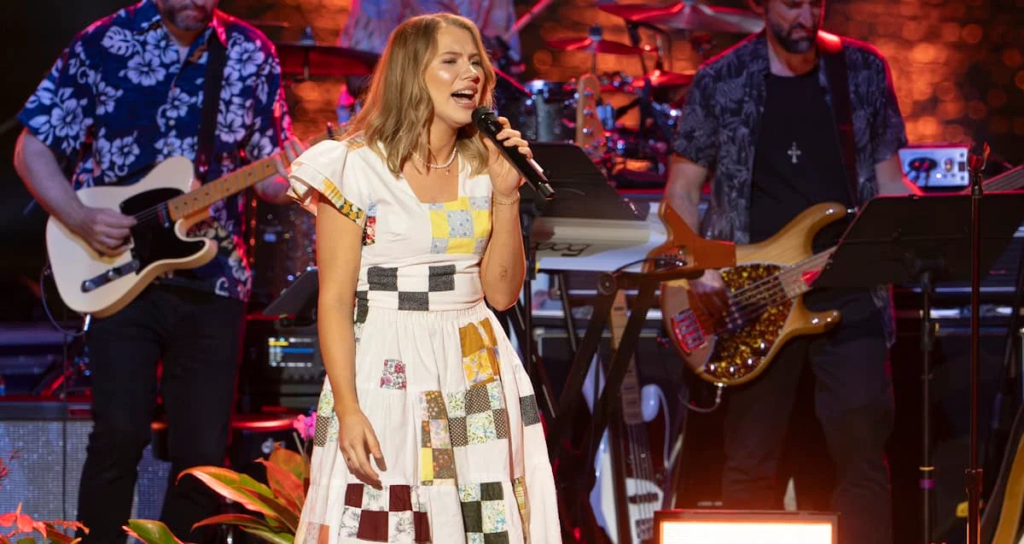
In homes shaped by faith, expression is rarely neutral. It is guided, filtered, and often softened. Words are chosen carefully, not just for how they sound—but for how they align. And somewhere in that alignment, a young voice begins to measure itself before it ever dares to fully release.
Her earliest songs were not about heartbreak or rebellion. They were about devotion, surrender, grace. Beautiful themes—but structured ones. Safe ones. The kind that teach you how to feel deeply, but only within certain boundaries.
And that’s where the quiet tension begins.
Because emotion does not arrive with rules.
As she grew, so did the complexity of what she felt. Questions without easy answers. Feelings that didn’t fit neatly into hymns. Stories that couldn’t be wrapped in certainty. Yet every time those emotions rose, something inside her hesitated—Is this allowed? Should I say this? Will this still be me if I do?
This is the invisible barrier many never see.
It’s not a lack of talent. It’s not even fear of judgment from the outside. It’s the internal voice—shaped by years of belief—that edits before expression can even begin. A kind of self-censorship so gentle, it feels like protection rather than restriction.
And yet, artistry demands something different.
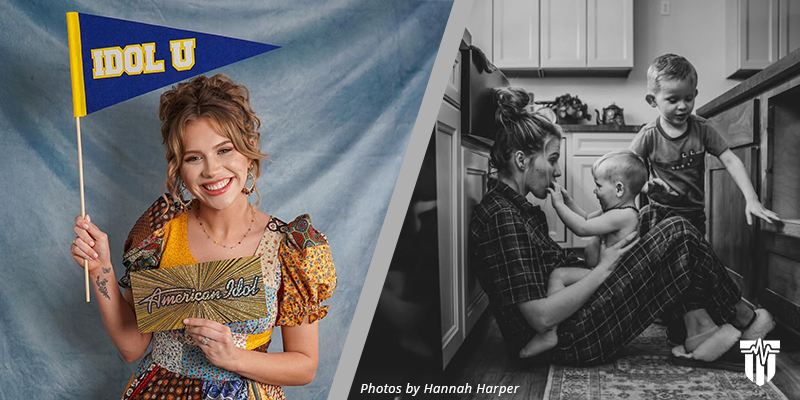
It asks for honesty without permission. It asks for vulnerability that isn’t pre-approved. It asks for the kind of truth that might not sit comfortably in the spaces that once defined you.
So when she steps onto a stage now, what we hear isn’t just a voice—it’s a negotiation.
Between who she was taught to be… and who she is becoming.
There are moments where her voice trembles slightly—not from weakness, but from crossing an invisible line. A lyric that feels a little too raw. A phrase that leans more into feeling than faith. And in those moments, something extraordinary happens.
She doesn’t retreat.
She leans in.
Because the most powerful artistry isn’t about abandoning where you came from—it’s about expanding beyond it without losing its essence. It’s about allowing faith to be a foundation, not a cage.
And maybe that’s why her voice feels different.
Not because it’s louder.
But because it’s finally saying things it once wasn’t sure it was allowed to feel.