
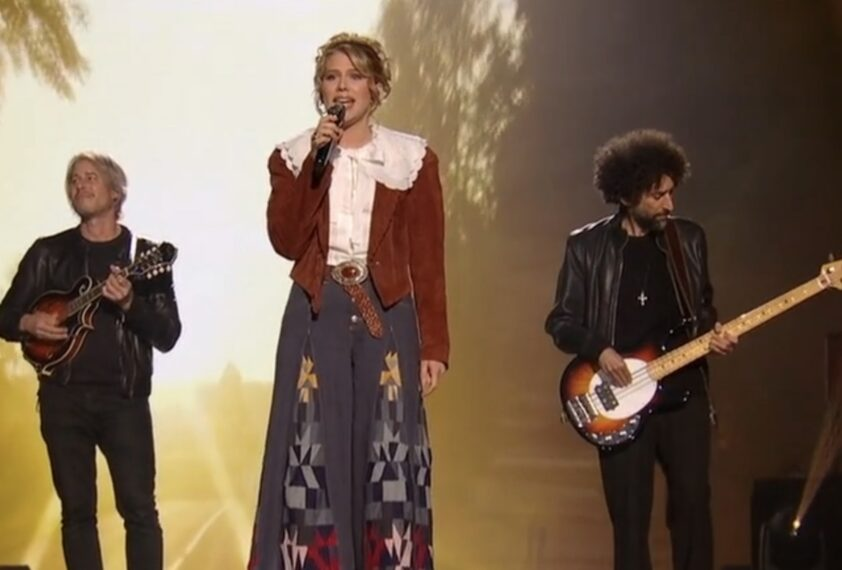
There comes a point in every competition where talent quietly steps aside—and something far more unforgiving takes its place. This is that point. Four names remain, but what lingers now isn’t excitement alone—it’s pressure, sharpened and undeniable.
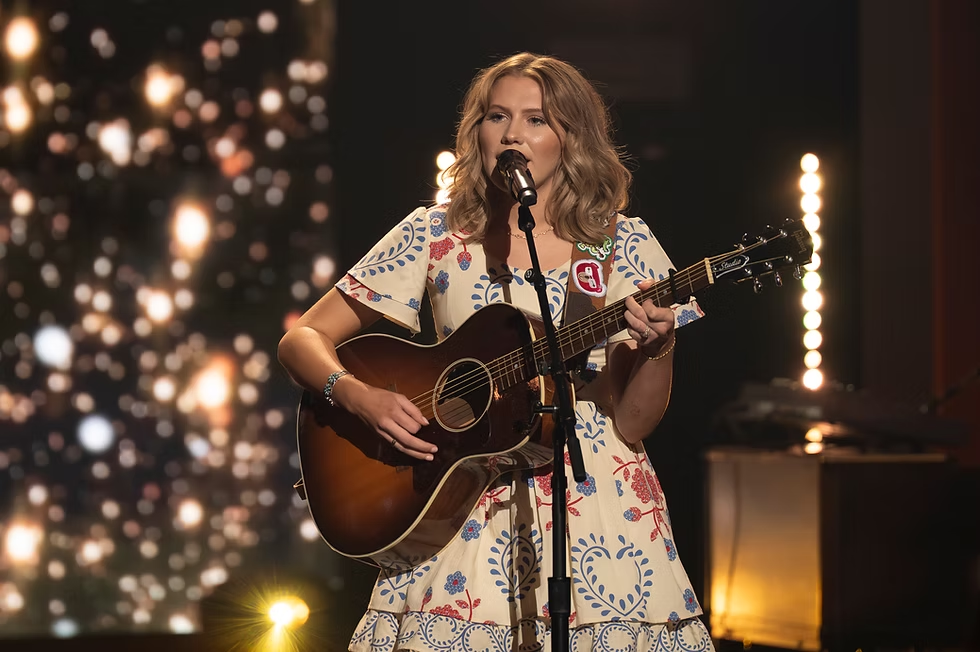
Hannah Harper. Keyla Richardson. Rae Boyd. Kyndal Inskeep.
Four voices that once blended into a crowded field now stand exposed, each one carrying a different kind of weight. And under the lights of American Idol, weight is everything.
Because at this stage, being “good” is no longer the currency.
Hannah Harper doesn’t overpower a room—she stills it. Her strength has never been volume, but control. The kind that makes silence feel intentional. But control, under pressure, can become fragility. One moment too restrained, and the audience may look elsewhere. The question isn’t whether she can sing—it’s whether she can risk breaking her own stillness when it matters most.
Keyla Richardson stands on the opposite edge. Precision, power, and technical brilliance define her performances. She doesn’t just sing—she executes. But execution invites expectation. And expectation can turn into a trap. Because when perfection becomes routine, audiences stop being surprised. And without surprise, even excellence can feel distant.
Then there’s Rae Boyd, who doesn’t just perform—she connects. There’s something unfiltered about her presence, something that feels less rehearsed and more lived-in. But connection is unpredictable. It relies on the moment, the mood, the intangible spark that cannot be rehearsed. And when the stakes rise, unpredictability can either elevate… or unravel.
Kyndal Inskeep carries a different kind of tension. She exists between identities—versatile, adaptive, willing to shift. That flexibility has brought her this far. But at this level, adaptability can blur into uncertainty. Audiences don’t just want range anymore—they want definition. They want to know exactly who they are watching.
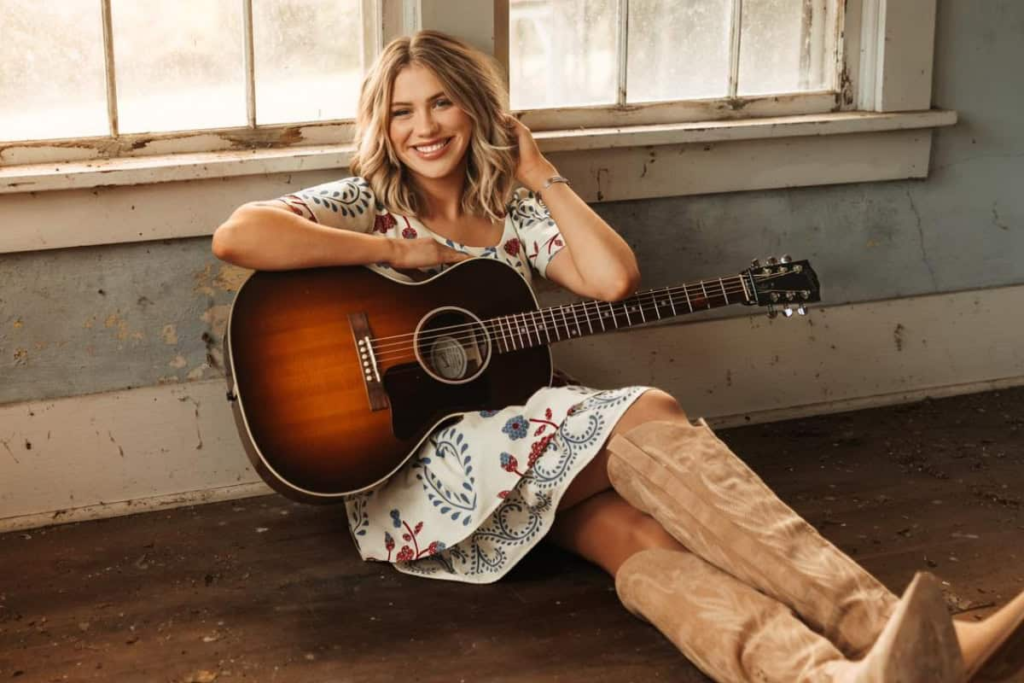
And that’s where everything changes.
Because this is no longer about who can sing the best note.
It’s about who can survive the silence between them.
Every performance now is a negotiation between fear and control. A single hesitation, a single missed emotional cue, can outweigh weeks of brilliance. The margin for error hasn’t just shrunk—it has disappeared entirely.
And the audience feels it.
There’s a different kind of watching now. It’s quieter. More intense. People aren’t just listening—they’re studying. Searching for cracks. For authenticity. For something that separates one voice from another in a way that statistics and judges’ comments never could.
The stage hasn’t changed—but what it demands has.
It demands risk.
It demands identity.
It demands a willingness to lose in order to win.
Because at this point, playing it safe isn’t safety—it’s elimination.
What makes this moment so compelling isn’t just the competition itself, but what it reveals. Each of these artists is being pushed into a version of themselves they may not fully recognize yet. The polished edges begin to fade. What remains is instinct.
And instinct doesn’t always behave.
One may rise by breaking their own pattern.
One may fall by holding onto it too tightly.
One may surprise by doing something no one expected.
And one may disappear—not because they lacked talent, but because they hesitated at the exact moment they needed to leap.
That’s the truth no one says out loud.
The difference now isn’t voice.
It’s timing.
It’s courage.
It’s the ability to stand in front of millions and choose uncertainty over comfort.
Four are left.
But this isn’t the final stage.
This is the breaking point—where identities are tested, narratives are rewritten, and the competition stops asking who deserves to win…
…and starts revealing who can endure it.