
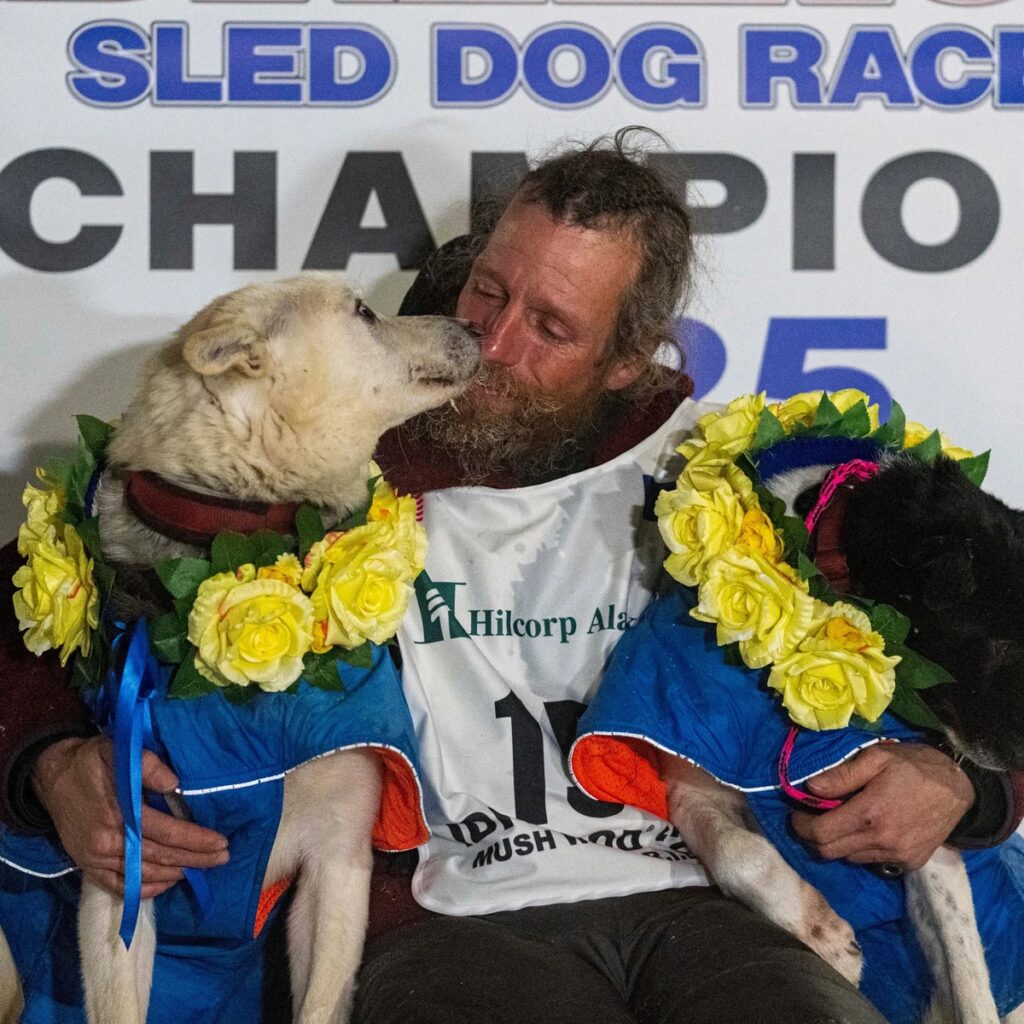
The first thing to break the silence is breath, not voice—a thin, trembling plume ghosting into the air, pale as milk against the steel‑gray sky. The Yukon lies still under a skin of ice, lake and river rolled together into one vast mirror, catching the last light of day like a slow, fading thought. Jesse’s footsteps are not echoes here; they are soft, almost private, like the weight of a hand closing over a secret. The cold has long since stopped shouting; it speaks now in glances, in the quiet shudder of muscles, in the way the air tastes clean and sharp, like glass on the tongue.
A lantern swing at the distant checkpoint traces a small, slow arc of light, a single pulse in the darkness as if the world is learning to blink again. The wind falls away, and in that stillness the sound of Jesse’s boots on packed snow becomes the only music left—deliberate, uneven, then steadying, like a heartbeat learning to trust itself after a long fall. The horizon is not a line but a feeling, a suggestion of edge, where the sky and ice seem to lean into one another, each borrowing the other’s color. For a moment, it feels as though the land is holding its breath, waiting for someone to exhale first.
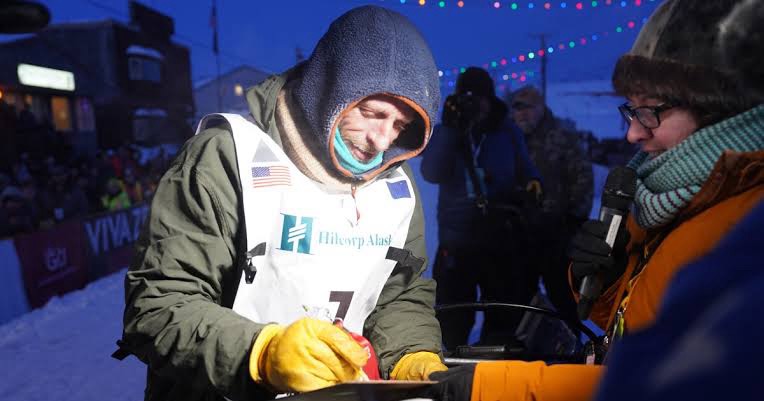
When the face finally comes into focus, it is not the triumphant mask of a hero but the quiet mask of someone who has come too far not to be wrecked by relief. The wind has scoured cheeks red, has traced new lines at the corners of the eyes, and the tears that gather there do not fall so much as freeze—tiny, crystalline halts suspended in the lower rims, glinting like minuscule stars caught in the cold. There is a moment when Jesse’s shoulders loosen, a subtle surrender, as if the body has at last remembered that it does not have to fight every second. The glove lifts to the eyes, not to wipe, but to press gently, as though checking that what is there is still real.
The sound of distant voices arrives second, as if the world has been waiting for the body to arrive before it remembers how to speak. Someone’s voice, roughened by cold, calls out a name—Jesse’s name, soft‑spun into the air like a thread across all that distance. The sound does not rush in; it weaves through the stillness, catching on the edges of breath, the clink of a buckle, the faint hiss of pants against nylon. Jesse’s lips part, but no quick answer comes. The mouth curves, slowly, as though the muscles have forgotten how to form that particular shape. It is less of a smile than a pooling of warmth in the center of the face, a quiet return of color to what had been carved in stone.
The sky grows darker, not all at once, but in shades—indigo deepening into violet, then a bruise of blue that settles over the ice. The cold seems to fold itself more closely around the shoulders, but it is no longer a blade; it is an old companion, sharp but familiar. Jesse’s mittens tremble slightly in the lantern’s light as they are pulled off, fingers flexing, testing the fragile return of feeling. The air smells of frost, of distant woodsmoke, of something ancient and unspoken—like the memory of rivers that once ran where the ice now lies. The world is not cheering loudly; it is holding its breath, watching the quiet unravel on a single face.
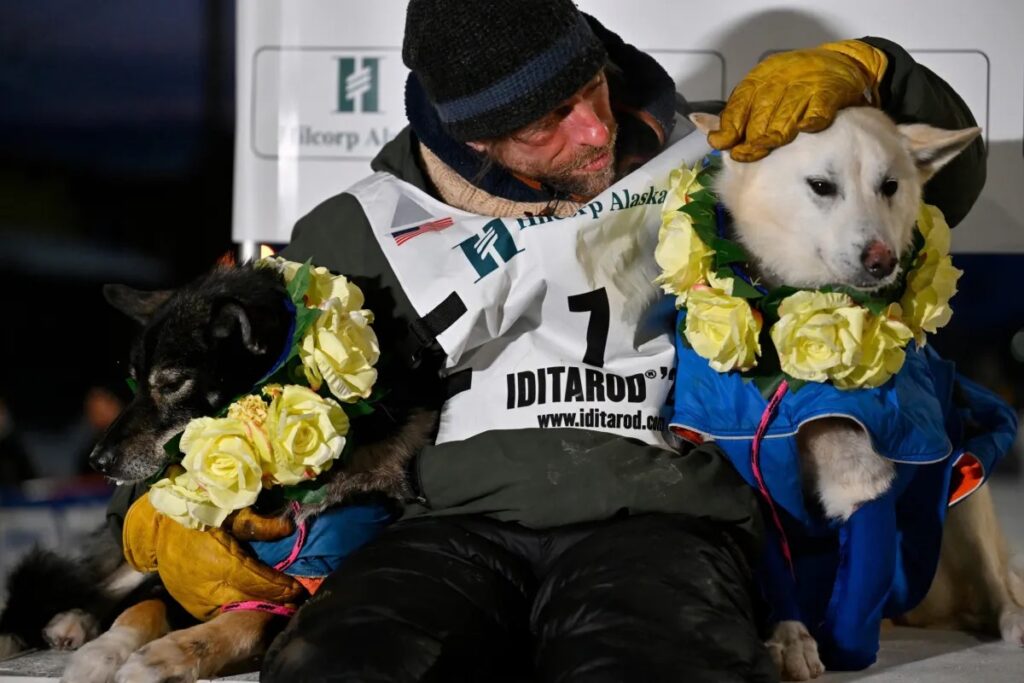
There is a moment when the eyes close, not out of fatigue, but because the weight of having made it is too heavy to bear in full view. The skin around the lashes tightens, then loosens again, and somewhere behind the lids, memories of all the steps—those that came before, those that never made it this far—pass through like a slow, soundless procession. The wind forgets to whistle for a heartbeat, and in that pause the body remembers what it is to be small, to be human, to be made of something more fragile than the ice it walks on. The exhale that follows is long and soft, the sound of a door finally opening after a long winter.
When the eyes open again, they are clearer, as though the tears had washed something away instead of simply freezing in place. The crowd’s murmur, the clapping that has begun at the edge of vision, the crumpled medal in someone’s hand—they all arrive with the inevitability of rain after a long drought. Yet none of it reaches Jesse as noise so much as it reaches as light—with the soft, steady glow of human warmth, the quiet acknowledgment in the eyes of those who waited. The hand that reaches out to take the medal brushes against the other’s glove, and for an instant, the cold between them is not absence but a kind of bridge.
The camera flashes, bright and sudden, but it cannot catch what is happening in the stillness just beneath the surface. The face that looks into the lens is not the one that began this journey; it is the one that has been worn down, reshaped, and quietly reassembled somewhere along that frozen trail. The mouth does not stretch into a wide grin, but holds a gentler, more private shape, as if the victory is not something to be shouted into the wind but kept close, like a secret held against the chest. The ice, the light, the breath—all of it conspires to make this moment feel like a photograph that time forgot to take right away.
Later, when the memory of this night returns, it will not come with the roar of a crowd or the sting of a finish line, but with the soft, almost imperceptible sound of Jesse’s breath evening out, the way the cold eased its grip just enough to let the body remember what it means to be warm. The frozen tears will be remembered not as marks of weakness, but as proof that something had been allowed to thaw, somewhere deep inside, where the ice had clung the longest. The Yukon, vast and silent, will remember none of this in words, but in the faint imprint of a single set of footsteps, the echo of a slow, quiet exhale, the imprint of a name whispered into the frost.
And in the end, it is not the distance, the medals, or the light that remains, but the way the world, for one fragile moment, held its breath and let someone stand there, small against the ice, and weep in the quietest way possible—like the land itself had learned at last how to listen, and how to respond not with noise, but with the gentle, almost reverent silence of being witnessed.
Sources