
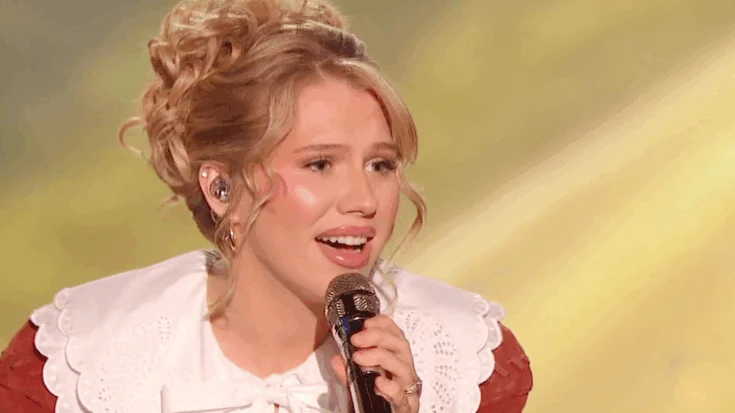
When American Idol flipped the switch to ‘90s Night, the stage didn’t just light up—it shifted into memory. And right at the center of that shift stood Hannah Harper, holding a song that has lived in the bloodstream of country music for decades. Jo Dee Messina’s “Heads Carolina, Tails California” is more than a hit—it’s a feeling, a gamble, a road waiting to be chosen.
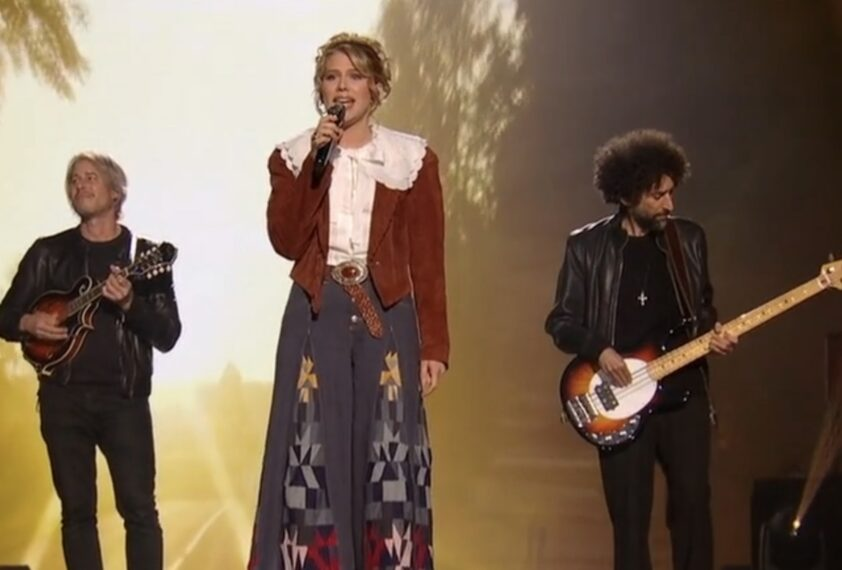
From the very first note, Hannah didn’t try to outshine the original—she leaned into it. That decision alone revealed something deeper about her artistry. She understands that legacy songs don’t need to be reinvented loudly; they need to be re-lived honestly. And in that moment, it didn’t feel like she was covering a song—it felt like she was remembering something that had always belonged to her.
There was a looseness in her voice, a kind of controlled freedom that many contestants struggle to find under pressure. Instead of chasing perfection, she chased connection. Her phrasing carried a softness in the verses, then opened up into a confident, almost fearless tone in the chorus. It created a natural rise and fall, like a conversation rather than a performance.
What made this performance particularly striking was how aligned it felt with her identity. Hannah has never hidden where she comes from—her bluegrass and gospel roots are not just influences, they are her foundation. So when she stepped into a ‘90s country anthem, it didn’t feel like a genre shift. It felt like a return home.
And that sense of “home” is powerful on a show like Idol. Viewers don’t just vote for voices—they vote for stories they recognize. Hannah’s storytelling ability, the way she subtly holds back just enough before delivering emotional peaks, creates a lingering effect. It’s the kind of performance that doesn’t end when the music stops—it stays.
But here’s where the real question emerges: was it enough?
Because in a competition this tight, being good is no longer the standard. Being unforgettable is. And while Hannah delivered a performance filled with warmth, control, and authenticity, the night itself was stacked with moments designed to shock, to stun, to dominate attention instantly.
What Hannah did instead was quieter—and arguably riskier.
She trusted the audience to feel rather than react. She didn’t oversing. She didn’t chase vocal acrobatics just to earn applause. She stayed grounded in the song’s spirit, letting its narrative breathe through her instead of forcing it into something louder. And that kind of restraint can either elevate an artist—or get lost in a night full of louder voices.
Still, there’s something important about momentum, and Hannah has it.
Week after week, she has shown growth without losing herself. That balance is rare. Many contestants evolve by shedding parts of who they are, but Hannah evolves by refining it. Each performance feels like a clearer version of her identity, not a departure from it. And audiences tend to reward that kind of consistency because it builds trust.
Another key factor is relatability. Hannah doesn’t perform like someone chasing fame—she performs like someone sharing a piece of her life. That distinction matters more than people realize. It’s what turns casual viewers into active voters. When people see themselves in an artist, they don’t just watch—they invest.
And then there’s the emotional memory of the song itself.
“Heads Carolina, Tails California” carries a built-in nostalgia that already connects with a wide audience. Hannah didn’t just tap into that nostalgia—she personalized it. She made the “coin flip” feel less like a playful lyric and more like a quiet metaphor for risk, for change, for choosing a direction when nothing is guaranteed.
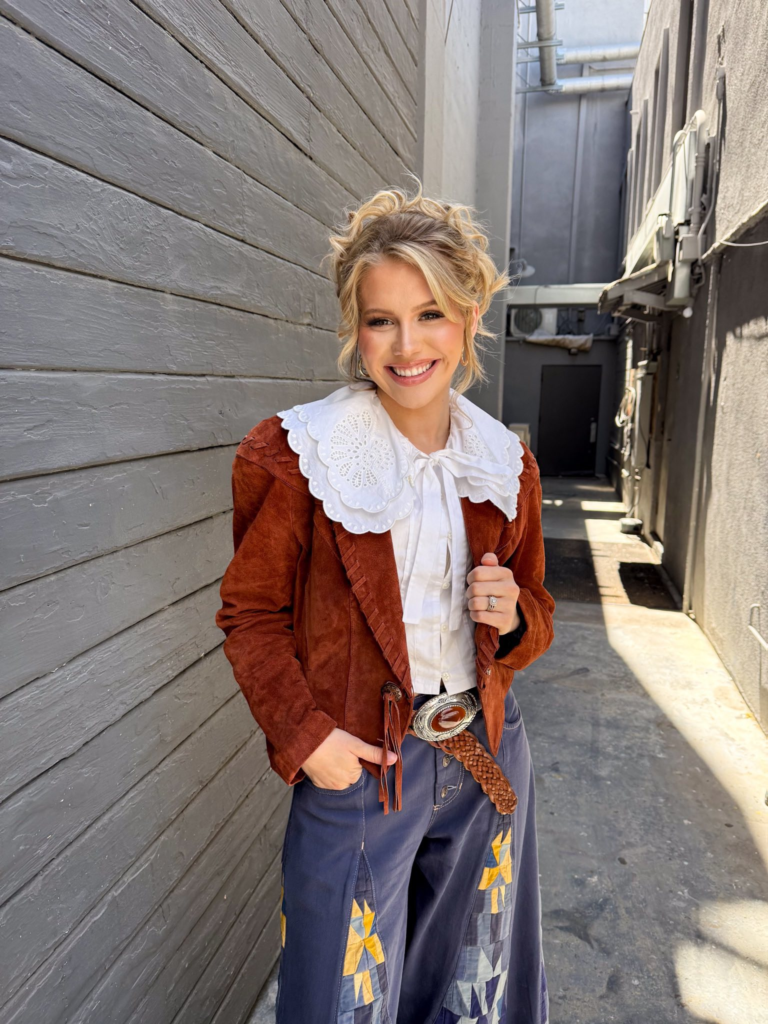
In a competition built on moments, that subtle reinterpretation might be her strongest weapon.
So, was it enough to keep her in the competition?
If Idol were judged purely on vocal fireworks, maybe the answer would be uncertain. But American Idol has never been just about that. It’s about who people want to keep listening to after the show ends. And Hannah is building something that extends beyond a single night—she’s building an artist people believe in.
That belief is what wins.
And if there’s one thing this performance proved, it’s that Hannah Harper isn’t flipping a coin anymore. She’s quietly deciding her direction—and inviting the audience to follow her there.