
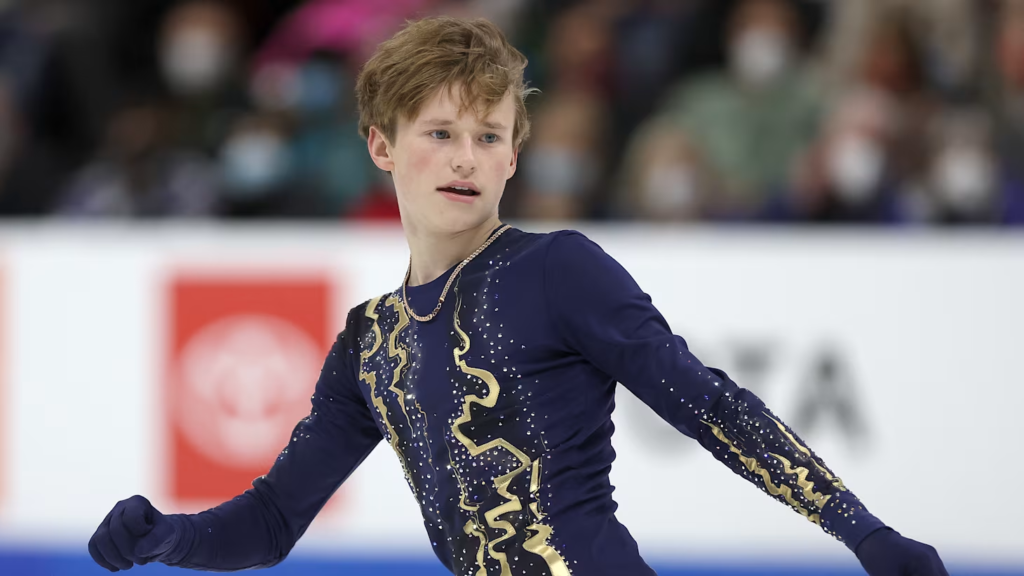
The arena in Prague was already trembling long before the music ended. It wasn’t just noise—it was disbelief wrapped in adrenaline. Thousands of voices rising at once, reacting to something that felt almost unreal. And at the center of it all stood Ilia Malinin, moving with a precision that seemed to bend the limits of the sport itself.
From the opening seconds, there was a tension in the air—the kind that only appears when something extraordinary is about to unfold.
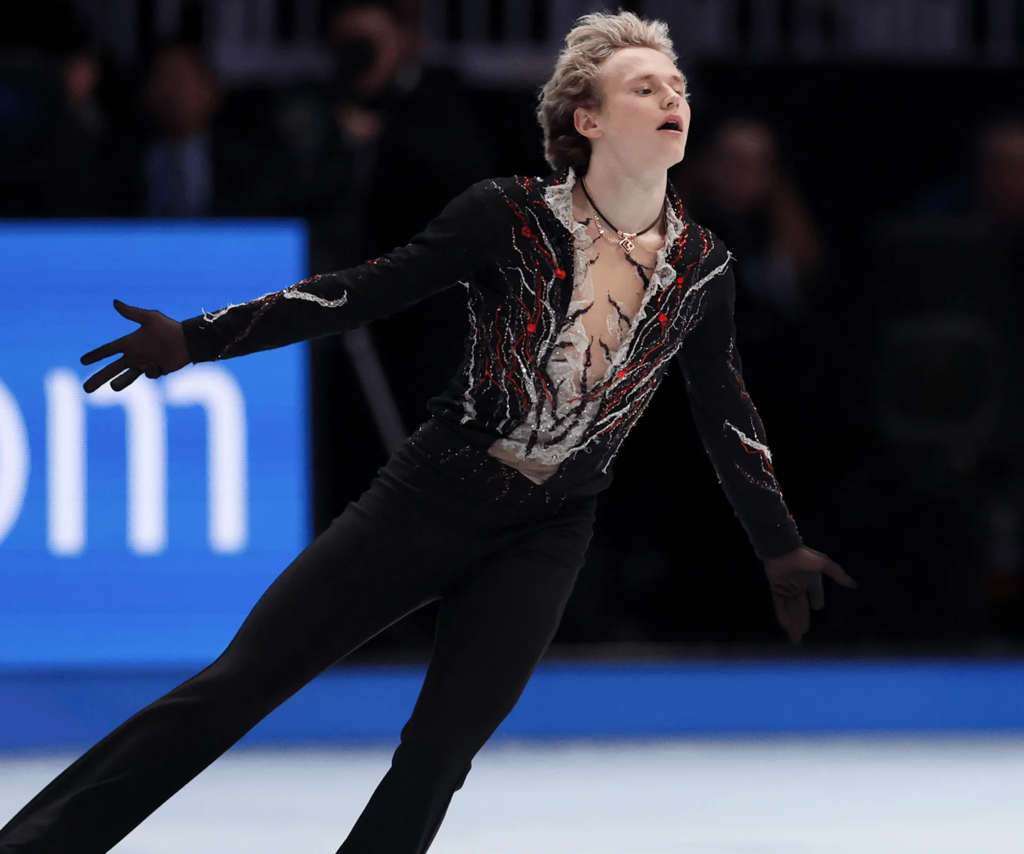
Every jump landed with authority. Every transition carried intent. There was no hesitation, no flicker of doubt. It wasn’t just a performance; it was control, distilled into motion. And then came the moment everyone had been waiting for—the quad axel.
A jump so rare, so unforgiving, that even attempting it reshapes a program.
He didn’t just attempt it.
He owned it.
The second his blades touched the ice, clean and undeniable, the arena erupted. People were already standing, already shouting, already losing themselves in the realization that they had just witnessed something historic. But Malinin wasn’t finished—not even close.
Because what came next turned spectacle into chaos.
As the energy surged, he turned toward Adam Siao Him Fa—a moment that felt spontaneous, almost playful—and then, in perfect synchronization, they did the unthinkable. A backflip. Not once seen as tradition in competitive skating, but here, it wasn’t about rules.
It was about release.
And the crowd exploded again—louder, wilder, completely unrestrained.
For a moment, it felt like nothing could surpass what had just happened. Not the jump. Not the backflip. Not the electricity filling every inch of the arena. It seemed like the night had already reached its peak.
But the most powerful moment hadn’t even begun.
The music faded.
The lights shifted.
And suddenly, everything slowed.
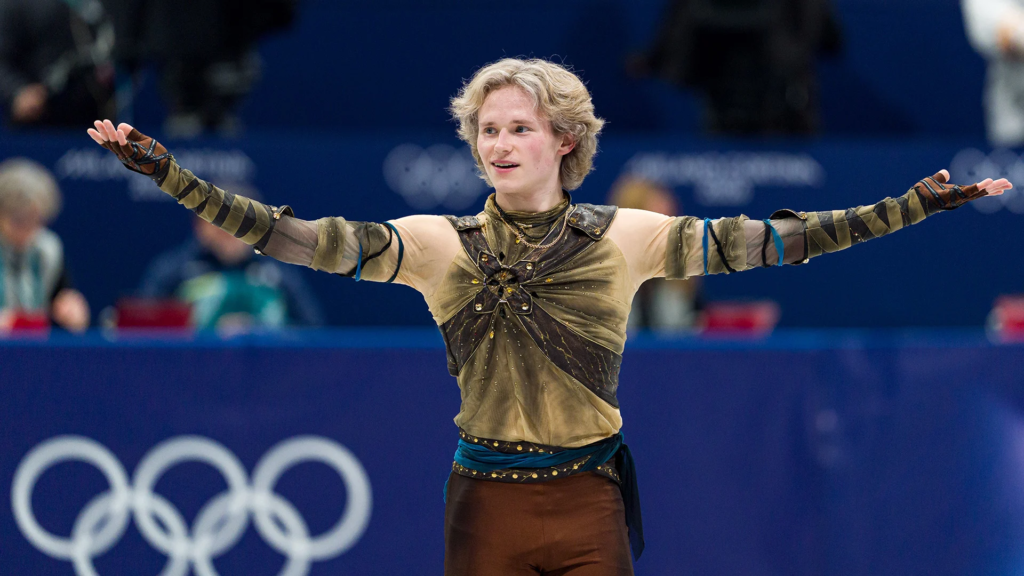
Malinin stood at center ice, chest rising and falling, the echoes of the crowd still crashing around him. Cameras flashed. Announcers spoke. Scores loomed somewhere in the distance. Yet in that brief, fragile pause, he did something so simple it almost went unnoticed.
He looked into the crowd.
And there she was.
His mother.
No grand gesture. No dramatic reaction. She didn’t rush forward or call out his name. She simply stood there, still, her eyes reflecting something far deeper than celebration. It wasn’t just pride. It wasn’t just relief.
It was recognition.
Of every early morning.
Every quiet sacrifice.
Every unseen moment that led to this one.
For a second, the arena disappeared. The noise dissolved into nothing. There were no judges, no medals, no history being written—just a son and the person who had carried him through the unseen chapters no one else could measure.
It felt like a conversation without words.
“I did it.”
“No… we did.”
And in that silent exchange, something shifted.
Because suddenly, the quad axel—impossible as it is—felt smaller. The backflip, electric as it was, felt secondary. Even the roar of thousands couldn’t compete with the stillness of that glance.
That look held years.
It held doubt, belief, failure, resilience—all compressed into a single, fleeting moment that no scoreboard could ever capture.
This is what makes sport transcend itself.
Not the records, though they matter.
Not the perfection, though it dazzles.
But the human thread running beneath it all—the relationships, the sacrifices, the quiet people standing just outside the spotlight, holding everything together while the world watches the final result.
Malinin didn’t just deliver a performance that night.
He revealed the story behind it.
And perhaps that’s why the moment spread so quickly, why it lingered, why people kept replaying not the jump, but the look. Because everyone, in some way, recognized it.
The idea that no victory is ever truly individual.
That behind every impossible achievement is someone who believed before the world did.
In Prague, amid chaos and brilliance, Ilia Malinin reminded everyone of something beautifully simple:
Sometimes, the most unforgettable part of greatness isn’t what you accomplish.
It’s who you share it with.