
There are nights on television that feel rehearsed… and then there are nights that feel like they slipped through untouched—raw, unfiltered, almost too human to belong on a stage built for spectacle. The “Songs of Faith” night on American Idol was one of those rare moments where the line between performance and personal truth blurred so completely, it left the audience unsure of what they had just witnessed.
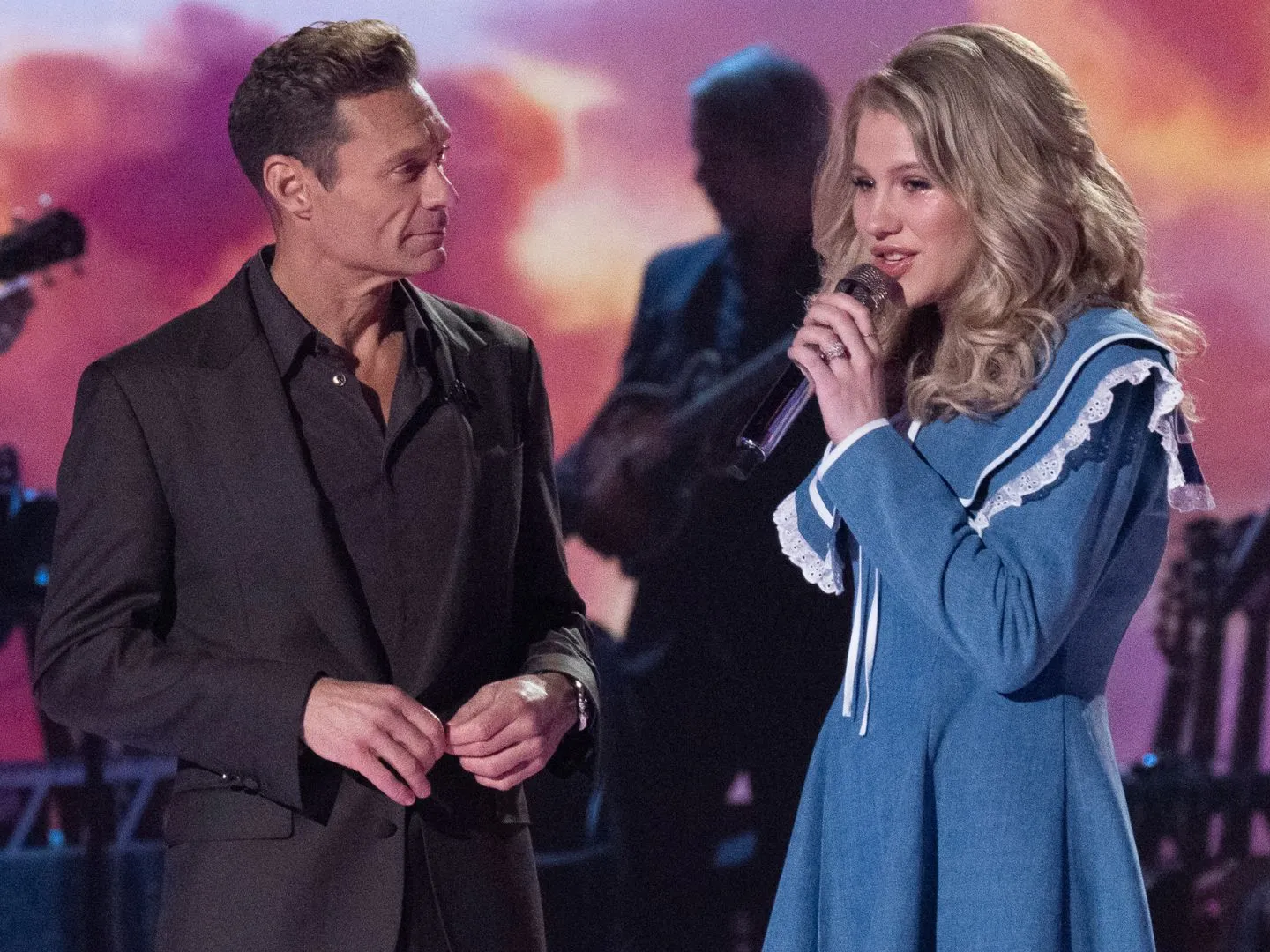
Because what unfolded wasn’t just music. It was vulnerability, laid bare under lights that are designed to magnify everything.
And at the center of it all stood Hannah Harper—not just singing, but unraveling.
When she began “At The Cross,” there was a quietness that settled over the room, the kind that doesn’t come from silence but from anticipation. Her voice didn’t rush. It carried weight. Each word felt like it had lived somewhere deep before it ever reached the microphone. And then, somewhere between the melody and the meaning, something shifted.
Her voice cracked.
Her eyes closed.
And then the tears came.
It wasn’t dramatic in the way television often teaches us to expect. There were no exaggerated gestures, no reaching for effect. If anything, it felt inconvenient—like emotion interrupting control rather than enhancing it. And maybe that’s exactly why it struck so deeply.
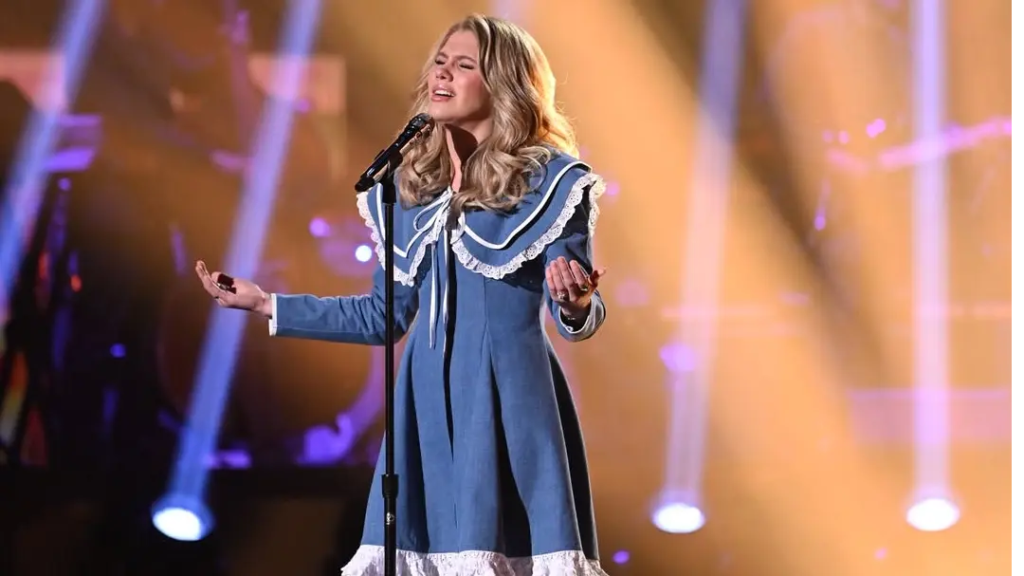
Because in that moment, it didn’t feel like a performance trying to be emotional.
It felt like emotion refusing to be contained.
But the reality of a stage like American Idol is that nothing exists in isolation. Every second is broadcast. Every reaction is replayed. And every moment—especially one as powerful as that—is inevitably questioned.
As applause echoed and judges searched for words, a different kind of noise began to build outside the theater.
Questions.
Not about her voice, but about the moment itself.
Was it real?
Or was it the kind of perfectly timed vulnerability that modern reality television has quietly mastered—where emotion becomes not just an expression, but a strategy?
It’s not an easy question to ask. And it’s even harder to answer.
Because shows like this have evolved. They are no longer just about who sings the best—they are about who connects the deepest. Storytelling has become currency. Emotion has become language. And contestants, whether consciously or not, understand that audiences don’t just vote for voices.
They vote for feeling.
Throughout that same night, performers like Lucas Leon leaned into that truth. Their performances weren’t just technically strong—they were emotionally immersive. Stories wrapped in melodies. Experiences translated into sound. And for many viewers, it was exactly what made the episode unforgettable.
But for others, it raised an uncomfortable possibility.
When emotion becomes expected… does it remain authentic?
Or does it slowly begin to shape itself around what the audience wants to see?
That’s where the divide began.
On one side were those who saw Hannah Harper’s tears as something sacred—an unfiltered response to a song rooted in faith, memory, and personal meaning. To them, it was a reminder of why music exists in the first place: not to impress, but to express.
On the other side were those who watched with a more critical lens. Not cynical, but cautious. They understood the stakes. Millions of votes. Careers on the line. A platform where even a single moment can shift momentum overnight. And in that context, they couldn’t help but wonder—whether moments like these are as spontaneous as they seem.
But here’s the truth that sits quietly beneath both perspectives.
Authenticity and awareness are not opposites.
A performer can feel deeply… and still understand the weight of being watched.
A tear can be real… and still change everything.
And maybe that’s what made that night so powerful—not because it gave us answers, but because it forced us to sit in the question.
Because when Hannah stood there, voice trembling, eyes filled with something words couldn’t hold, it didn’t just challenge the audience to decide what they believed.
It challenged them to feel something first.
And that’s where the real impact lives.
Not in whether the moment was perfectly timed.
Not in whether it influenced votes.
But in the fact that, for a few minutes, millions of people stopped analyzing… and simply listened.
And maybe, just maybe, that’s the kind of moment no strategy in the world can truly manufacture.
Or is it?