

The barn stood at the edge of dusk, its wood bleached by years of sun and wind, its edges softened by shadow. Inside, the air was still, thick with the scent of old hay and the faint metallic tang of rusted tools. Dust hung in slanting beams of light like tiny stars suspended mid‑fall, and the silence did not feel empty so much as waiting—holding its breath for a single note to break it.
He stepped across the threshold slow, almost apologetic, as if entering a room where someone had only just stopped crying. His boots left soft prints on the floor, and the boards groaned beneath him in a way that felt like an old friend waking from a long sleep. The guitar case bumped gently against his hip, a quiet, familiar weight, and for a moment he just stood there, taking in the shape of the emptiness, the way the corners swallowed light.
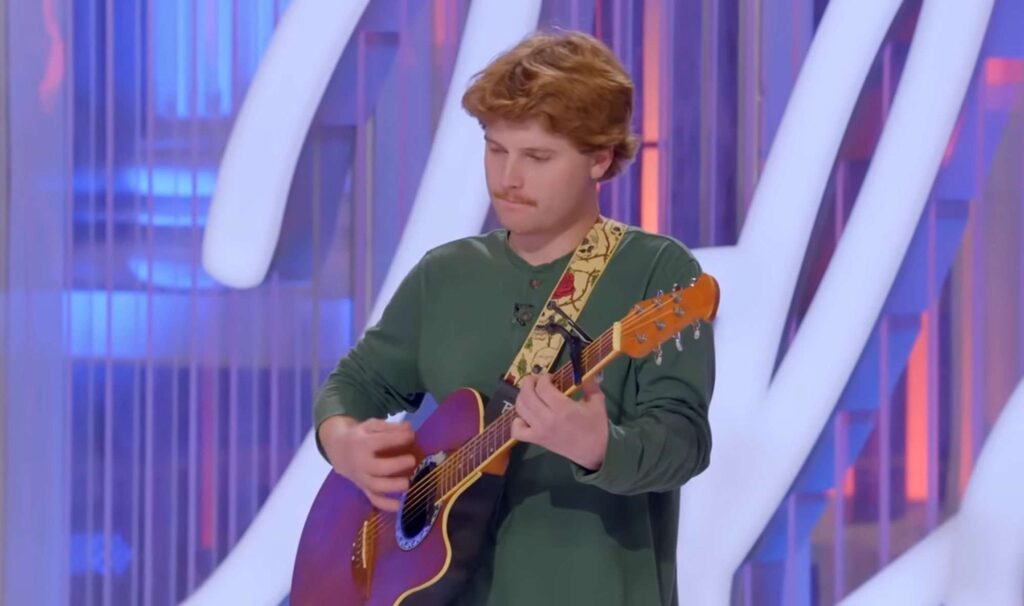
He unzipped the case with deliberate care, fingers moving like they knew the ritual better than he did. The wood of the guitar was warm to the touch, the neck familiar in his palm, the strings humming with a stillness that felt like coiled memory. He sat on an overturned crate, its surface rough against his fingers, and when he lifted the instrument into his lap, it settled against him as though it had always belonged there, like a missing limb finally found.
He strummed once, softly, and the sound bloomed into the silence not as interruption but as acknowledgment. The note floated, trembling, then faded into the hollow of the barn, echoed by the faintest ghost of a second note from the rafters. His breath caught, not in surprise, but in recognition—this was the first time the room had answered him in a language he understood.
He began to sing, and his voice, high and clear, slipped through the air like a thread of light. It did not try to fill the space; it wove through it, catching in the corners, tracing the edges of where laughter and shouting and hurried footsteps had once lived. The words were small, almost shy, but they carried the weight of a long‑held ache, the kind that settles in the small of the back and the space between the ribs.

The guitar trembled with each chord, its body rising and falling against his chest like a heartbeat matched to his own. His fingers moved with a quiet precision, pressing the strings until they released their stories, one by one. The sound gathered around him, pooling in the corners, climbing the walls, until the whole barn seemed to lean in, its beams holding up the weight of something too delicate to name.
Outside, the sky deepened into a bruised violet, and the first stars appeared like pinpricks in a dark cloth. Inside, the light softened, the dusty beams narrowing into a halo around him and his instrument. The air grew cooler, and with it came a stillness so complete that even his breath seemed to hush, as if the world had paused to listen to the way his voice cracked on a single syllable.
He closed his eyes for a moment, and in that darkness, the song became something else—not performance, not proof, not even solace. It was simply the truth of where he had been, the shape of the years he carried in his shoulders, the way his hands had learned to tremble not from fear but from the need to create. The guitar wept then, not in sorrow but in understanding, a sound that did not ask for anything, only to be heard.
When the last note slipped away, the silence that returned was different. It did not press down; it settled gently, like dust finally coming to rest. The barn did not feel empty anymore, but full in a way that had nothing to do with objects or people. It was full of the echoes of what had been sung, of what had been carried here from rooms far away—a hospital corridor, a car at night, a small bedroom where a boy first learned to sing to himself so he would not feel alone.

He lifted his head slowly, the weight of the guitar easing from his chest as he set it beside him. His fingers lingered for a moment on the strings, pressing them lightly, feeling the faint vibration that refused to disappear. Outside, the world resumed—wind stirred the trees, a distant dog barked, and overhead a plane drew a thin white line across the sky. But in that barn, in that moment, time had folded itself around a single, fragile truth: that sometimes all it takes is one voice, one instrument, one dusty room, and the courage to let them speak without explanation.
And when, years later, he tried to remember the exact words, the precise notes, the chronology of how it began, he could not. All that remained was the feeling: the air thick with dust, the quiet hum of the guitar, the way his voice had trembled and steadied, and the way the barn, for just a little while, had held his grief like a hand held around a sparrow’s heart.
Sources