
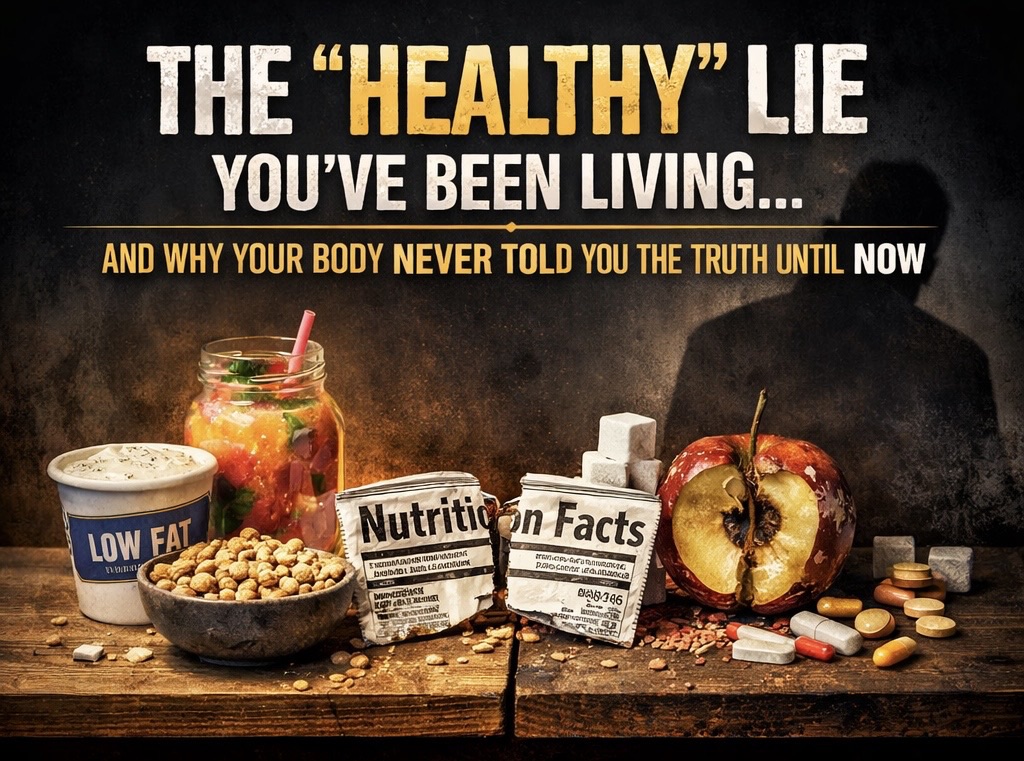
Every morning, millions begin their day with a quiet promise—to be healthier than yesterday. A bowl of oatmeal, a cup of low-fat yogurt, a fruit smoothie glowing with color. It feels right. It feels responsible. But beneath that comforting routine lies a truth few dare to question.
Somewhere along the way, “healthy” stopped meaning nourishing and started meaning convenient. Decades ago, when fat became the villain, food industries rewrote the rules. They stripped natural fats and replaced them with sugars, additives, and artificial balance—creating a version of health that looked right but behaved differently inside the body.
What followed wasn’t immediate chaos, but a slow, almost invisible shift. Energy spikes became crashes. Hunger returned faster. Bodies held onto weight despite “clean eating.” And yet, people blamed themselves—never the food quietly working against them.
Today, the confusion has only deepened. Scroll through any feed, and you’ll find endless advice—green powders, fasting hacks, high-protein obsessions, detox rituals. Each promises clarity, yet together they create noise so loud that intuition gets drowned out.

Take the smoothie, for example. Once a symbol of vitality, it can easily become a sugar surge in disguise. Blended fruits lose their natural pacing, flooding the bloodstream faster than the body can manage. What feels like a healthy choice becomes a metabolic rollercoaster.
Or consider low-fat products—marketed as guilt-free, yet often engineered to compensate for lost flavor. Hidden sugars slip in unnoticed, quietly influencing insulin responses, nudging the body toward imbalance over time.
Even salads, the poster child of clean eating, carry their own paradox. Drenched in processed dressings or paired with the wrong combinations, they can hinder nutrient absorption rather than enhance it. Health, it turns out, is not just about what you eat—but how.
Behind all of this lies a deeper issue: disconnection. We’ve moved away from understanding food as a living interaction with our bodies and replaced it with labels, trends, and quick fixes. The result is a generation trying harder than ever—yet often feeling worse.
But something is beginning to shift. Science is catching up to what intuition once knew. Conversations around gut health, personalized nutrition, and metabolic awareness are slowly redefining what it means to eat well—not based on trends, but on individual response.
And perhaps that’s where the real story begins—not in fear of doing it wrong, but in rediscovering what “right” feels like. Because the most unsettling truth isn’t that we’ve been eating healthy foods incorrectly… it’s that we’ve forgotten how to truly listen to our own bodies.