

The room was still long before the first note. Not the kind of stillness that comes from exhaustion, but the one that gathers around a secret about to be spoken. The air hung low, carrying the faint scent of stale coffee and nervous perfume, the hum of distant traffic pressing against the thick studio glass like a subdued heartbeat. Somewhere in the back, a chair creaked, and someone breathed too loudly, as if the sound might tear the moment before it began. Braden sat just off‑center, his fingers tracing the edge of the microphone stand, his knuckles white and then softening, like waves pulling back from the shore.
He didn’t look at the crowd. He didn’t have to. Their leaning bodies, the way phones floated in the dark like tiny stars, the occasional swallowed gasp before it had fully formed—all of that was already inside him. The silence was not empty; it was waiting, held between the space of an exhale and an inhale. For a second too long, he simply stood there, eyes lowered, lashes like dark strokes against his skin. The only light fell unevenly across his collarbone, catching the fine tremor of his throat as he swallowed.
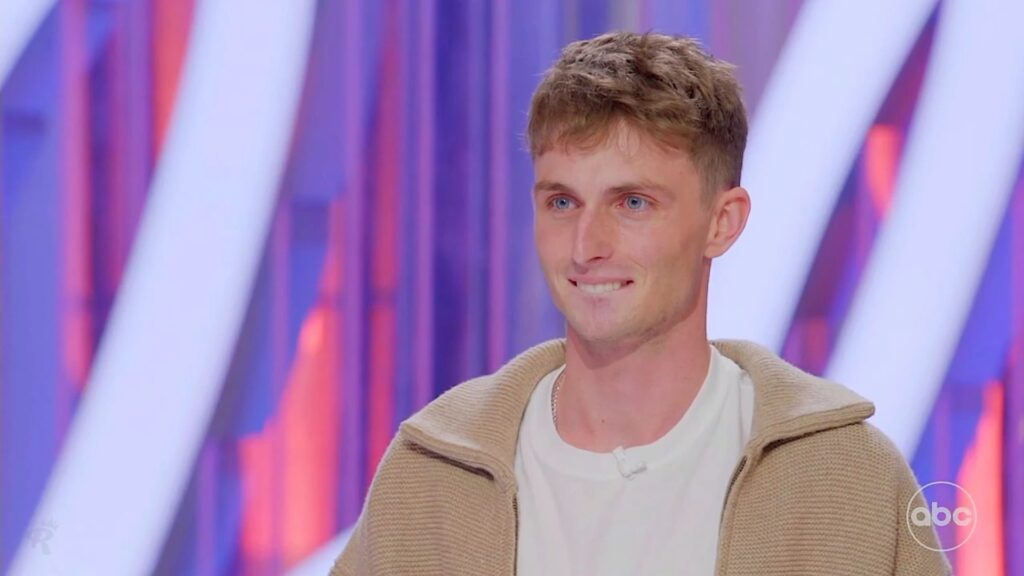
Then, the first whisper of sound. It barely qualified as a note, more like a breath finding a shape. The room tightened, as if someone had gently pulled a string taut along the ceiling. His voice was soft, almost private, like a confession spoken into a pillow. The melody curled around the edges of the room, reaching the corners before the crowd could catch up with what he was doing. The judges’ pens hovered mid‑air, forgotten. A fan’s hand, halfway up in applause, paused mid‑arc, suspended by the atmosphere he had created.
Slowly, the volume climbed, but not in any way that felt planned. It was as if the sound were rising from the floor, climbing up his spine, pooling in his chest. The softest notes brushed against the heavier ones, like a wave pressing close to the shore before remembering how to crash. His voice cracked once, not in a way that shattered anything, but in a way that made the room close around him. Someone sniffled; someone else wiped their eyes with the back of their hand, both gestures done in slow motion, as if the air itself were thickening.
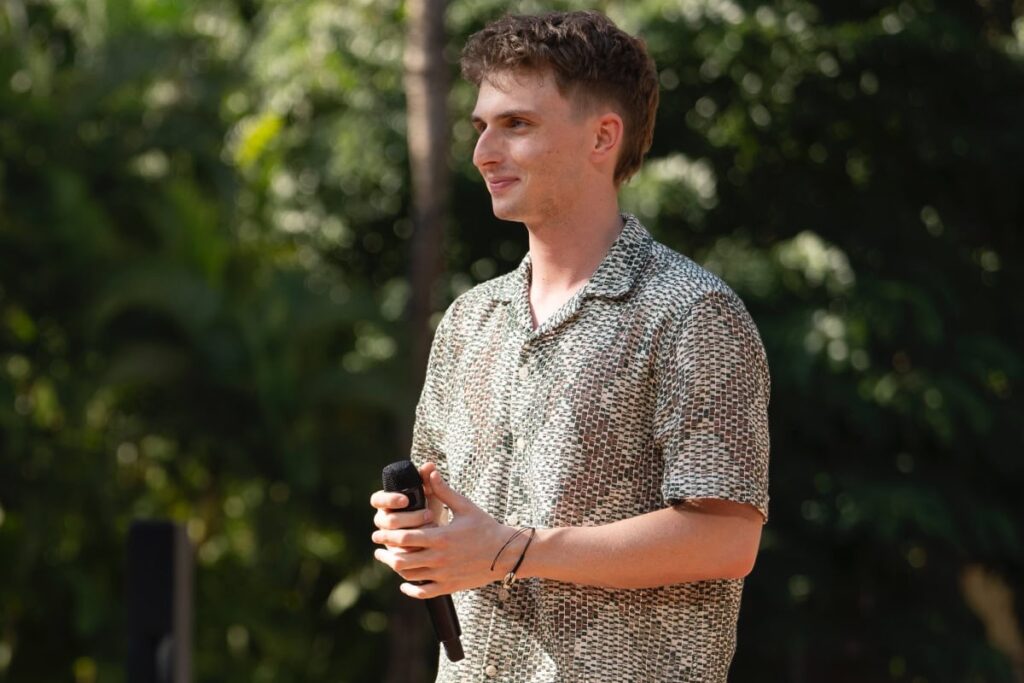
His eyes lifted, finally, scanning the judges without quite meeting them. His gaze was not searching for approval; it was searching for recognition, for someone who might have once felt the same emptiness in their own chest. The light shifted, catching the faint sheen of tears at the edges of his lashes, turning them into tiny halos. A single spotlight leaned in, nudging his silhouette away from the shadows, as if the room itself had decided to stand with him.
The chorus arrived like a tide that no one had asked for but everyone had secretly prayed to hear. His voice opened, not with a shout, but with a release so deep it seemed to echo from somewhere beneath the floor. The notes rolled out, bright and heavy all at once, filling the room in a way that made people lean forward without realizing they had moved. The air pulsed; the back of someone’s neck prickled; a hand reached blindly for another, fingers interlacing without ceremony. The sound did not conquer the silence so much as invite it in, letting the quiet become part of the music.
In the front row, his parents sat stiffly, their hands folded in their laps like careful arrangements of worry and pride. His mother’s lips moved with the words, mouthing them to herself, as if by repeating them she could somehow keep him anchored. His father stared at the floor, jaw clenched, then lifted his head just enough to see his son illuminated by the light, as if he were seeing him clearly for the first time. A tear escaped, not in a dramatic rush, but slowly, like water finding its way through cracked stone. The camera caught it, but the room didn’t notice; they were too busy remembering how their own breath sounded in that moment.
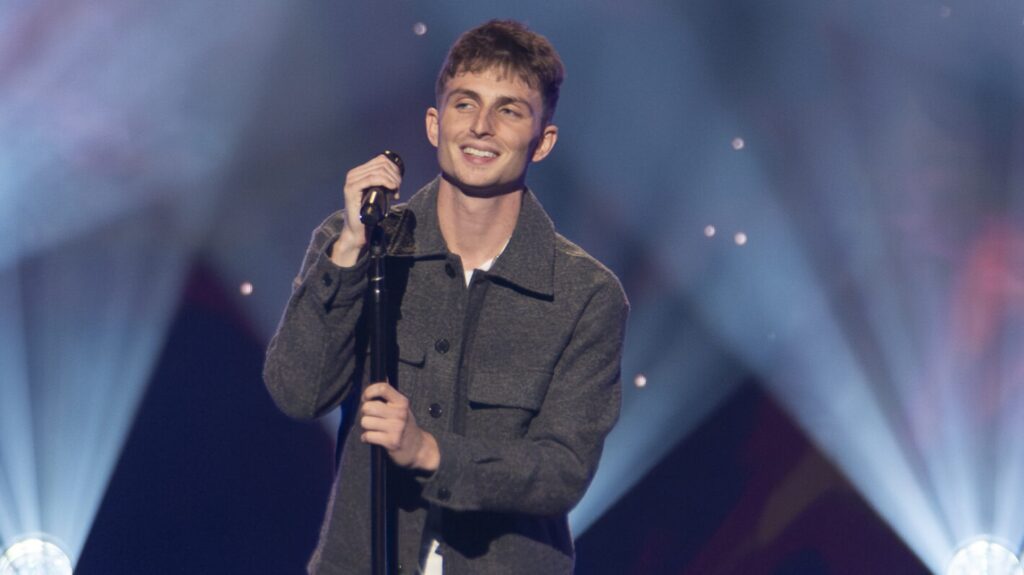
The final note was not particularly loud. It was low, almost like a sigh. It settled into the room like dust after a storm, settling into every corner, every fold of fabric, every startled heart. The music ended, but the sound lingered, tucked under the silence like a secret that had been waiting to be shared. For a heartbeat, nobody moved. Nobody clapped. The room seemed to hold its breath, as if any sound might break the spell. Then, from somewhere in the back, a single hand came together, soft and slow, and the rest of the room followed, not in a rush, but in layers, like waves arriving one after another.
Later, the applause would be remembered in snippets: the blur of faces, the flash of camera lights, the way the noise seemed to press against his skin like a warm current. But what stayed was the quiet between the notes, the way the room had learned to listen, really listen, for once. The way his voice, so soft at first, had carved a space inside everyone who heard it, leaving behind a shape that would outlast the moment. The way the silence, once so heavy with expectation, had learned to carry something gentler: the echo of a voice that dared to be honest.
Long after the stage lights dimmed and the cameras packed up, the night would remain in him like a photograph developed in the dark. Not as a victory, nor as a turning point, but as a quiet acknowledgment that some moments are not meant to be explained, only felt. Braden would walk away, his shoulders still carrying the weight of every whisper and every roar, but something in his chest would feel lighter, as if the room had taken a part of his silence and turned it into sound. And somewhere, in the memory of that night, the world would remember the way one voice, fragile and fierce all at once, had taught the darkness how to listen.
Sources