
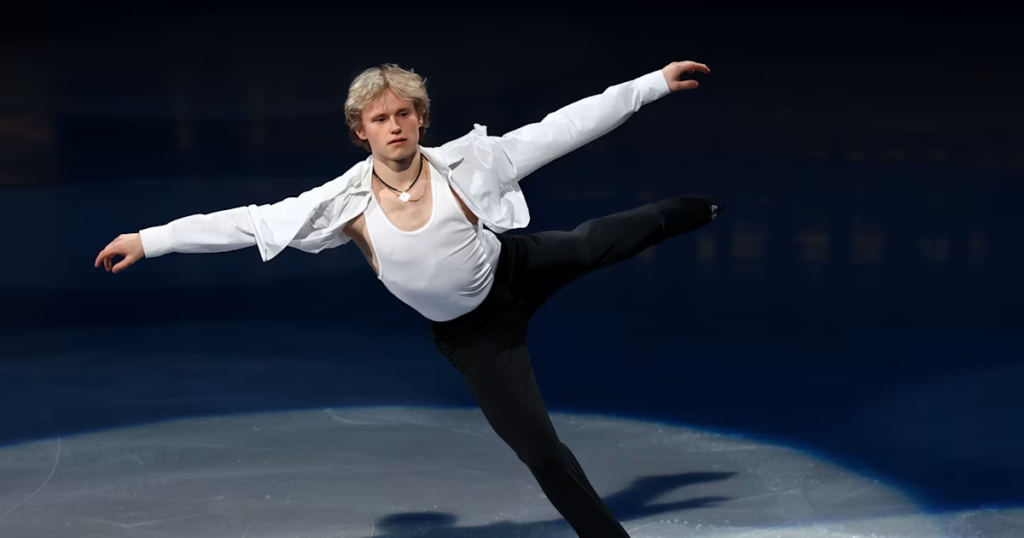
The arena in Zürich felt different before anything even began. The lights hung low over the ice, soft and pale, as if the whole place were holding its breath. People spoke in quieter voices than usual, coats still on their shoulders, programs folded in their hands. Nothing had happened yet, and still there was a strange sense that something was about to step outside the ordinary.
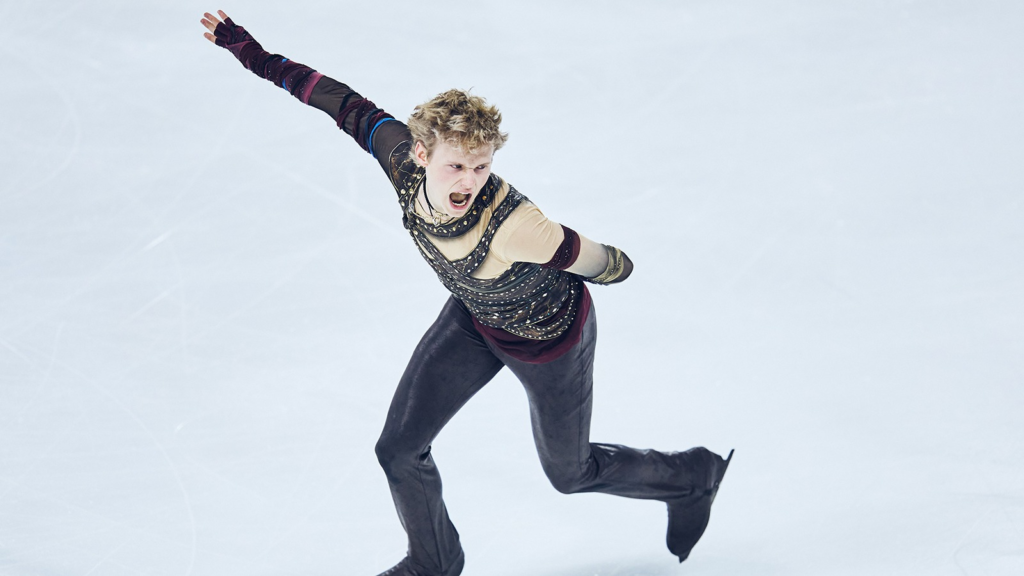
When Ilia Malinin skated into the light, the sound in the arena changed without anyone noticing it happen. Not louder, not softer — just tighter, as if every voice had pulled itself inward. He didn’t rush. His blades traced slow, deliberate lines across the ice, each curve leaving a thin whisper behind him. Even from the far seats, you could see the stillness in his shoulders.
The music began almost gently, barely louder than the sound of the blades. He moved through the opening steps with a calm that didn’t ask for attention. No dramatic gestures, no sudden force. Just control. The kind of control that makes people lean forward without realizing they’ve done it.
Then came the moment when the rhythm changed. It wasn’t announced. It didn’t need to be. His speed grew in a way that felt effortless, like the ice itself was pulling him forward. The circle tightened, the edge grew deeper, and something in the arena shifted. A few people stopped breathing. Someone near the boards covered their mouth before the jump even started.
He left the ice so cleanly it almost didn’t look like a jump at all. For a fraction of a second, he seemed suspended in a place where gravity had forgotten its job. The rotation was too fast for the eye to follow, just a blur of black and silver under the lights. When the blade touched down again, the sound was sharp and perfect, a single clean scratch that echoed through the whole arena.
The reaction didn’t come right away. It never does, not when something feels impossible. There was a pause — a real one — where nobody moved, nobody clapped, nobody spoke. You could see faces frozen mid-expression, eyes wide, hands half-raised, as if the crowd needed a second to understand what it had just seen.
He kept skating.
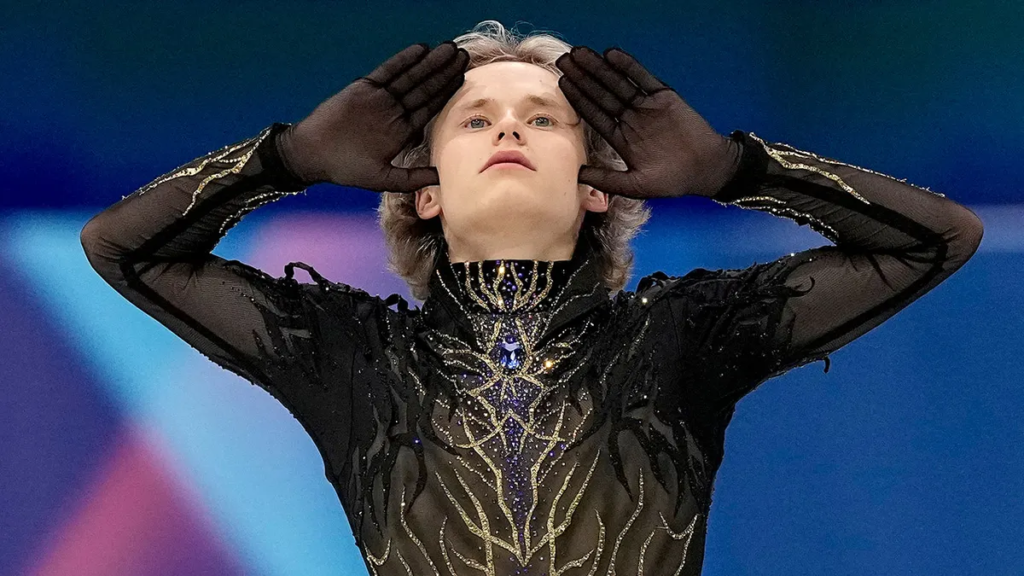
That was the part people talk about later, but in the moment it felt almost quiet. No celebration, no glance to the audience. Just a small turn of the shoulders, a half loop drawn into the ice like a line in a sketch. His body stayed loose, almost casual, as if the hardest thing in the sport had been nothing more than another step in the program.
And then, without warning, he went upside down.
For an instant the arena lost all sound. The backflip cut through the air so quickly it felt unreal, like something remembered wrong. When his blades touched the ice again, the silence broke all at once. People stood before they knew they were standing. Hands flew to faces. Somewhere near the judges’ side, someone laughed in disbelief, the kind of laugh that only comes when there are no words left.
The rest of the program passed in a blur no one would later be able to describe properly. The music ended, the final pose held, but the audience was still somewhere inside that one impossible sequence, replaying it over and over in their minds, trying to place it in the world they thought they understood.
Long after the lights came up, people stayed in their seats a little longer than usual. Conversations were quieter. Strangers looked at each other and smiled the way people do after sharing something they know they won’t see again.
And even now, when the moment is remembered, it isn’t the jump or the flip that comes back first — it’s that brief, fragile silence in Zürich, when an entire arena realized at the same time that the limits of the ice had just moved.