
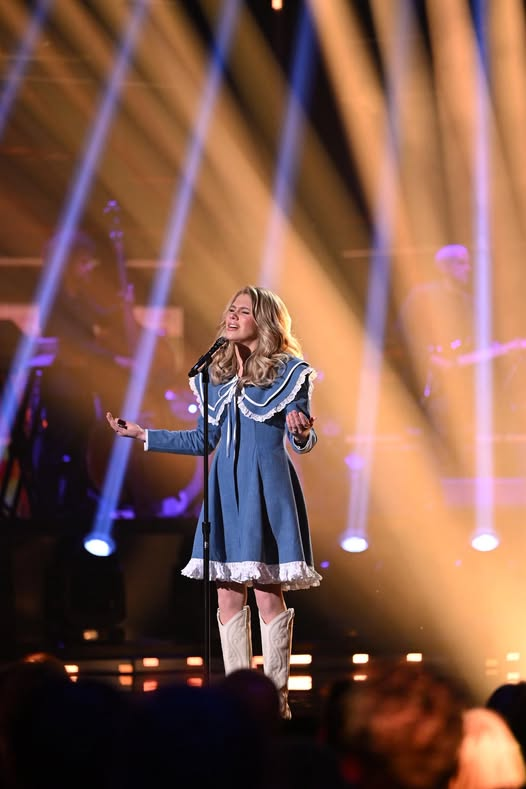
There is a kind of momentum that doesn’t announce itself. It doesn’t trend loudly, doesn’t flood timelines, doesn’t rely on spectacle. And yet, it moves—quietly, steadily, almost invisibly—until suddenly, it becomes undeniable. That is the kind of momentum Hannah Harper is building on American Idol.
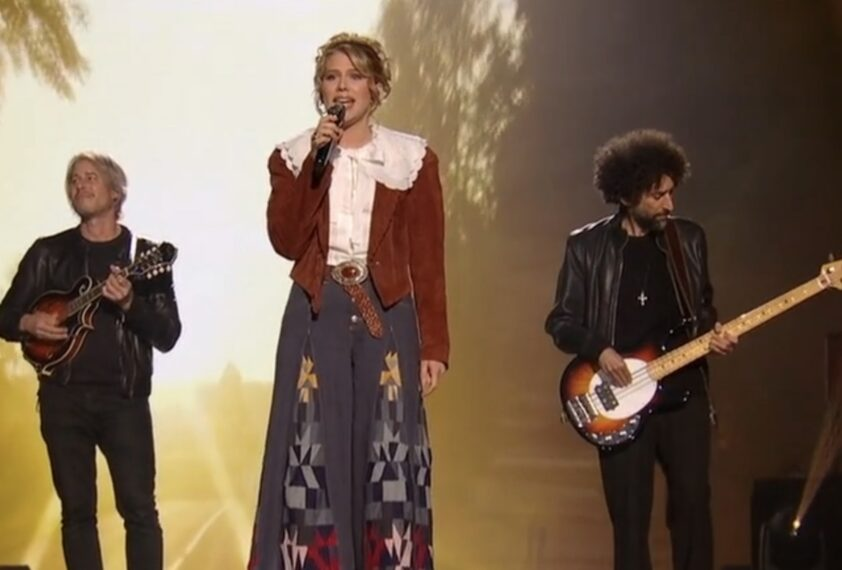
While others chase viral moments, Harper seems to exist in a different rhythm entirely. Her journey isn’t shaped by explosive headlines but by something far more durable: consistency. Week after week, she doesn’t just perform—she stabilizes. And in a competition driven by public votes, stability is often more powerful than spectacle.
What makes her rise so unusual is how little noise surrounds it. There are no dramatic controversies, no polarizing moments engineered for attention. Instead, there is a quiet trust forming between her and the audience. It’s not built overnight. It accumulates, almost like a habit—viewers returning, remembering, voting.
Her recent performance of “Heads Carolina, Tails California” didn’t just showcase technical growth; it revealed something subtler. She didn’t try to overpower the song. She settled into it, allowing familiarity to become her strength. That choice—intentional or instinctive—signals an understanding many contestants take seasons to develop: connection often beats complexity.
In a competition where louder often feels safer, Harper is choosing restraint. And restraint, when done right, becomes magnetic. It invites the audience in rather than pushing them back. It creates space—for emotion, for memory, for personal interpretation. And in that space, votes are quietly cast.
There’s also an emotional continuity in her performances. Each week feels less like a reset and more like a continuation of a story. Viewers aren’t just watching isolated performances; they are following a journey. That narrative cohesion makes it easier for audiences to stay invested—and more importantly, to keep voting.
Interestingly, her background plays into this dynamic without being overexploited. The image of a grounded, family-rooted artist doesn’t feel manufactured. It feels lived-in. And audiences, especially in a show like this, have a sharp instinct for authenticity. When they sense it, they protect it. Often through votes.
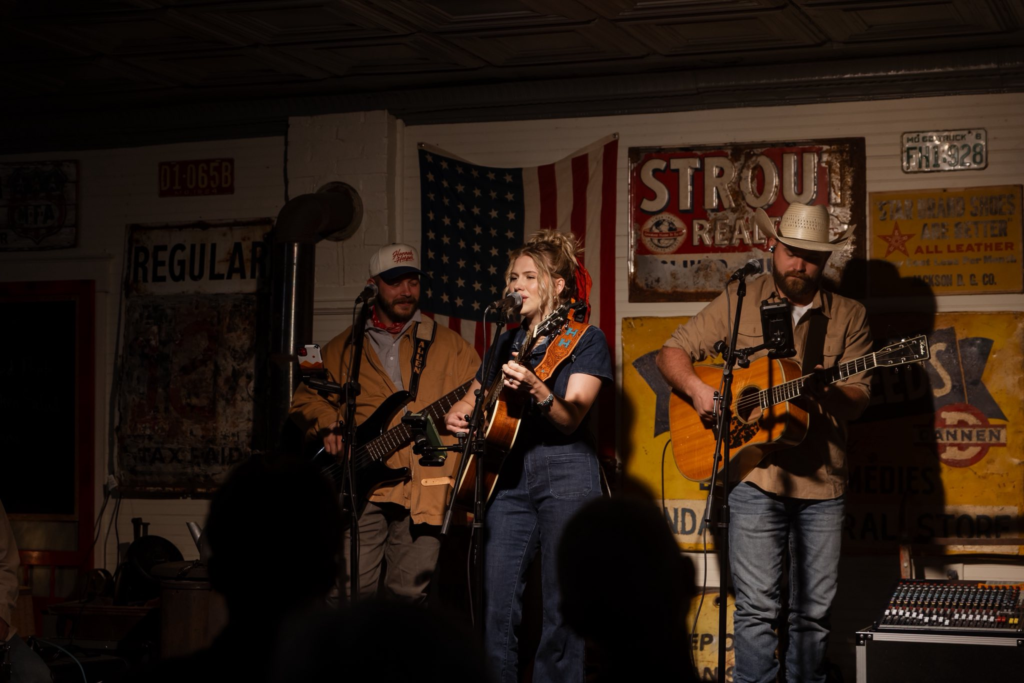
Another layer to her quiet surge lies in predictability—not in a negative sense, but in reliability. Fans know what they’re getting: sincerity, control, and a performance that respects the song. In a sea of unpredictability, that reliability becomes comforting. And comfort, in voting behavior, is a powerful driver.
What’s fascinating is how this positions her against more visibly dominant contestants. While others may peak with standout moments, Harper is building something cumulative. She may not always “win the night,” but she rarely loses it either. And over time, that consistency can outweigh even the most viral highs.
There’s also a psychological element at play. Audiences often rally around contestants who feel overlooked. When someone isn’t constantly in the spotlight but continues to deliver, viewers begin to feel a sense of responsibility. Voting becomes less about preference and more about preservation—keeping someone deserving in the competition.
And perhaps that’s the most compelling part of her journey. It doesn’t feel like a campaign. It feels like an unfolding. No aggressive push, no forced narrative—just a steady presence that grows stronger with each passing week. Almost as if she’s letting the audience discover her at their own pace.
Because in the end, not every winner is the loudest. Some are simply the most trusted. And if this quiet surge continues—if the votes keep building in silence—there may come a moment when the realization hits all at once:
She was never behind. She was just moving differently.