
The common misconception in fitness is that a workout only “counts” if it leaves you gasping for air and nursing sore joints. However, for long-term health, the most effective exercise is often the kind that works with your body’s mechanics rather than against them. Low-impact exercise refers to movements where at least one foot stays on the ground at all times, significantly reducing the vertical force—often up to three times your body weight—that high-impact activities like running place on your knees, hips, and ankles. By choosing these smoother transitions, you protect the precious cartilage that acts as a natural shock absorber in your skeletal system.
Maintaining joint health is fundamentally about movement; joints are non-vascular, meaning they don’t have a direct blood supply to bring in nutrients. Instead, they rely on a process called “imbibition,” where movement creates a pump-like effect that circulates synovial fluid. This fluid is the “oil” for your hinges, delivering essential nutrients and removing waste products from the joint capsule. When we remain sedentary due to pain or fatigue, this fluid thickens and becomes less effective, leading to the stiffness and “rusty” feeling many experience in the morning.
Beyond physical structure, low-impact exercise is a potent catalyst for daily energy. When you engage in steady, rhythmic movement—such as power walking or swimming—your body increases its production of mitochondria, the power plants of your cells. Unlike high-intensity interval training (HIIT), which can sometimes leave you feeling “fried” or over-taxed, low-impact steady-state (LISS) exercise provides a manageable cardiovascular challenge. This improves your heart’s stroke volume, allowing it to pump more blood with less effort, which translates to a higher baseline of energy throughout your workday.
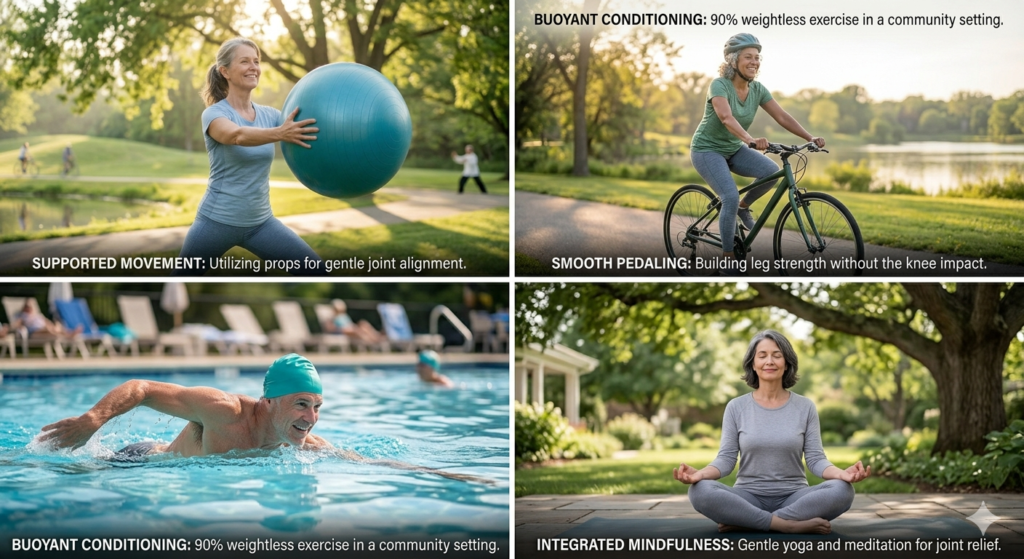
Swimming and water aerobics are perhaps the gold standard of low-impact movement due to the physics of buoyancy. When you are submerged to chest height, your body effectively weighs only 10% of its land weight. This near-weightless environment allows for a full range of motion that might be impossible on land, particularly for those recovering from injuries or dealing with chronic inflammation. The water also provides natural resistance in every direction, which strengthens stabilizer muscles around the joints without the jarring impact of gravity-heavy sports.
Cycling offers another excellent avenue for building lower-body strength while sparing the knees. Because the feet are clipped in or placed firmly on pedals, the motion is closed-circuit and circular, eliminating the “strike” phase found in running. This consistent tension builds the quadriceps and hamstrings, which are the primary defenders of the knee joint. Stronger leg muscles act like a support sleeve, absorbing the forces of daily life—like climbing stairs or getting out of a chair—so your bones and ligaments don’t have to bear the full load.
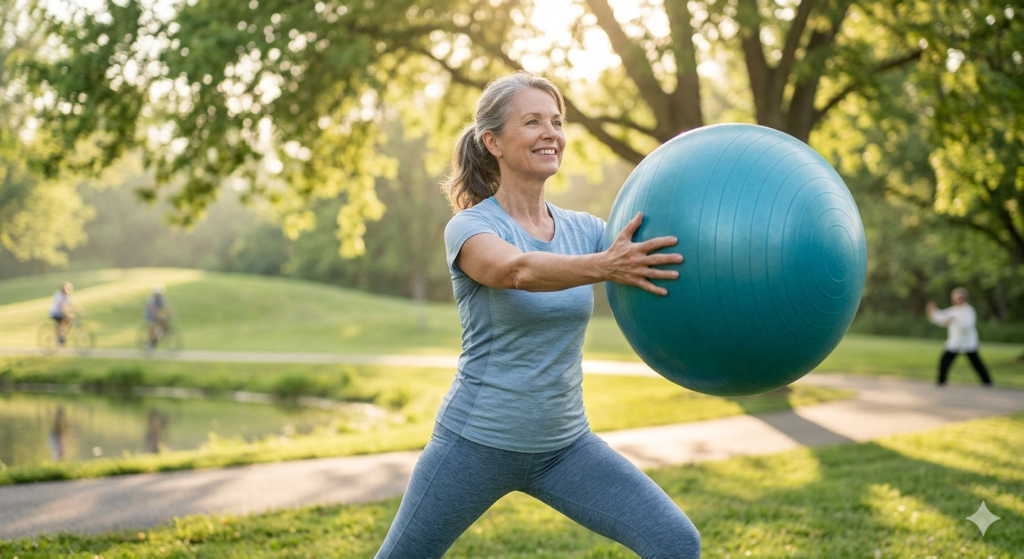
For those focused on core stability and posture, Pilates and Yoga are transformative low-impact practices. These disciplines emphasize controlled, deliberate movements and “isometrics,” where you hold a position to build strength. By focusing on the “powerhouse” (the deep muscles of the abdomen and lower back), you create a stable foundation for your limbs. Better posture reduces the mechanical stress on your spine and hips, preventing the micro-alignments that lead to chronic lower back pain and midday fatigue caused by “slumping” at a desk.
Walking remains the most accessible low-impact exercise, yet it is often undervalued. A brisk walk triggers the release of endorphins—the body’s natural feel-good chemicals—which combat the mental fatigue that often mimics physical exhaustion. To maximize the joint benefits, focus on a “heel-to-toe” roll and ensure you are wearing footwear with adequate arch support. Walking on softer surfaces like grass or a dedicated track can further reduce impact compared to concrete sidewalks, making it a sustainable daily habit for almost anyone.
The role of hydration in joint health cannot be overstated, especially when paired with a new exercise routine. Synovial fluid is largely composed of water; if you are dehydrated, your “joint oil” becomes more like “joint glue.” This increased friction can cause inflammation, which the body perceives as pain, leading to a cycle of inactivity. By drinking water consistently throughout the day, you ensure that your low-impact movements are as smooth as possible, allowing for better nutrient exchange and quicker recovery times between sessions.
Consistency is the hidden engine of energy. High-impact athletes often have to build in “deload” weeks or rest days to allow for tissue repair, but low-impact activities can often be performed daily. This creates a consistent metabolic rhythm. Instead of the “boom and bust” cycle of intense workouts followed by days of soreness, low-impact movement keeps your lymphatic system—the body’s waste disposal unit—functioning at peak levels every single day. This constant “flushing” of the system helps prevent the sluggishness associated with a sedentary lifestyle.
Ultimately, the goal of prioritizing low-impact exercise is to build a body that feels good to live in. It is about playing the “long game” of fitness, ensuring that your 60-year-old self will thank your current self for not wearing out your joints prematurely. By integrating these movements into your routine, you aren’t just “working out”; you are investing in a more mobile, more vibrant version of yourself. True energy doesn’t come from a caffeine jolt or a grueling sprint; it comes from a body that is well-oiled, well-aligned, and ready to move with ease.