

The video didn’t begin with silence. It began with the sound of a home still moving. A cupboard closing somewhere off camera, a child calling from another room, the faint hum of something cooking on the stove. Hannah Harper stood in the middle of it all, not under stage lights, not behind a microphone stand, just in the soft, uneven light of an ordinary day. For a moment she looked down, as if making sure she had the courage to start, and then the first note slipped out like something she hadn’t planned to share.

Her voice didn’t try to rise above the noise. It moved through it. You could hear footsteps in the background, the quiet shuffle of life continuing, but the song didn’t fight for attention. It let the world stay exactly as it was, and somehow that made every word feel closer. The melody felt less like a performance and more like something remembered, like a story told while the dishes were still drying on the rack.
She wasn’t dressed for a camera. No stage makeup, no spotlight, just a tired shirt, hair pulled back, the look of someone who had already lived a full day before pressing record. When she sang, her eyes didn’t search for approval. They stayed low, thoughtful, as if the lyrics were meant for the room itself, for the walls that had heard every hard conversation, every late-night worry, every quiet promise she had made to keep going.
The children’s voices drifted in and out, soft and unbothered, the way they do when they know home is safe. She paused once, just for a breath, listening for a second as if deciding whether to keep singing or go back to whatever she had been doing before. That small hesitation felt more honest than any perfect take could have been. When the song continued, it sounded steadier, like she had chosen to stay in the moment instead of running from it.
There was something in the way she held the last word of each line, not stretching it for effect, just letting it settle where it belonged. The notes didn’t rush. They moved the way memories do, slowly, carefully, as if afraid that going too fast might make them disappear. Even the silence between phrases felt full, like the room itself was listening.
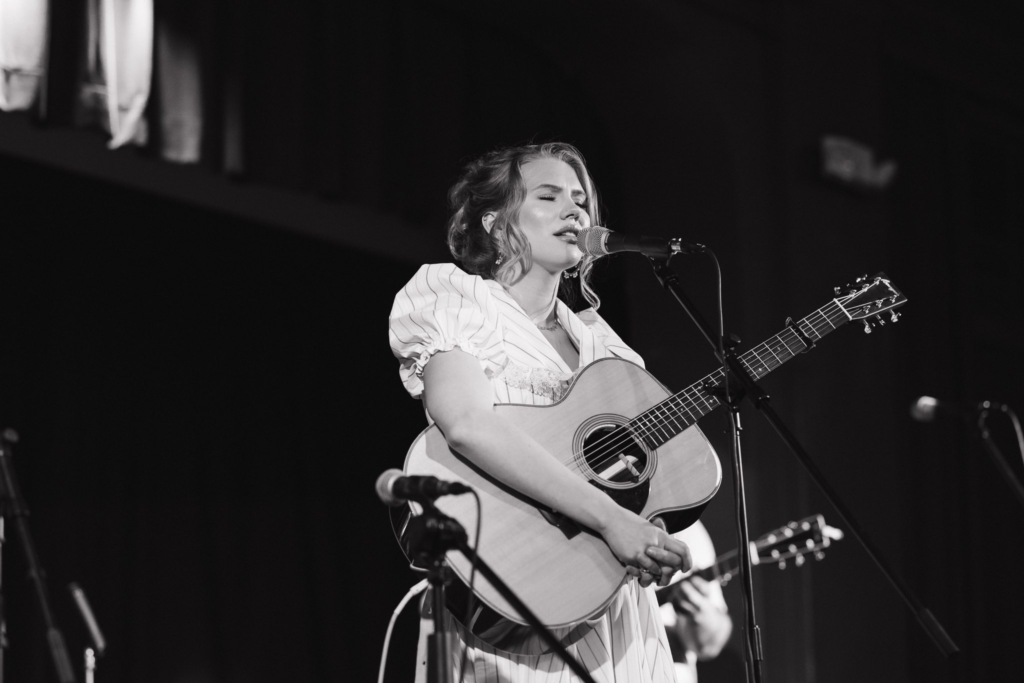
The light shifted while she sang. It came through the window at an angle that made the dust in the air visible, tiny pieces floating in and out of the frame. Nothing about the scene was arranged, but it felt complete, the way a moment does when no one realizes it’s important yet. Her voice softened near the middle of the song, almost to a whisper, and for a second the only thing you could hear was her breathing between the lines.
Somewhere in that quiet, the comparison people would make later suddenly made sense. Not because she sounded like anyone else, but because the song carried the same feeling old stories do — the kind that don’t try to impress you, only to tell the truth. It had the calm strength of something that has been lived, not imagined, the kind of storytelling that feels like it belongs to kitchens, front porches, and long drives at dusk.
She never stopped to restart. No second take, no correction, no glance at the camera to see if it was working. The song moved forward the way life does, with small interruptions, with sounds that weren’t planned, with moments that couldn’t be rehearsed. And because of that, every line felt like it was happening for the first and only time.
When she reached the end, she didn’t hold the last note for applause. She let it fade naturally, her voice lowering until it disappeared into the same quiet it came from. For a second she stood there without moving, listening to the house again, to the ordinary sounds that had never stopped. Then she exhaled, almost like she had forgotten the camera was there at all.
Long after the video ended, what stayed wasn’t the melody alone, but the feeling of having been let into something small and real. A song sung in the middle of chores, in the middle of noise, in the middle of a life still unfolding — and because nothing was perfect, it felt like something that would be remembered long after the last note was gone.