
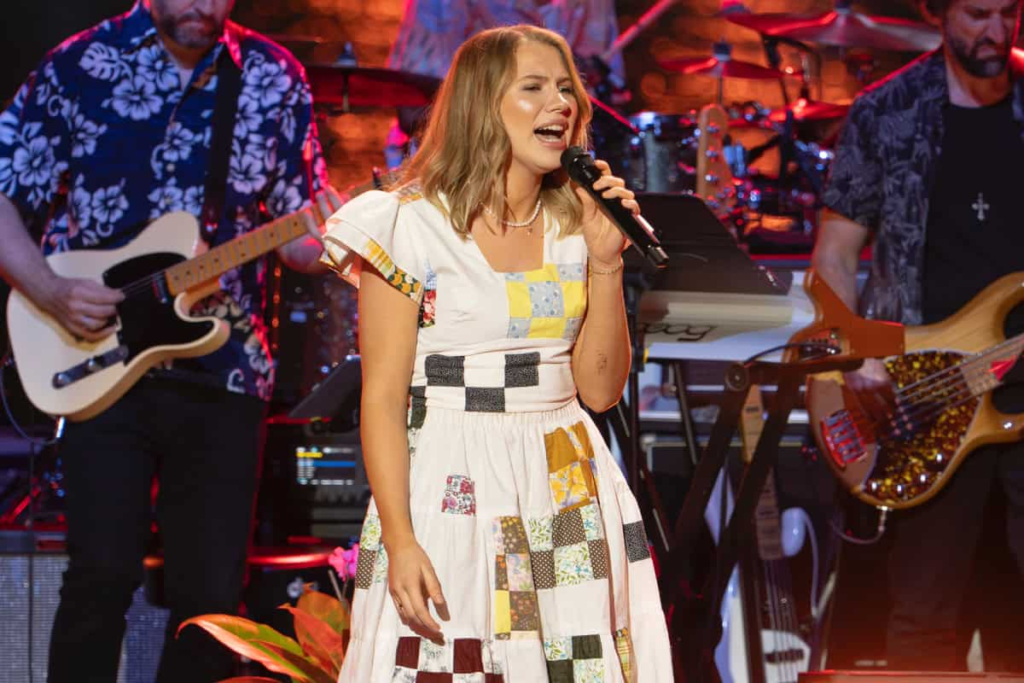
The night Hannah Harper first walked onto the American Idol stage, the room didn’t feel loud the way television stages usually do. The lights were bright, the cameras ready, yet something about the way she stood there made everything seem softer, as if the air itself had slowed down to listen. She didn’t look like someone chasing a moment. She looked like someone carrying one with her.

Before the music even began, there was a stillness that felt almost unfamiliar. The judges leaned forward without speaking, the audience settling into a quiet that wasn’t planned. When she opened her mouth to sing, the sound didn’t arrive like a performance. It came out carefully, like a memory being told out loud for the first time.
Her audition song spoke about a chapter most people keep hidden. The words carried the weight of sleepless nights, of holding a child while feeling lost inside herself, of learning how to keep going when the world expected strength. Nothing about it sounded dramatic, yet the honesty in her voice made the silence in the room feel heavier than applause ever could.
There was a moment when the last note faded and no one moved. Not because they didn’t know what to say, but because the feeling in the room didn’t need words yet. One of the judges wiped their eyes without looking at the camera, and the audience stayed still, as if afraid the moment might disappear if anyone spoke too soon.
In the rounds that followed, her songs never tried to be bigger than they were. She chose melodies that felt like they belonged somewhere far from television lights, songs that sounded like church halls, kitchen tables, and long drives home after dark. Each time she sang, it felt less like she was showing her voice and more like she was letting people see where it came from.
When she sang gospel, the sound carried a warmth that didn’t need volume. It felt like something learned slowly over years, not taught in lessons but lived in quiet places. You could almost imagine the echo of wooden pews, the hum of voices around her, the kind of music that fills a room without asking for attention.
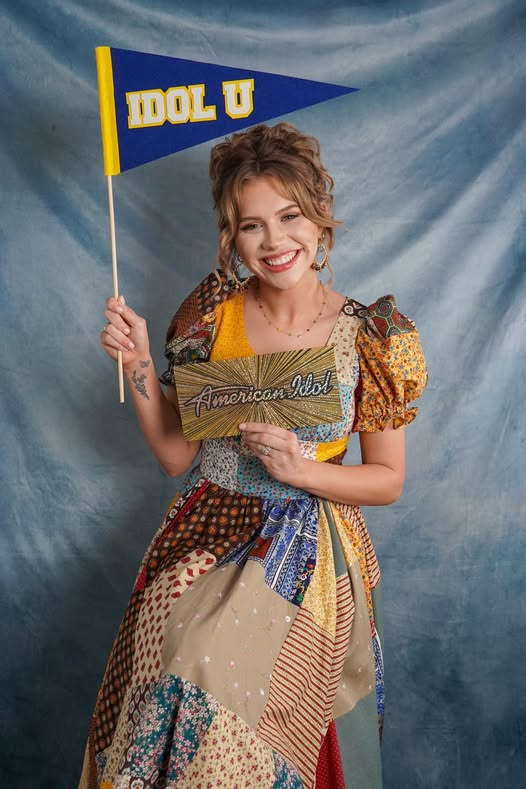
Her country songs felt even closer to home. There was a softness in the way she held certain words, as if they meant more to her than to anyone listening. When she sang about motherhood, about putting dreams aside and finding them again later, the stage suddenly felt smaller, like the story was being told to one person at a time.
During Hollywood Week, when the room was filled with louder voices and brighter performances, she didn’t change the way she stood. She held the microphone the same way, steady and close, singing as if the noise around her belonged to another world. And somehow, in the middle of all that sound, her quiet felt stronger.
As the weeks passed, people stopped waiting for her to impress them. They waited to feel something instead. Every song seemed to open another small window into a life that had been lived long before the cameras arrived, a life where music wasn’t for winning, but for getting through days that no one else saw.
By the time she finished one of her last performances, the applause came slowly, almost gently, like no one wanted to break the atmosphere too quickly. She stood there for a second longer than expected, breathing in the light, her eyes calm, her shoulders relaxed, as if she understood that the moment wasn’t about the stage at all.
Long after the music ended, what people remembered wasn’t a note or a lyric. It was the feeling that, for a few minutes, the room had become quiet enough for a real story to be heard. And in that quiet, Hannah Harper didn’t look like someone who had finally found her dream. She looked like someone who had carried it all along, waiting for the world to be still enough to listen.