
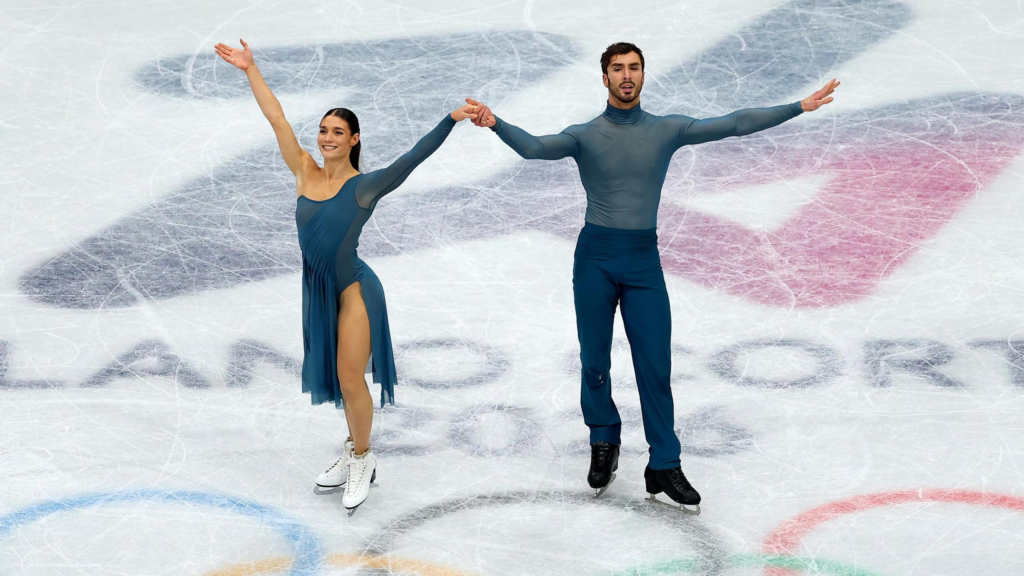
There are victories that feel expected, and then there are seasons that feel almost unreal—like something the sport itself didn’t see coming. What Laurence Fournier Beaudry and Guillaume Cizeron created in a single competitive year belongs to the latter.
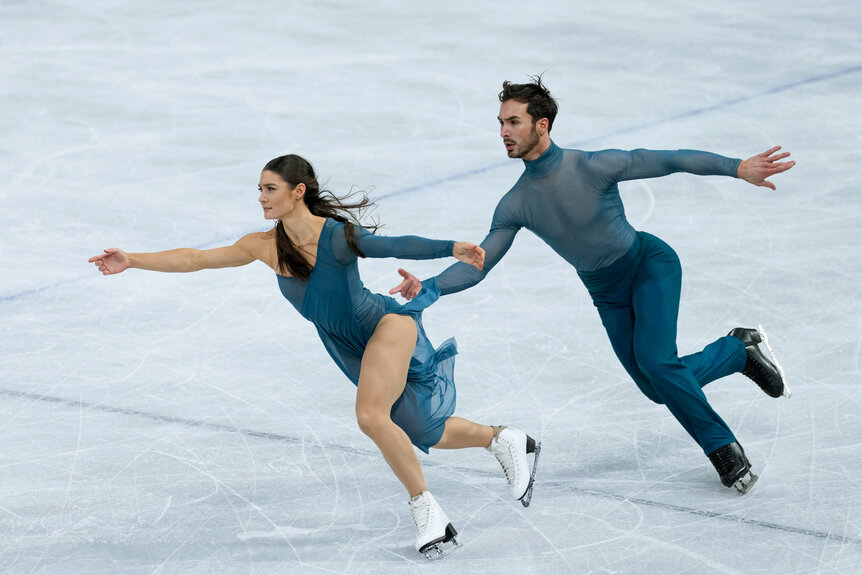
It wasn’t just dominance. It was alignment.
From the moment their season began, there was a quiet sense that something rare was unfolding. Not loudly declared, not aggressively predicted—but visible in the precision of their edges, the stillness between movements, the kind of connection that cannot be manufactured under pressure.
Then came the first gold.
At the Olympics, where expectations often crush even the most prepared athletes, they didn’t look burdened—they looked certain. Every lift, every glide, every extension felt inevitable, as if the program had already lived a hundred lives before touching the ice that night.
But Olympic gold alone doesn’t define a season.
It tests it.
When they returned to the ice for the European Championships, the pressure had shifted. Now they weren’t chasing history—they were carrying it. And yet, instead of tightening, they expanded. Their performance didn’t just meet expectations; it reframed them.
Two golds.
At that point, the conversation had already begun. Quietly, then louder. Could they complete the triple? Could they join the rarest company in ice dance history—those who have captured Olympic, European, and World gold within the same season?
That question followed them into ISU World Figure Skating Championships 2026.
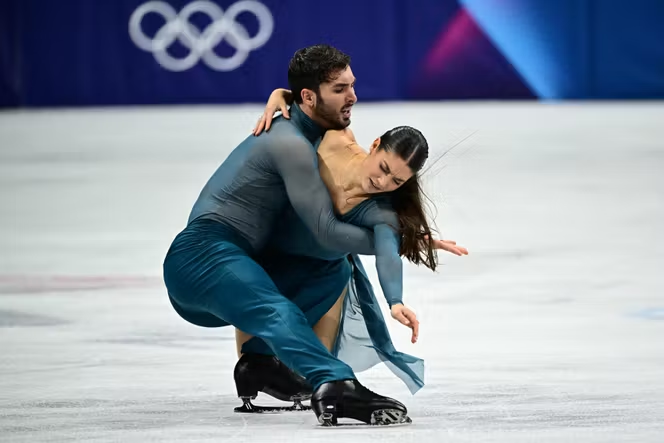
And that’s where everything changed.
Inside the O2 Arena, there was a different kind of energy. Not just anticipation, but awareness. The crowd understood what was at stake. The air felt heavier—not tense, but expectant, like the moment before something irreversible happens.
When they stepped onto the ice, there was no visible weight.
Only clarity.
The performance didn’t feel like a fight for gold—it felt like a confirmation of it. Their free skate, scoring 138.07, unfolded with a control that bordered on surreal. Every transition was seamless. Every moment lingered just long enough to be felt before dissolving into the next.
And when the final note ended, the reaction wasn’t delayed.
It erupted.
A total score of 230.81 didn’t just secure the win—it separated them. Not slightly, not marginally, but definitively. The kind of gap that doesn’t invite debate, only acknowledgment.
Behind them, though, the story refused to fade.
Canada delivered a performance worthy of silver, earning 211.52 points in a display that balanced technical brilliance with emotional depth. Close behind, the United States—stepping into this level of competition with fresh energy—claimed bronze with 209.20, marking a debut that felt less like an arrival and more like a warning.
It was, in every sense, a podium built on intensity.
But at the top, there was no question.
With that final gold, Fournier Beaudry and Cizeron completed what only a handful of pairs in history have achieved—a clean sweep of the Olympic Games, European Championships, and World Championships in a single season. A legendary hat-trick that doesn’t just reflect skill, but endurance, adaptability, and an almost impossible level of consistency.
And yet, statistics don’t fully capture it.
Because what they did wasn’t just about winning across three stages—it was about sustaining a standard that never dropped, never wavered, never fractured under expectation. Each performance carried the same level of intention, as if the season itself had been carefully composed.
That’s what makes it historic.
Not just the medals, but the absence of decline.
In a sport where momentum can shift in seconds, where one misstep can redefine an entire narrative, they remained untouched. Not because they were flawless in theory—but because they understood how to move through pressure without letting it reshape them.
And in doing so, they didn’t just complete a season.
They redefined its ceiling.
For French figure skating, this isn’t just a victory—it’s a turning point. A moment that expands what feels possible, not only for those who come next, but for the sport itself. Because when a pair reaches this level, the standard doesn’t reset—it rises.
And somewhere between the Olympic ice, the European stage, and the roaring arena in Prague, a quiet realization settled in—
This wasn’t just a perfect season.
It was the kind that changes what perfection looks like.