

There are performances that impress, and then there are performances that pause time. On the stage of American Idol, Hannah Harper delivered something that didn’t just fill the room—it stilled it. Her rendition of “Choosin’ Texas” didn’t arrive with force. It arrived with presence.

And presence, when it is real, is impossible to ignore.
From the very first note, there was a quiet shift in the atmosphere. The usual expectations of a televised performance—big vocals, dramatic moments, visible peaks—were replaced with something far more restrained. Harper didn’t try to outsing the song. She tried to understand it.
That difference changed everything.
Because instead of performing for the audience, she seemed to be singing from somewhere deeper, somewhere more personal. Each line felt less like a delivery and more like a confession. The kind that doesn’t ask for attention but earns it anyway.
And slowly, the room followed her.
There’s a rare kind of courage in choosing subtlety on a stage that rewards spectacle. It means trusting that emotion can carry further than volume, that stillness can speak louder than movement. Harper leaned into that courage, allowing the song to breathe in a way that felt almost fragile.
But it never broke.
Instead, it built—quietly, steadily—until the weight of it became undeniable. Not because it grew louder, but because it grew closer. Closer to the audience. Closer to something real. Closer to a truth that didn’t need explanation.
That is where the performance changed from impressive to unforgettable.
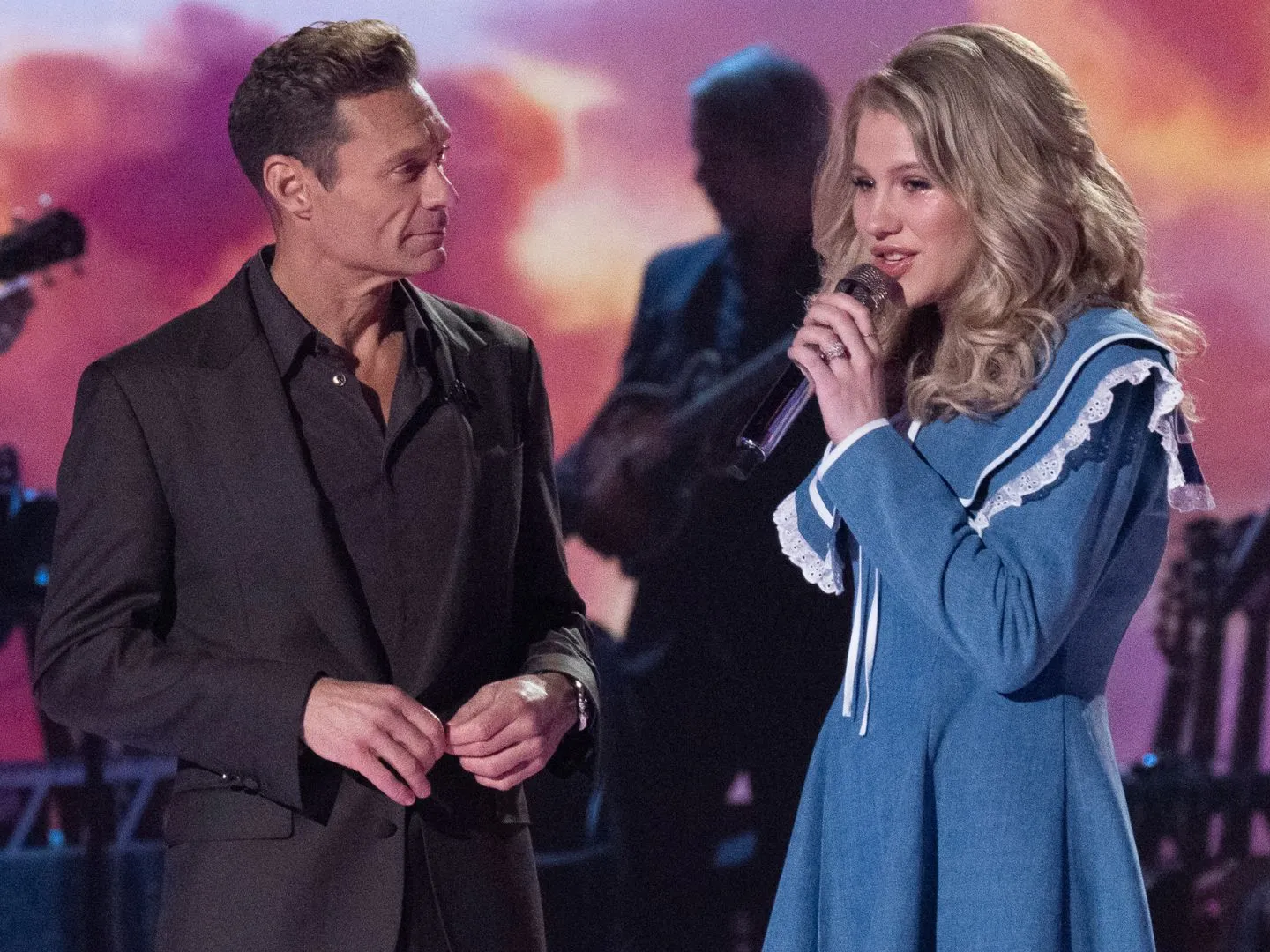
Even Ella Langley, the voice behind the original, acknowledged the gravity of what had just happened. And that acknowledgment carried its own significance. Because when an artist sees their work reflected back in a new light, it means something authentic has been uncovered—not recreated.
Harper didn’t cover the song.
She revealed another side of it.
And in doing so, she revealed something about herself as well.
What made the moment linger wasn’t technical perfection. It wasn’t about hitting every note flawlessly or delivering a textbook performance. It was about alignment—the rare instance where voice, emotion, and timing meet in exactly the right place.
That kind of alignment can’t be practiced.
It can only be felt.
Fans sensed it immediately. Not just in applause or praise, but in the way the performance continued to exist after it ended. Clips were replayed. Conversations were started. Words like “powerful” and “unforgettable” began to surface—but even those felt insufficient.
Because what people were really trying to describe was impact.
The kind that doesn’t fade when the stage lights dim.
In the fast-moving rhythm of a show like American Idol, moments are often temporary. One performance replaces another. One story gives way to the next. But every so often, something resists that cycle.
Something stays.
Harper’s performance did exactly that.
It stepped beyond the structure of the show and settled into something more permanent. It became a reference point—not just for her journey, but for what a performance can be when it is rooted in truth rather than expectation.
And that is what makes it a turning point.
Not because it was louder. Not because it was bigger. But because it was truer.

Now, the conversation is no longer about whether Harper can sing. That question has already been answered. The conversation has shifted to something far more meaningful—what she represents, and where that kind of honesty can take her next.
Because when an artist reaches a moment like this, they don’t just move forward.
They move differently.
And somewhere between the silence of that stage and the echo it left behind, Hannah Harper didn’t just perform a song.
She changed the way people listen.