
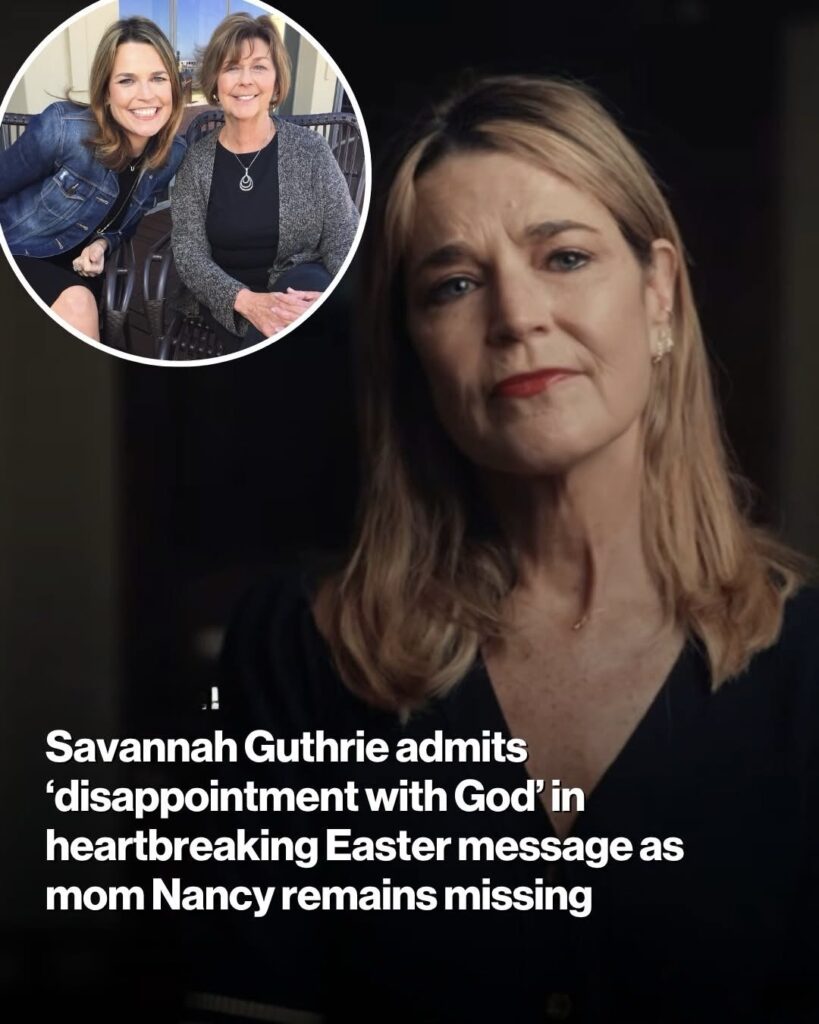
There are certain words people expect to hear on Easter—renewal, hope, resurrection. But what happens when those words feel distant, almost unreachable? This year, Savannah Guthrie offered something far more human than certainty. She offered honesty.
In a moment that felt less like a broadcast and more like a quiet confession, she admitted something many believe but rarely say aloud—disappointment with God. Not anger. Not rejection. Just a fragile, aching disappointment that lingers when prayers seem to echo back unanswered.
At the center of that vulnerability is her mother, Nancy Guthrie, who remains missing. It’s a reality that doesn’t come with closure, timelines, or understanding. It simply exists—heavy, unresolved, and deeply personal.
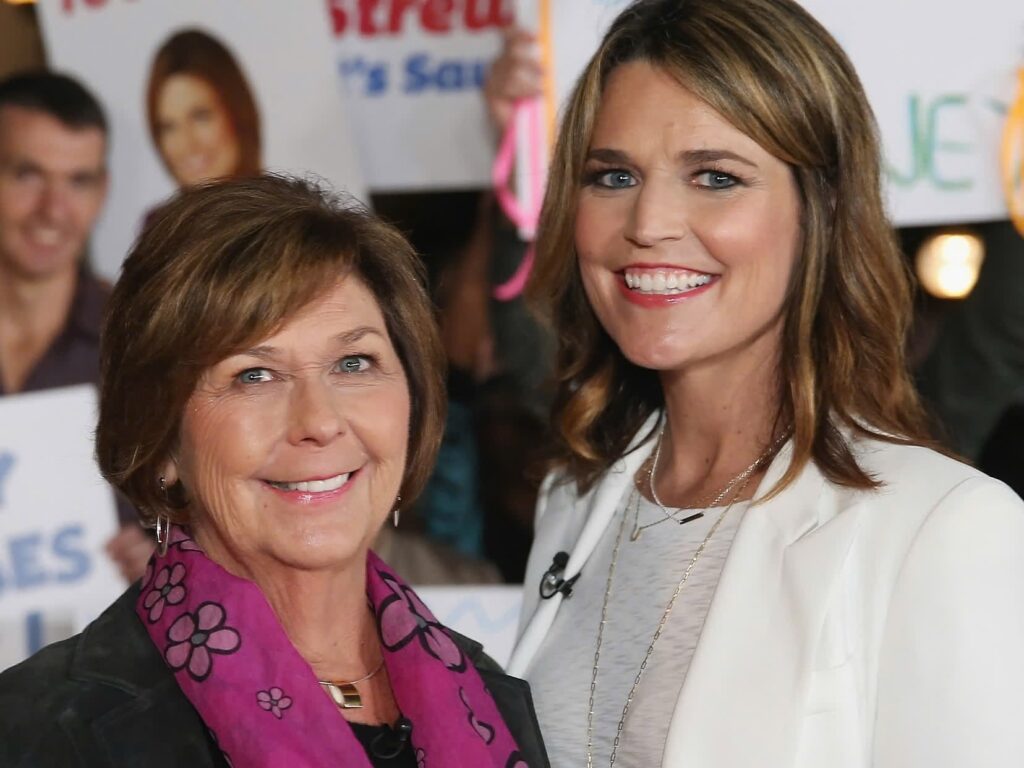
There is a unique kind of pain in not knowing. It doesn’t allow grief to settle or healing to begin. Instead, it stretches time into something shapeless, where hope and fear coexist in exhausting harmony. For Guthrie, this Easter wasn’t about celebration—it was about endurance.
What made her message resonate wasn’t its sadness, but its courage. In a world that often packages faith as unwavering strength, she chose to reveal its cracks. And in doing so, she made space for others who quietly wrestle with the same questions.
Because disappointment in faith is rarely about losing belief. It’s about loving something enough to feel hurt when it seems absent. It’s about expecting comfort and finding silence instead. And that silence can be louder than any answer.
Her words carried an unspoken truth—faith isn’t always a steady light. Sometimes, it flickers. Sometimes, it dims. And sometimes, it asks more from us than we feel capable of giving. Yet, even in that uncertainty, it remains.

There’s something profoundly human about admitting that hope can feel like a burden. That belief can feel heavy. That even on days meant for renewal, the heart can feel unchanged. Guthrie didn’t try to resolve that tension. She simply acknowledged it.
And perhaps that’s what made her message so powerful. It didn’t offer solutions or tidy conclusions. It didn’t promise that everything would be okay. Instead, it gave permission—to question, to feel, to exist in the uncomfortable space between faith and doubt.
In the end, her Easter message wasn’t about losing faith. It was about redefining it. Not as certainty, but as persistence. Not as answers, but as the quiet decision to keep believing—even when the silence doesn’t break.