
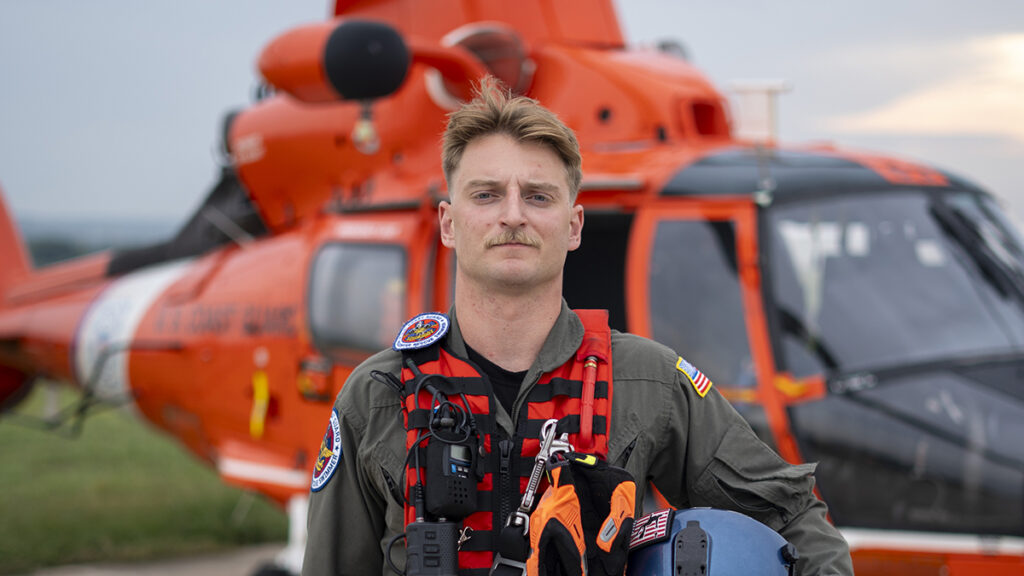
The applause arrived like a wave, rising before anyone could quite remember why they had started clapping. Beneath the high ceiling and careful lights, Scott Ruskan sat almost motionless, shoulders squared, expression caught between humility and disbelief. The sound filled the chamber, yet somehow the moment felt impossibly quiet.
He did not wear the noise easily. His hands rested in his lap, fingers gently intertwined, as though anchoring himself to something steady. Around him, faces blurred into a sea of standing figures, but his gaze remained soft, distant, elsewhere.
Elsewhere looked like rain.
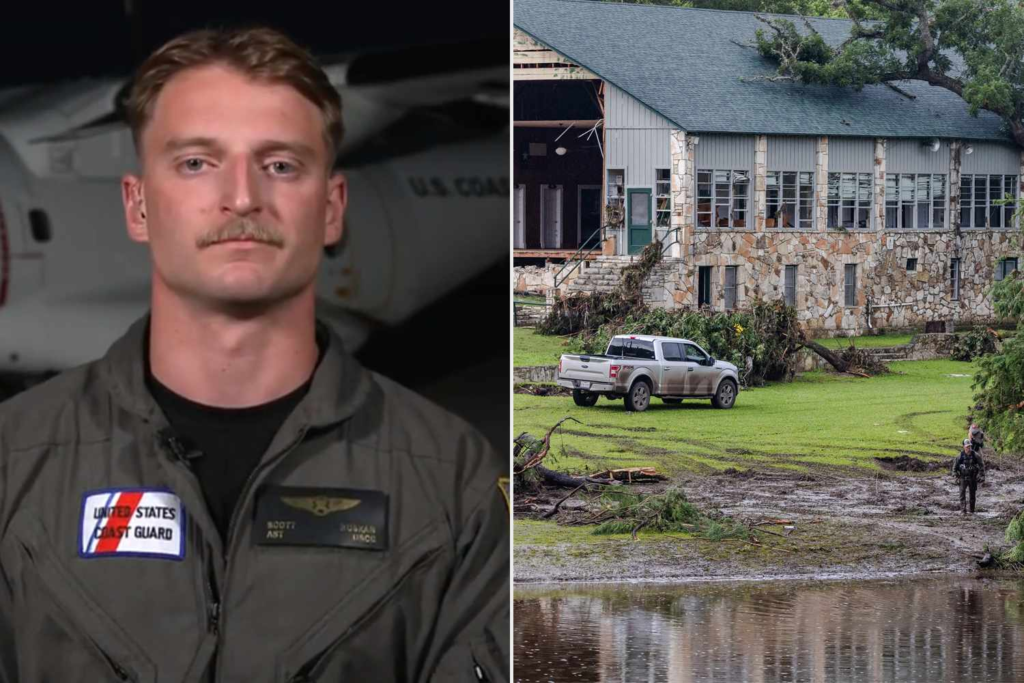
Elsewhere sounded like rotor blades cutting through a sky heavy with storm. The world reduced to wind, water, and urgency. A body entering chaos without hesitation. The cold grip of floodwaters swallowing streets, homes, voices.
Somewhere in that moving, unforgiving landscape, a small hand had reached.
Not dramatically. Not theatrically. Just instinctively. A fragile gesture against an overwhelming current. Ruskan remembered the weight of it — not heavy, not light, but human. Terrifying in its trust.
Back beneath the chamber lights, another silence formed. A different kind. Softer. Charged.
She walked toward him slowly, the young girl whose world had once narrowed to rushing water and fear. No flood now. No storm. Only careful steps across polished floors, eyes fixed on the man who had appeared when everything else disappeared.
For a fraction of a second, they simply looked at one another.
Then distance collapsed.
Arms wrapped without choreography, without awareness of cameras, without regard for history unfolding around them. The room, so accustomed to speeches and spectacle, seemed to exhale all at once.
And in that embrace — quiet, unguarded, almost impossibly gentle — the meaning of heroism shed its grandeur, revealing something far simpler and far rarer.
Not the act of saving a life.
But the moment two lives, once separated by disaster, found each other again in stillness.