

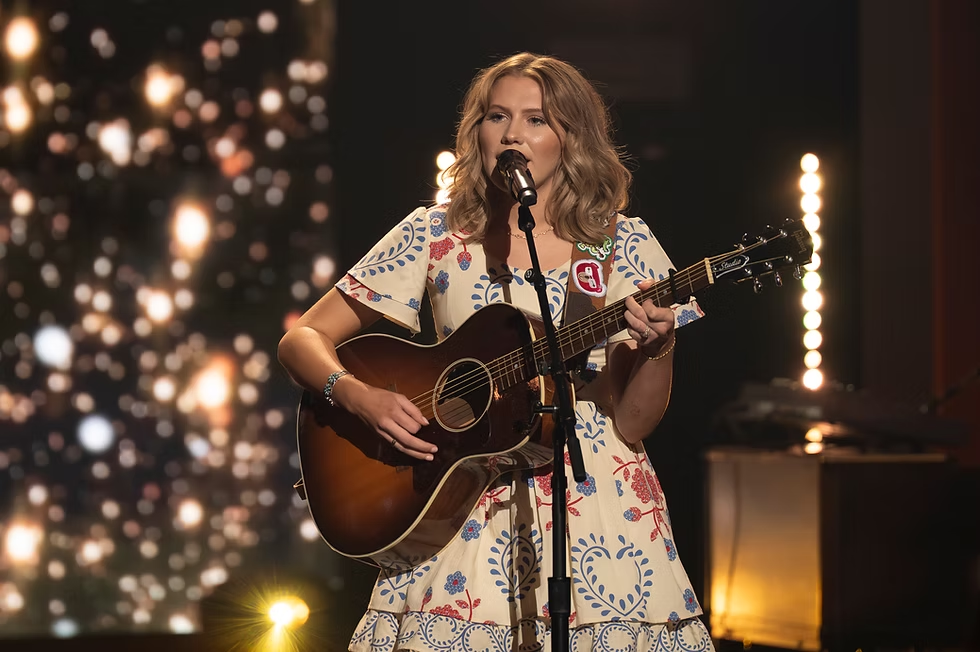
There are performances… and then there are moments that don’t feel like television at all. The kind that seem to pause time, soften the noise, and quietly reach into something deeper than entertainment. That’s exactly what happened when Hannah Harper stepped onto the American Idol stage and began singing “At The Cross.”
From the very first note, something shifted.
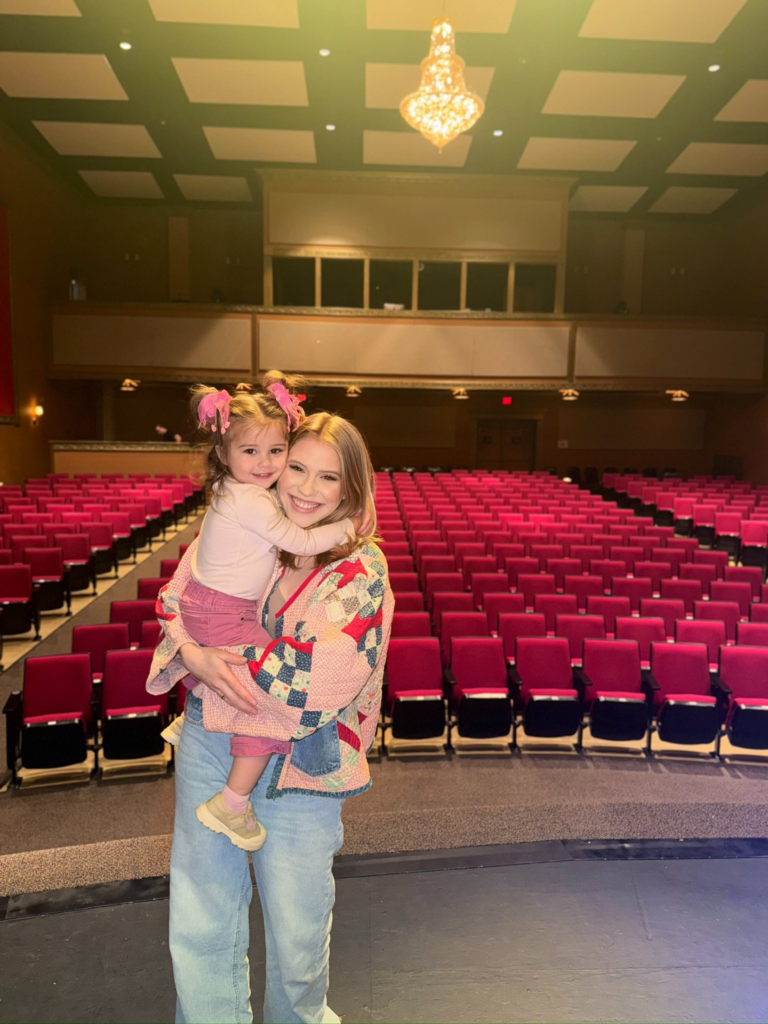
It wasn’t just the clarity of her voice or the control she carried—it was the weight behind it. A mother of three, standing alone under a spotlight that suddenly felt too bright, too exposing, yet somehow perfectly placed. You could see it in her eyes—this wasn’t just a performance she had rehearsed. This was something she had lived.
And as the song unfolded, so did she.
There was a tremble—not of fear, but of honesty. The kind of trembling that comes when emotion gets too close to the surface, when holding it back feels harder than letting it spill. Her voice didn’t break, but it came close enough for everyone to feel it. And that “almost” was what made it unforgettable.
Because perfection rarely moves people.
But truth does.
The room didn’t erupt right away. It leaned in first. You could feel the stillness ripple across the audience, like everyone was holding the same breath at the same time. Even the judges, who have seen countless performances, seemed caught off guard by the rawness unfolding in front of them.
Carrie Underwood looked visibly shaken, her reaction less like critique and more like recognition—of something real, something rare. Lionel Richie called it “spectacular,” but even that word felt too small for what had just happened. And Luke Bryan, usually quick with charm, settled on something simpler—“perfection.”
But here’s the truth no one says out loud.
On American Idol, moments like this don’t guarantee anything.
Because once the lights dim and the applause fades, it all comes down to something far less emotional—votes. Cold, quiet decisions made from living rooms, phones in hand, where feeling can sometimes be overshadowed by preference, habit, or even timing.
And that’s where the tension begins.
Fans flooded social media almost instantly, calling it “the performance of the season,” insisting that Hannah had just secured her place. Clips began circulating, captions filled with words like chills, tears, goosebumps. It felt unanimous.
But it rarely is.
Because in a competition shaped by millions of voices, even the most powerful moment can become uncertain. The same performance that moved one person to tears might not reach another the same way. And sometimes, the quietest doubt can outweigh the loudest praise.
That’s what makes this moment different.
It wasn’t just about how beautifully she sang—it was about what she risked by singing it that way. Stripping away control, letting vulnerability sit at the center of the stage, knowing that it might not translate into votes the way a flawless, technically perfect performance might.
And yet, she chose it anyway.
That’s where Hannah Harper separates herself.
Not in volume, not in range, but in intention.
She doesn’t perform to impress—she performs to connect. And connection, as powerful as it is, doesn’t always follow the rules of competition. It’s unpredictable. It lingers. It divides.

So now, the question isn’t whether she delivered one of the most emotional performances of the season.
That part feels undeniable.
The real question—the one echoing across fan pages, comment sections, and quiet conversations—is far more uncertain.
When it mattered most… did America feel it enough to keep her?