

The theater lights felt softer that night, as if even they understood the weight of expectation. Hannah Harper walked into Hollywood Week without spectacle, without hurry. The applause that once followed her name had quieted into something more watchful. Fame, however fleeting, had already brushed her shoulders. Now there was only the stage, the hush, and the faint hum of nerves threading through the air.
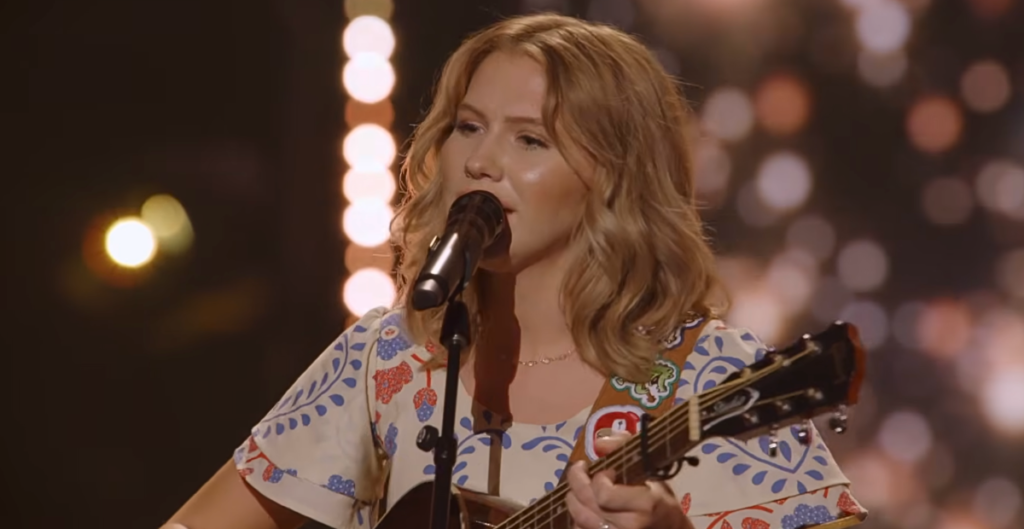
“String Cheese” still lingered in memory — a melody that had carried surprise and delight in equal measure. It had been bright, disarming, almost playful. But that glow had shifted into something steadier now. This was no longer the spark of discovery. It was the quiet test of endurance, of depth, of whether the voice could stand without the shimmer of novelty.
When the first notes of “A Little Past Little Rock” drifted into the room, they arrived like twilight — low and unassuming. The song did not beg for attention. It asked for patience. Hannah stood still, hands relaxed at her sides, as though she were holding something fragile in her palms. Her shoulders rose once with a careful breath, and then the story began.
She did not reach for grandeur. She did not strain toward the rafters. Instead, her voice settled into the melody the way a letter settles into an envelope — precise, deliberate, sealed with intention. Each phrase seemed measured against an inner rhythm only she could hear. There was restraint in it, but not fear. There was control, but never distance.
The room grew quieter with every line. It was the kind of silence that gathers slowly, like snowfall. No one shifted in their seats. Even the air felt suspended, attentive. The song’s ache lived not in volume but in pause — in the space she allowed between words, in the softness that followed a held note before it dissolved.
Under the lights, her expression changed almost imperceptibly. A slight narrowing of the eyes. A tremor at the corner of her mouth. She wasn’t performing emotion; she was remembering it. The lyric seemed to move through her rather than from her, as though she were walking through an old memory and inviting the audience to follow at a respectful distance.
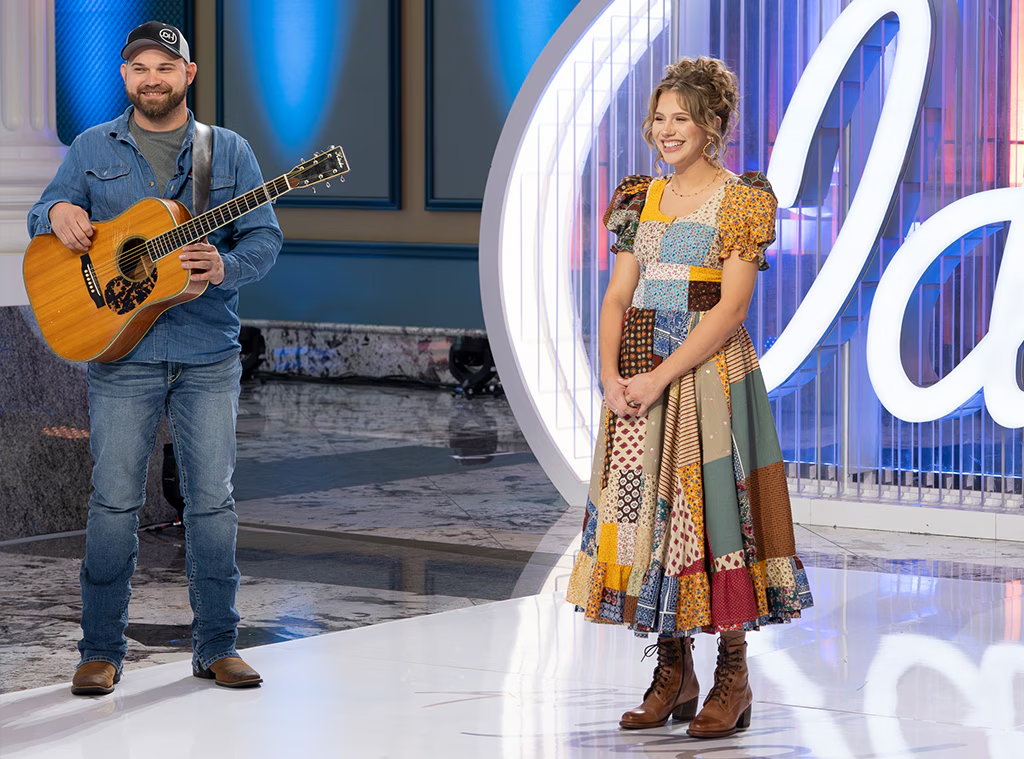
There was a moment — small, nearly invisible — when her voice thinned to a whisper. Not from weakness, but from trust. She trusted the quiet. She trusted the stillness. And in doing so, she invited everyone else to lean closer instead of stepping back. The song breathed because she let it.
When the final note arrived, it did not crash or soar. It simply rested. The kind of ending that feels less like a conclusion and more like a truth acknowledged. For a heartbeat longer than expected, she remained there, eyes steady, as if unsure whether to release the moment or hold it just a second more.
The applause came gently at first, almost reverent. In the glow of it, Lionel Richie’s smile carried something deeper than praise — recognition, perhaps, of a singer who understood that power is often quiet. Hannah listened with the same composure she had sung with, her gratitude contained in a small nod and a breath that seemed to say, I am still here.
Long after the stage lights dimmed and the chatter resumed, what remained was not the memory of high notes or spectacle. It was the image of a woman standing still in a sea of expectation, choosing restraint over display, choosing story over applause. And in that choice, something shifted. The song had not been conquered. It had been lived.