
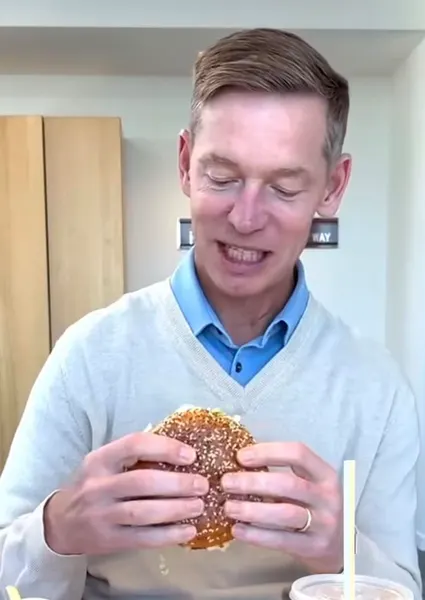
In the world of corporate PR, there is a golden rule: Eat the product. McDonald’s CEO Chris Kempczinski is currently learning this the hard way. A video of him sampling the chain’s new 1,000-calorie heavyweight burger has gone viral for all the wrong reasons. Instead of a hearty “I love my job” chomp, viewers witnessed what the internet has dubbed the “Squidward Bite”—a hesitant, microscopic nibble that looked more like a lab test than a lunch break.
The fallout was instant. Now, the Golden Arches are facing a platinum-grade identity crisis: If the guy running the kitchen won’t eat the food, why should we?
Anatomy of a Viral Fail
Why did a three-second clip cause such a massive stir? It boils down to three main issues:
- The Authenticity Gap: We live in an era where consumers crave transparency. Seeing a CEO treat his own flagship product like a biohazard suggests a lack of faith in the brand’s quality.
- The “1,000-Calorie” Optics: Promoting a massive, calorie-dense burger while appearing physically terrified of it creates a “rules for thee, but not for me” narrative.
- The Meme Factor: Comparing the CEO to Squidward (who famously claimed to hate Krabby Patties before obsessively eating them) turned a corporate slip-up into a cultural moment.
The “Squidward Bite” vs. The Trust Factor
When a leader acts as the face of a brand, their body language becomes the brand’s language. Kempczinski’s hesitation tapped into a long-standing public anxiety about fast food: the idea that it’s “unhealthy” or “low-quality.” By failing to take a real bite, he inadvertently validated the critics’ harshest talking points.
“A CEO should be your biggest fan. If they’re eating like they’re afraid of the ingredients, the customer is going to be afraid of the receipt.”
How to Recover (If Possible)
For McDonald’s to flip the script, they need to move fast. Here’s how a PR recovery usually looks in these scenarios:
- The “Real” Meal: A follow-up, unpolished video of the CEO actually finishing a meal with frontline staff.
- Lean into the Joke: Sometimes, self-deprecation is the best medicine. Acknowledging the “hesitant bite” and turning it into a “Better the Second Time” campaign could humanize the leadership.
- Transparency: Pivoting to talk about ingredient sourcing to combat the “what’s actually in there?” rumors sparked by the video.
The Bottom Line
In the age of high-definition scrutiny, you can’t fake enthusiasm. Whether it’s a tech CEO using a rival’s phone or a fast-food mogul dodging a burger, the audience always catches the “Squidward moment.”
What do you think? Was it just a small bite for a busy man, or a giant red flag for the brand? Let us know in the comments!