
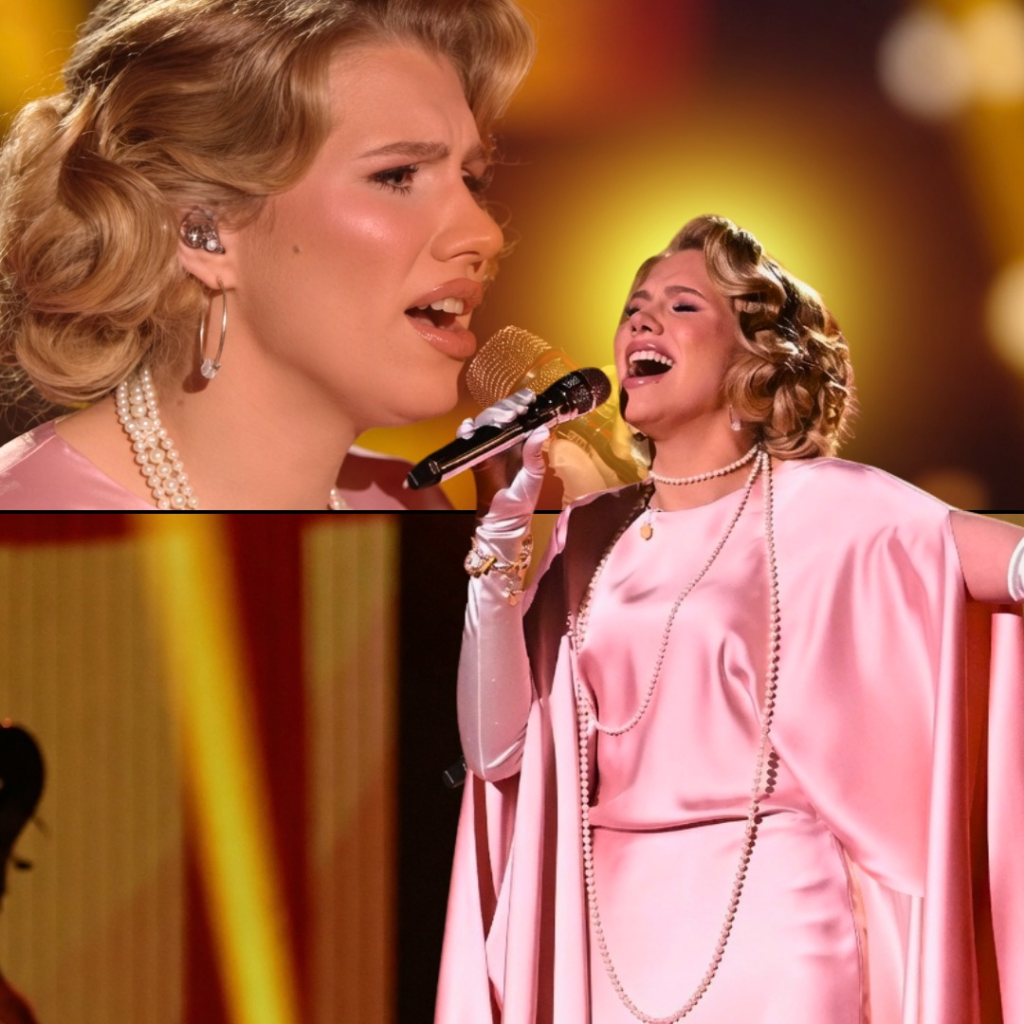
American Idol has always thrived on more than performances alone. It lives on moments, memories, comparisons, and the kind of debates that keep fans talking long after the credits roll. This week, one conversation has taken center stage: who did it better—John Foster or Hannah Harper?

The discussion began after Disney Night, when viewers noticed a striking similarity in style, presentation, and overall energy between Hannah’s standout moment and a previous performance many still associate with John Foster. Suddenly, social media was filled with side-by-side opinions, passionate defenses, and one question impossible to ignore: was Hannah revisiting greatness, or redefining it?
Comparisons in talent competitions are inevitable. When a contestant steps into a similar theme, emotional lane, or visual concept once handled memorably by someone else, audiences instantly measure the two experiences against each other. It is not always fair, but it is deeply human. We use memory as a ruler, especially in entertainment.
For many longtime fans, John Foster remains a benchmark. His earlier performance is remembered as polished, emotionally resonant, and difficult to surpass. Some viewers describe it as one of those rare Idol moments where everything aligned—song choice, timing, confidence, and connection. In their eyes, John did not simply perform well; he created a standard.
That is why some reactions have been so immediate. To those fans, Hannah stepped into territory already marked by excellence. Their argument is not necessarily against Hannah’s talent. Instead, it is rooted in reverence for what John accomplished first. They believe certain performances become reference points, and anything similar will naturally be judged against them.
But there is another side to the debate, and it is growing louder.

Many viewers argue that Hannah Harper is not imitating anyone. She is evolving a familiar lane into something distinctly her own. While surface similarities may exist, they see deeper differences in energy, identity, and artistic intention. Where John may have brought one emotional texture, Hannah brought another. Where he offered one type of presence, she offered a fresh interpretation shaped by her own personality.
This is where the conversation becomes interesting. Doing something “better” is often less meaningful than doing something differently with authenticity. Entertainment history is filled with artists who were initially compared to predecessors, only to later become undeniable originals. Similar beginnings do not guarantee similar destinations.
Hannah’s supporters point to exactly that. They note her ability to bring elegance, modern confidence, and a cinematic stage presence that feels current rather than borrowed. They see someone building her own lane in real time, even if certain moments remind audiences of what came before. In their view, inspiration and repetition are not the same thing.
There is also a generational factor at play. Fans who connected deeply with John Foster’s era or moment may naturally protect that memory. Newer viewers experiencing Hannah’s rise may feel equally passionate about what she represents now. Neither perspective is wrong. They are simply tied to different emotional timelines.
The strongest performers often create this kind of divide because they stir loyalty. If nobody argues, the moment likely did not matter much. Debate is often a sign that both artists left real impressions. John Foster clearly did. Hannah Harper clearly is.
What makes Hannah especially compelling is that she does not appear interested in competing with ghosts. She seems focused on the present—on delivering performances that reflect who she is now, not proving she can outdo someone from another chapter. That mindset matters. Artists who obsess over comparisons often shrink. Artists who commit to themselves usually grow.
John’s legacy, meanwhile, may actually be strengthened by this discussion. To still be invoked whenever similar greatness appears means the performance lasted. That is a compliment few contestants ever receive. Being remembered as the bar is its own kind of victory.
So who did it better?

If the answer is based on nostalgia, some will always choose John Foster. If it is based on freshness, current momentum, and evolving star presence, many will choose Hannah Harper. If it is based on technical specifics, emotional preference, or personal taste, the answers will vary endlessly.
And maybe that is the real point.
Some performances are not meant to be ranked like statistics. They are meant to be felt in the moment they happened. John had his moment. Hannah is building hers. Fans can compare them all day, but each artist belongs to a different emotional snapshot in Idol history.
What began as a simple question—John or Hannah?—has become something more revealing. It shows how powerful performances echo across seasons, how audiences carry memories forward, and how new stars are often born in the shadow of old benchmarks before stepping into their own light.
John Foster may have set the bar.
But Hannah Harper is making sure nobody can ignore what comes next.