
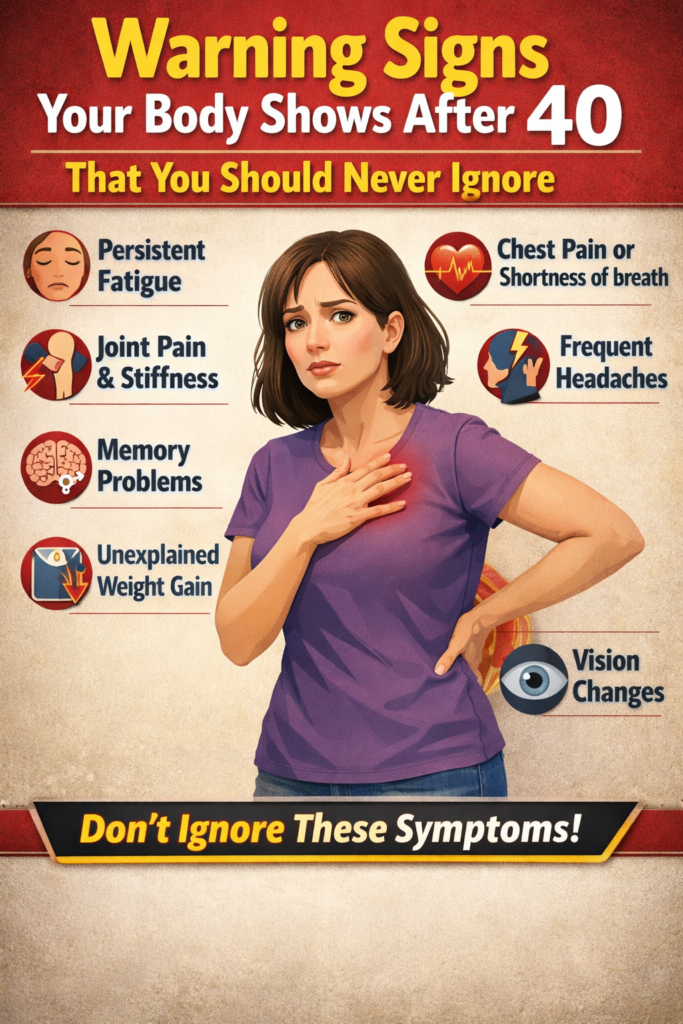
Warning Signs Your Body Shows After 40 That You Should Never Ignore
Your body speaks — here’s how to listen before small symptoms become serious problems.
⚠️ Chest Pain or Pressure — Even Mild
Any chest discomfort — tightness, heaviness, or pressure — deserves immediate attention. This is especially true if it spreads to your jaw, left arm, or back. For men, the classic crushing chest pain is the hallmark. But women’s symptoms are often subtler: shortness of breath, nausea, or back pain with no obvious cause.
After 40, the risk of heart disease rises significantly. In the U.S., between ages 40–59, about 6% of men and 5.6% of women have diagnosed heart disease — and many more have undetected risk factors.
🚨 Call 911 Immediately
😴 Fatigue That Sleep Doesn’t Fix
Everyone gets tired. But if you’re waking up exhausted after a full night’s sleep — and this happens regularly — your body is trying to tell you something. This kind of bone-deep, unexplained fatigue can be an early sign of anemia, thyroid problems, diabetes, sleep apnea, heart disease, depression, or even cancer.
Don’t write it off as “just getting older.” A simple blood panel can rule out many of the common culprits.
👨⚕️ See Your Doctor
⚖️ Unexplained Weight Loss
Losing weight without trying may sound appealing — but it’s one of the most important warning signs doctors flag. If you’ve lost more than 5% of your body weight over 6 to 12 months without changes to your diet or exercise routine, something in your body may be consuming extra energy to fight an underlying illness.
Possible causes include thyroid disorders, diabetes, digestive issues, depression, or in some cases, cancer. Always get it evaluated.
👨⚕️ See Your Doctor
🌡️ A Fever That Won’t Go Away
Most fevers are your immune system doing its job — fighting off a short-term infection. But a fever above 103°F, or any low-grade fever that persists for more than a week or keeps coming back, needs medical evaluation. Persistent fever can signal serious infections, autoimmune conditions like lupus, or in rare cases, blood cancers like lymphoma.
Night fevers accompanied by drenching night sweats are a particularly important flag and should be reported to your doctor promptly.
👨⚕️ See Your Doctor Within 24–48 Hours
🫁 Shortness of Breath During Everyday Tasks
Getting winded going up a flight of stairs or carrying groceries is not a normal part of aging — it’s a signal. Unexplained breathlessness can indicate heart conditions, respiratory disease, or anemia. A common culprit that surprises many people in their 40s and 50s is COPD (chronic obstructive pulmonary disease), which often develops silently for years before symptoms appear.
Don’t wait for chest pain to accompany it. Shortness of breath alone is enough reason to see a doctor.
👨⚕️ See Your Doctor
🧠 Sudden Confusion or Memory Changes
Occasional forgetfulness is one thing — but sudden confusion, difficulty concentrating, or significant memory lapses are different. Known as delirium or acute mental status changes, these symptoms can point to stroke, carbon monoxide poisoning, serious infection, or neurological conditions and require immediate evaluation.
Slurred speech or confusion paired with numbness or weakness on one side of the body are stroke symptoms. Don’t wait — call 911.
🚨 Possible Stroke — Call 911
🩸 Unexplained Bleeding or Changes in Bowel Habits
Blood in your stool or urine, or bleeding that has no obvious explanation, should never be brushed aside. These can be early signs of gastrointestinal issues, kidney problems, or cancer. Similarly, a persistent change in your normal bowel habits — whether diarrhea, constipation, or a change in stool shape — lasting more than a few weeks warrants a conversation with your doctor.
Colorectal cancer screening is recommended starting at age 45. Don’t skip it.
👨⚕️ See Your Doctor Promptly
🦵 Swelling in Your Legs, Ankles, or Feet
Persistent puffiness in the lower legs — especially if it’s in both legs and doesn’t go away overnight — can be a sign of heart failure, blood clots, kidney disease, or thyroid issues. A blood clot (deep vein thrombosis) in the leg is particularly serious, as it can travel to the lungs and cause a life-threatening pulmonary embolism.
If swelling comes on suddenly, is only in one leg, or is accompanied by pain or redness, seek urgent care.
⚠️ Don’t Ignore Persistent Swelling
🔍 New Skin Changes or Moles
Your skin is a window into your internal health. After 40, pay close attention to any new moles or spots, or changes in existing ones — particularly if they’re asymmetrical, have uneven borders, contain multiple colors, are larger than a pencil eraser, or are evolving in size, shape, or color. These are the classic ABCDEs of skin cancer warning signs.
Dermatologist screenings are quick and can catch melanoma, the deadliest form of skin cancer, at its most treatable stage.
👨⚕️ See a Dermatologist
💧 Frequent Urination or Changes in Urinary Habits
Needing to urinate much more often, pain during urination, blood in the urine, or a sudden change in how frequently you go can all point to urinary tract infections, kidney problems, or diabetes. In men over 40, it can also signal prostate issues. These are symptoms people often feel embarrassed to mention — but they’re among the easiest to treat when caught early.
👨⚕️ See Your Doctor
🚨 Go to the ER or Call 911 Immediately For:
- Sudden, severe chest pain or pressure radiating to the arm or jaw
- Facial drooping, arm weakness, or sudden slurred speech (stroke signs)
- Sudden severe headache unlike any you’ve had before
- Sudden loss of vision or consciousness
- Difficulty breathing that comes on fast
- Sudden confusion or inability to recognize people or places
✅ Your Over-40 Annual Health Checklist
Blood pressure check
Full blood panel (cholesterol, glucose)
Thyroid function test
Skin cancer screening
Colorectal cancer screening (45+)
Eye exam
Hearing check
Mammogram / prostate screening
Dental exam
Mental health check-in
Your Body is Always Talking. Are You Listening?
None of these symptoms automatically mean something is seriously wrong — but they all deserve attention. Early detection is the single most powerful tool you have for a long, healthy life.
Share this article with someone you care about.
This article is for informational purposes only and does not constitute medical advice.
Always consult a qualified healthcare professional for personal health concerns.