
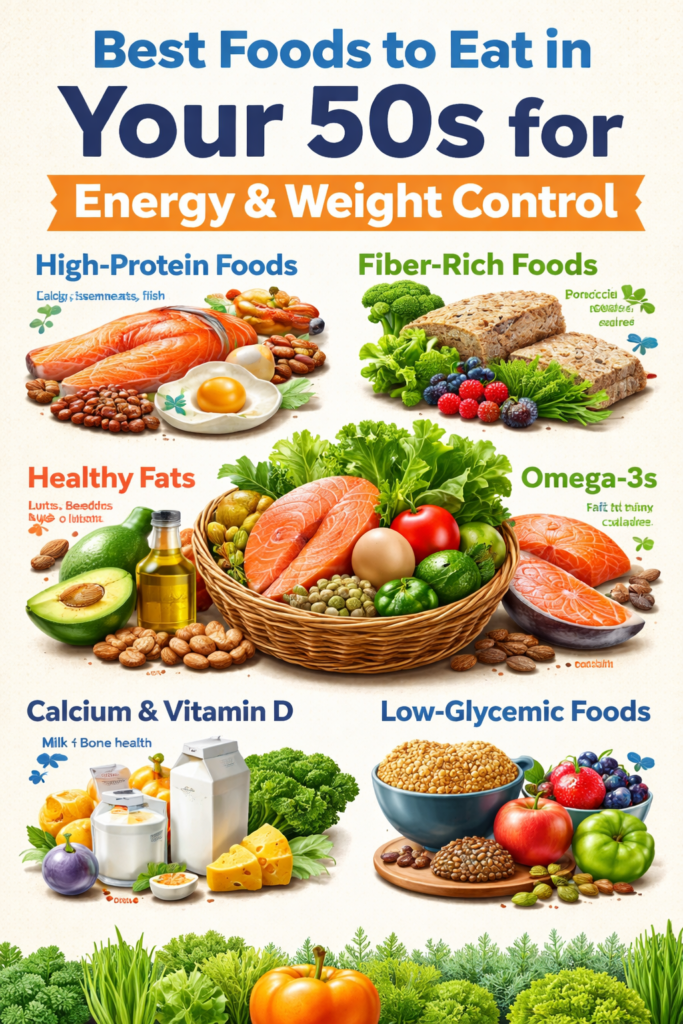
Hitting your 50s doesn’t mean slowing down—it means eating smarter to maintain energy, control weight, and protect your long-term health. With metabolism slowing, muscles losing strength, and energy levels fluctuating, your diet becomes your most powerful tool for thriving in midlife.
Power Up with High-Protein Foods
Muscle loss, or sarcopenia, naturally accelerates in your 50s. To counteract this, focus on lean proteins like chicken, fish, eggs, beans, and lentils. Protein not only preserves muscle but also boosts metabolism and keeps you full longer, making weight control easier. Adding protein to every meal can stabilize energy and prevent mid-afternoon crashes.
Fiber-Rich Foods for Digestion and Energy
Digestive efficiency slows as we age, so fiber-rich foods like whole grains, vegetables, fruits, and legumes are essential. Fiber helps regulate blood sugar, supports gut health, and reduces fat storage. A fiber-packed diet keeps your digestion smooth and energy consistent throughout the day.
Healthy Fats for Heart and Brain Support
Not all fats are bad. Omega-3s from salmon, walnuts, and flaxseeds, plus monounsaturated fats from olive oil and avocados, protect the heart, improve brain function, and reduce inflammation. Healthy fats also stabilize energy and hormone levels, which naturally shift in midlife.
Strengthen Bones with Calcium and Vitamin D
Bone density decreases with age, increasing osteoporosis risk. Include calcium-rich foods like dairy, fortified plant milks, and leafy greens, and get enough vitamin D from sunlight or supplements. Pairing these with regular strength exercises ensures your bones stay strong.
Control Blood Sugar with Low-Glycemic Choices
Stable blood sugar is key for energy and weight control. Focus on low-glycemic foods such as oats, beans, lentils, and non-starchy vegetables. Avoid refined sugars and processed carbs to prevent spikes that cause fatigue and fat accumulation, and reduce your risk of type 2 diabetes.
Follow Proven Diet Patterns
The Mediterranean diet—rich in vegetables, fruits, whole grains, fish, nuts, and olive oil—is one of the most studied patterns for longevity and weight control. Adopting this diet in your 50s can help reduce chronic disease risk while keeping energy levels high.
Look Ahead: Personalized Nutrition and Technology
The future of nutrition is personalized. Gut microbiome-based diets, AI-driven meal plans, and wearable health trackers can tailor your food choices to your body’s unique needs, optimizing energy, weight management, and overall wellness. Ignoring these trends may increase risks of obesity, cardiovascular disease, and metabolic disorders.
Takeaway: Eat Smart, Stay Energized
Your 50s can be a decade of vitality. Focus on protein, fiber, and healthy fats, support bones with calcium and vitamin D, and control blood sugar with low-glycemic foods. Follow evidence-based diet patterns like the Mediterranean diet, and stay open to personalized nutrition trends. With the right choices, this stage of life can set the foundation for decades of health and energy.
If you want, I can also create a version with a strong hook, subheadings designed for scannable reading, and meta description for SEO—it would be perfect for blogs, health websites, or social media posts.
Do you want me to make that version too?