
There comes a point in every season of American Idol where the competition quietly shifts beneath the surface. It no longer lives in vocal runs, range, or technical precision alone. Instead, it begins to breathe through something far less measurable—connection. And at the Top 11 stage, that shift is no longer subtle; it becomes the deciding force.
Early in the competition, perfection is currency. Contestants are evaluated like polished instruments—clarity, control, consistency. A missed note matters. A shaky moment lingers. But as the field narrows, something more human starts to override that lens. Viewers stop asking, “Who sang the best?” and begin asking, “Who do I feel the most when they sing?”
This is where narrative voting takes over.
Narrative voting isn’t about sympathy—it’s about continuity. It’s the slow, emotional investment audiences build over weeks of watching someone evolve. It’s remembering where a contestant started, recognizing what they’ve overcome, and feeling like each performance is a chapter in a larger story. At this stage, voters aren’t just reacting—they’re following.
And few contestants embody this transition more clearly than Hannah Harper.
Harper’s appeal doesn’t hinge on technical perfection. In fact, that’s almost beside the point. What she offers instead is something far rarer in a competition setting: emotional consistency. Whether she’s delivering a stripped-down gospel moment or stepping into a broader genre, her identity remains intact. That consistency builds trust—and trust is the foundation of narrative voting.
Because when audiences trust an artist, they don’t vote based on a single performance. They vote based on belief.
At the Top 11 stage, this belief becomes a powerful psychological anchor. Viewers are no longer casual observers; they become protectors of the journey they’ve invested in. Every vote is no longer just support—it’s preservation. They’re not simply pushing someone forward; they’re refusing to let a story end prematurely.
Meanwhile, technically superior performers can find themselves at a disadvantage here. Perfection, while impressive, can sometimes feel transactional. It delivers admiration, but not always attachment. And admiration rarely translates into urgency. A flawless performance may earn applause—but it doesn’t always inspire action.
Harper’s strength lies in the opposite effect.
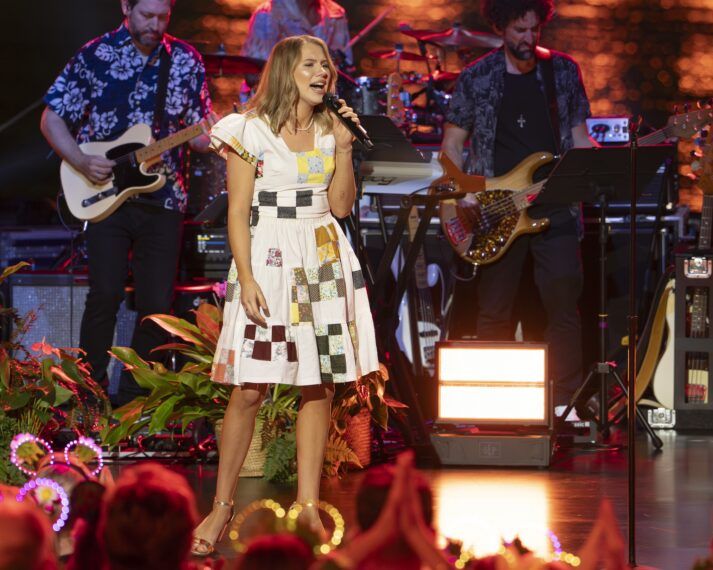
Her performances feel lived-in rather than executed. There’s a quiet unpredictability in her delivery—not in pitch, but in emotion. It makes the audience lean in, not because they expect perfection, but because they expect truth. And truth, even when imperfect, is far more compelling to vote for.
This is especially critical during themed nights like “Rock & Roll Hall of Fame Night,” where many contestants may lean into high energy, big vocals, and dramatic arrangements. In that environment, restraint becomes its own form of power. Standing still, vocally and physically grounded, can cut deeper than any explosive moment—because it feels intentional.
Harper’s stage presence thrives in that restraint.
It allows the audience to project themselves into the performance rather than just observe it. And psychologically, that creates ownership. When viewers see themselves reflected in an artist’s story, their votes become personal. It’s no longer about who deserves to win—it’s about who they want to carry forward.
This is the quiet advantage of narrative voting: it transforms competition into connection.
And connection, once established, is incredibly difficult to break. A technically stronger performance from another contestant may momentarily impress, but it rarely dismantles weeks of emotional investment. By this stage, voters are not easily swayed—they are already committed.
That commitment is what makes Harper particularly dangerous in this phase of the competition.
Because while others may still be trying to prove themselves vocally, she has already done something far more important—she has made people feel like they know her. And in a show driven by public votes, familiarity isn’t just comfort. It’s power.
As the Top 11 moves forward, the question is no longer who can sing the best song. It’s who can make people feel like they’ve been part of something unfolding in real time.
And if that continues to be the metric, then Harper isn’t just competing anymore.
She’s being carried.