
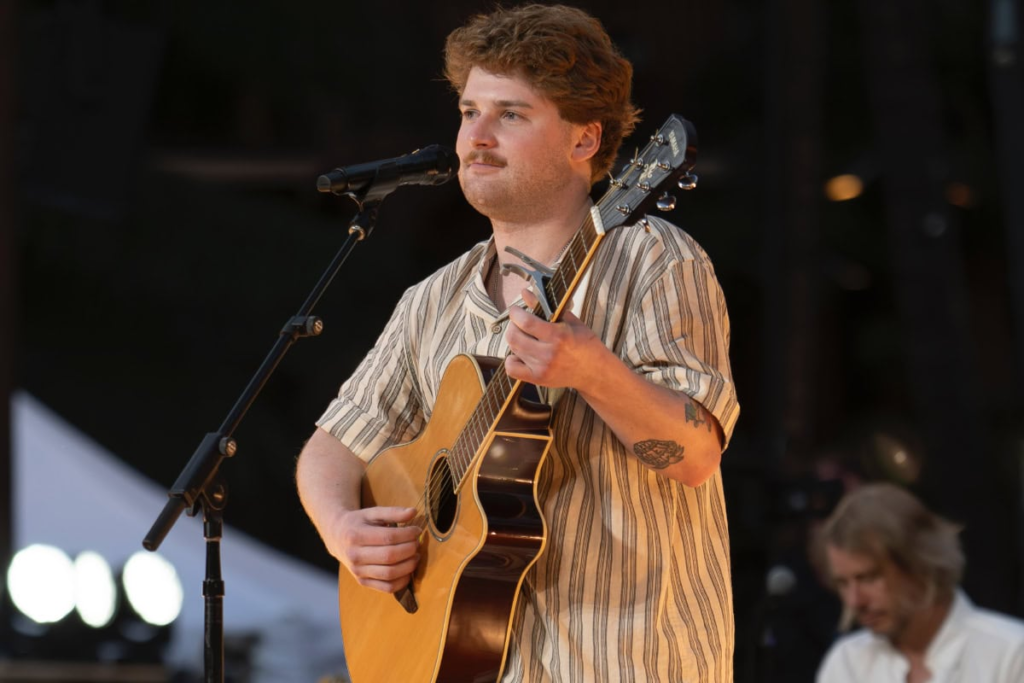
Some performances are praised, some are criticized, and a rare few become battlegrounds. That is exactly what happened after Brooks Rosser took the stage and performed The Climb. What should have been another emotional Disney Night moment quickly turned into one of the most polarizing reactions of the evening. Within minutes, fans were fiercely divided, each side convinced they had heard something completely different.
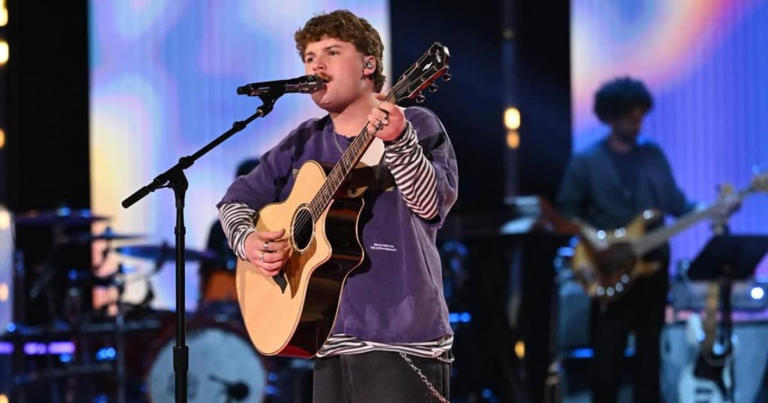
For some viewers, the performance simply did not meet the standard Brooks Rosser has set for himself. They pointed to moments that felt uncertain, less polished, or emotionally heavy in ways that affected the delivery. In a competition where expectations rise every week, many fans judge contestants not only against others—but against their own previous best work. By that measure, critics believed Brooks had an off night.
Those reactions were blunt and immediate. Social media posts described it as weaker than expected, with some calling it his most vulnerable showing in the wrong sense of the word. Others argued that the song required a smoother consistency than he delivered. Once that narrative started, it spread quickly. In modern fan culture, first impressions can become headlines before the final note has fully settled.
But while one side was disappointed, another side was just as passionate in defending him.
Supporters argued that Brooks did something many contestants avoid—he chose honesty over perfection. Rather than deliver a technically pristine version of The Climb, they believe he leaned into the emotional meaning of the song. To them, the rough edges were not flaws at all. They were evidence of sincerity, struggle, and feeling.
That perspective changed the entire conversation. Instead of hearing mistakes, these fans heard texture. Instead of hearing inconsistency, they heard vulnerability. Instead of hearing weakness, they heard courage. In their eyes, Brooks Rosser gave one of the night’s most human performances, and that humanity is exactly what made it memorable.
There is a reason this debate has become so intense: Brooks is not an easy artist to evaluate through simple metrics. Some singers impress through precision. Others connect through atmosphere and emotion. Brooks often lives in the second category. His appeal comes from tone, storytelling, and a voice that carries lived-in character. That style can deeply move some listeners while leaving others wanting cleaner execution.
And that tension sits at the heart of the reaction.
When audiences hear the same performance in opposite ways, it usually means the artist took a risk. Safe performances tend to create polite consensus. Risky performances create division. Brooks chose a song with massive emotional history and high expectations. Miley Cyrus made the original iconic for many fans, which adds another layer of challenge. Any reinterpretation was bound to be scrutinized.

Yet Brooks did not try to imitate the original. He approached it through his own vocal identity—earthier, older-souled, and less polished by design. That choice likely won over listeners who appreciate individuality, while frustrating those who wanted a cleaner, more familiar rendition. In other words, the split reaction may say as much about audience preference as it does about the performance itself.
There is also something powerful about timing. Contestants late in a competition are no longer anonymous hopefuls. Every note now carries amplified consequences. Fans become protective, expectations become rigid, and any deviation becomes magnified. Brooks performing an emotionally exposed version of such a well-known song under those conditions almost guaranteed a dramatic response.
Some supporters went even further, calling it one of his most underrated performances yet. They argued that years from now, people may revisit the moment and hear it differently—less as a flawed vocal and more as a fearless artistic statement. That often happens in music history. Performances once criticized for imperfection later become admired for authenticity.
Critics, however, remain unconvinced. They insist that emotional intention does not excuse technical lapses, especially in a competition where consistency matters. Their point is fair. Great artistry and strong execution are not mutually exclusive. Contestants are expected to bring both, particularly this deep into the season.
So, was it the worst performance of the night—or the most misunderstood?
The truth may lie somewhere in between. It may not have been Brooks Rosser’s cleanest performance, but that does not mean it lacked value. It may have had imperfect moments, yet still delivered something many viewers crave: feeling. Music has always lived in that complicated space where technical judgment and emotional impact do not always agree.
And perhaps that is why the internet cannot stop arguing. Brooks Rosser gave a performance people had to interpret, not just consume. Some heard decline. Others heard depth. Some heard a stumble. Others heard soul.
Now the final judgment belongs to the listener. Because once you hear it yourself, you may discover the most divided performances are often the ones worth remembering most.