

The camera is already rolling when he reaches for it. Not in a rush, not with ceremony—just the slow, casual movement of someone who has done this a thousand evenings before. The room holds the soft hum of a refrigerator somewhere offscreen, the faint rustle of fabric as he settles into his chair. Outside the window, light is fading into that quiet blue hour when the world feels suspended between moments.
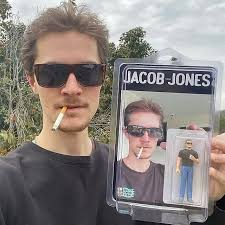
Jacob Jones leans back as if the air itself is familiar. A glass rests on the table beside him, catching the dim reflection of a lamp. There is no set, no deliberate staging—just the quiet arrangement of an ordinary life. He speaks the way people do when they’ve forgotten they are being watched, words drifting out between sips and laughter, the pauses just as present as the sentences.
Sometimes the camera catches him in the middle of lighting a cigarette, the brief flare of the flame bright against the room’s calm shadow. For a second, the light reflects in his eyes before it fades again. Smoke curls upward in slow, uncertain patterns, dissolving into the air as if the moment itself is exhaling.
What draws people in is not spectacle. It is the smallness of things—the way he leans forward when he tells a story, the way his shoulders rise when he laughs, the brief silence that follows when a joke settles into the room. These moments arrive without rehearsal, like conversations overheard through an open doorway late at night.
There are nights when he says very little. The camera simply waits with him. A soft clink of glass. The quiet drag of breath. Somewhere outside, a car passes, its headlights sliding across the wall like a brief memory before disappearing again. In that stillness, the space between gestures becomes its own language.
Viewers have learned to read the quiet shifts: the tired smile that lingers a second longer than usual, the glance toward the window when he loses a thought, the small shrug that follows a confession half meant as a joke. None of it feels arranged. It arrives the way life does—unfinished, sometimes messy, but undeniably real.
There is a strange intimacy in watching someone refuse the armor of performance. No attempt to smooth the edges, no careful edits to polish the moment into something safer. Just a man in a room, letting the camera sit beside him like an old friend who already knows the story.
And over time, the room itself becomes familiar. The lamp that glows like a quiet moon in the corner. The worn tabletop catching rings of condensation from another glass set down without thinking. The faint haze that drifts toward the ceiling before dissolving into nothing.
It is easy to imagine someone years from now remembering these scenes the way one remembers evenings with friends—the laughter echoing faintly, the smell of smoke in the air, the feeling that time had slowed enough for people to simply exist inside it. Not remarkable in the way headlines are remarkable, but meaningful in the way ordinary nights often are.

Long after the camera clicks off, the room returns to silence. The glass is half empty, the chair pushed back slightly from the table. Outside, the night has fully arrived. And somewhere in the quiet after, the moment lingers—not loud, not grand, but steady, like the fading warmth of a light left on just a little while longer.