
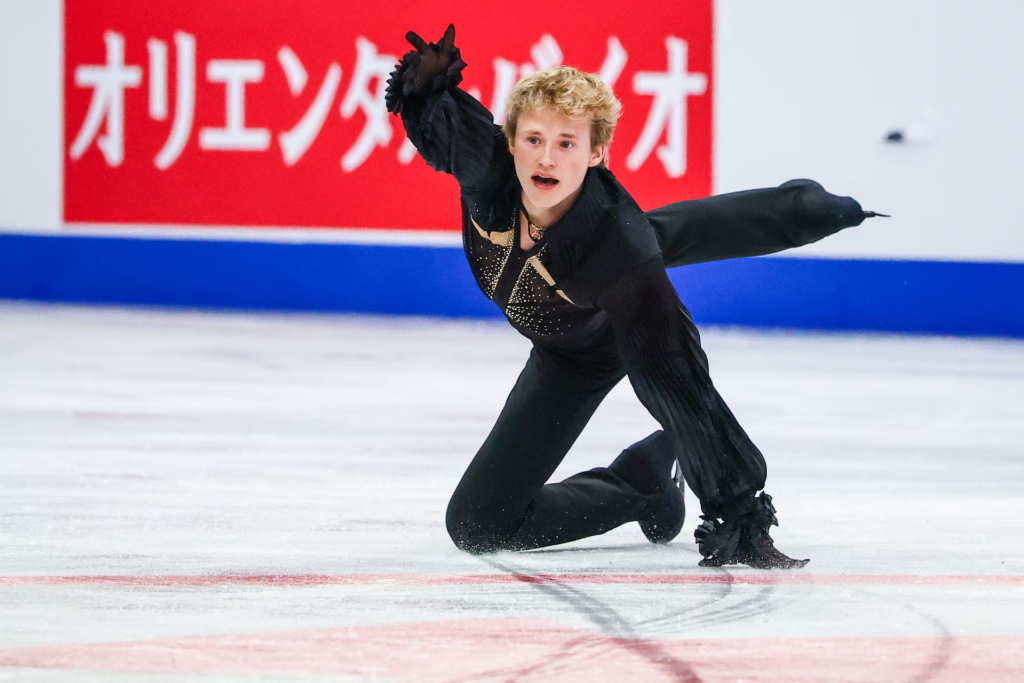
The arena lights felt softer that night, as if even the ceiling of Hallenstadion understood that something unfinished had followed him there. Days earlier, the ice had held the weight of expectation, every step measured against the memory of the Olympics, every landing echoing with questions no one could answer. Now the rink lay quiet again, the air cool enough to sting the lungs, the crowd speaking in low murmurs that faded the moment Ilia Malinin stepped through the gate. He did not look toward the judges. He did not look toward the stands. His eyes stayed on the ice, as if it were the only place where the past could be rewritten.
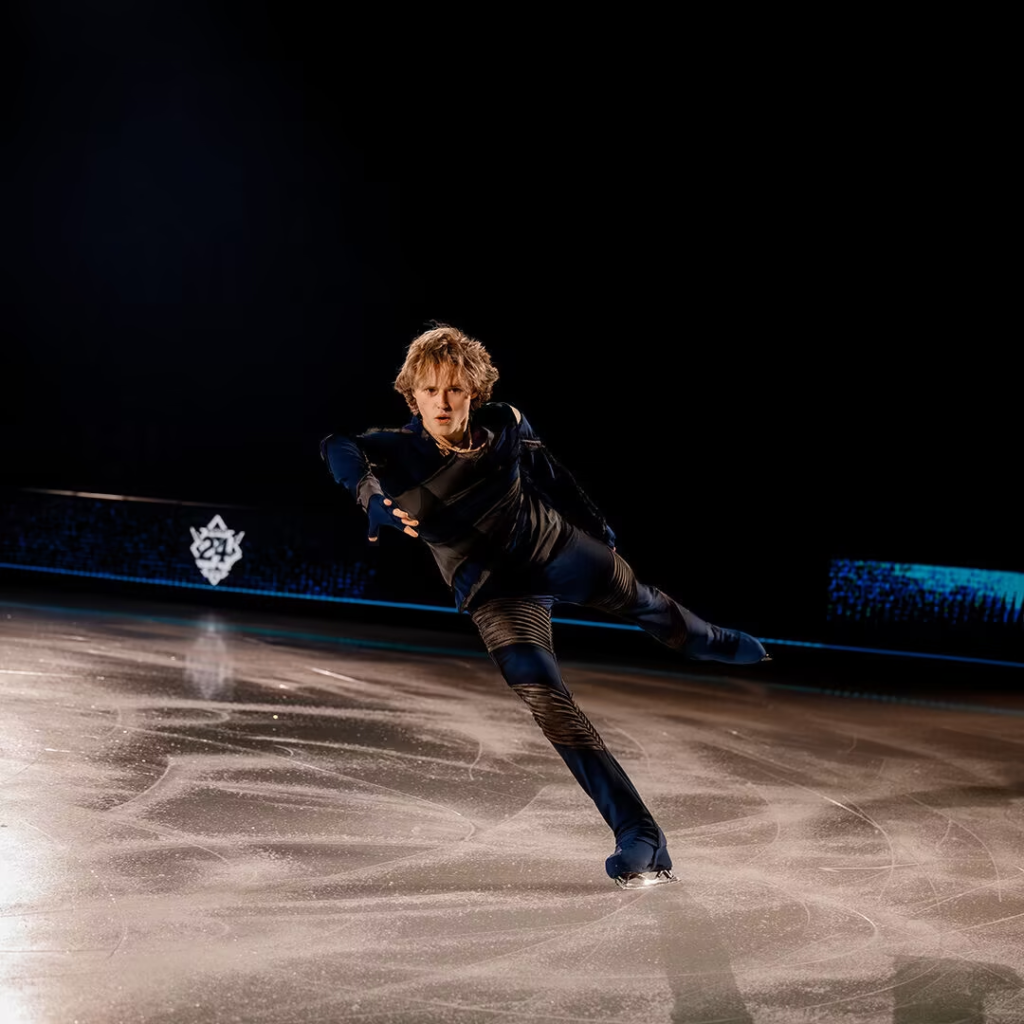
The first notes of music rose gently, almost hesitant, and he pushed forward without the sharpness people expected from him. His strokes were longer, calmer, as though he were letting the rhythm settle into his breathing. When the first jump came, it lifted cleanly into the cold air, the landing so quiet it felt like the arena forgot to react. Then another. And another. The sound of blades carving into the surface became the loudest thing in the building, a steady whisper that followed him with every turn.
Somewhere in the middle of the program, the tension that had lived in his shoulders all week seemed to loosen. His arms opened wider, his movements less guarded, the edges deeper and more certain. It was not the kind of skating that asked for approval. It felt like the kind that happens when no one is watching, when the rink belongs only to the skater and the sound of his own breath. For a moment, the crowd stopped clapping between elements, as if afraid to break whatever had begun to form.
He launched into the next pass with a speed that came from somewhere quiet and stubborn. The jump rose high enough to make the lights blur, the rotation tight, the landing sure. A ripple moved through the seats, the kind that starts with a single gasp and spreads before anyone realizes they are standing. He did not celebrate it. He only kept moving, gliding through the next step as though the ice itself had carried him there.
The music swelled, and with it came the feeling that the performance had slipped away from the program written on paper. His steps grew sharper, then softer again, his body leaning into the turns like someone following a memory instead of choreography. Every edge cut deeper than the last, the sound of steel against ice echoing up into the rafters. It felt less like competition and more like something being said without words.
Near the end, there was a pause so brief most people might not have noticed it. He stood at center ice, shoulders rising once with a slow breath, the kind taken before speaking a truth out loud. The next movement came without warning — faster, freer, almost reckless — as though the moment itself had decided what should happen next. The crowd felt it before they understood it, a shift in the air that made the whole arena lean forward at once.
What followed was not in the program anyone had seen. He moved into the final sequence with a confidence that looked almost weightless, every step falling exactly where it needed to, every turn sharper than the one before. The jump that came at the end rose suddenly, clean and certain, the landing so effortless it barely marked the ice. For a heartbeat, there was no sound at all.
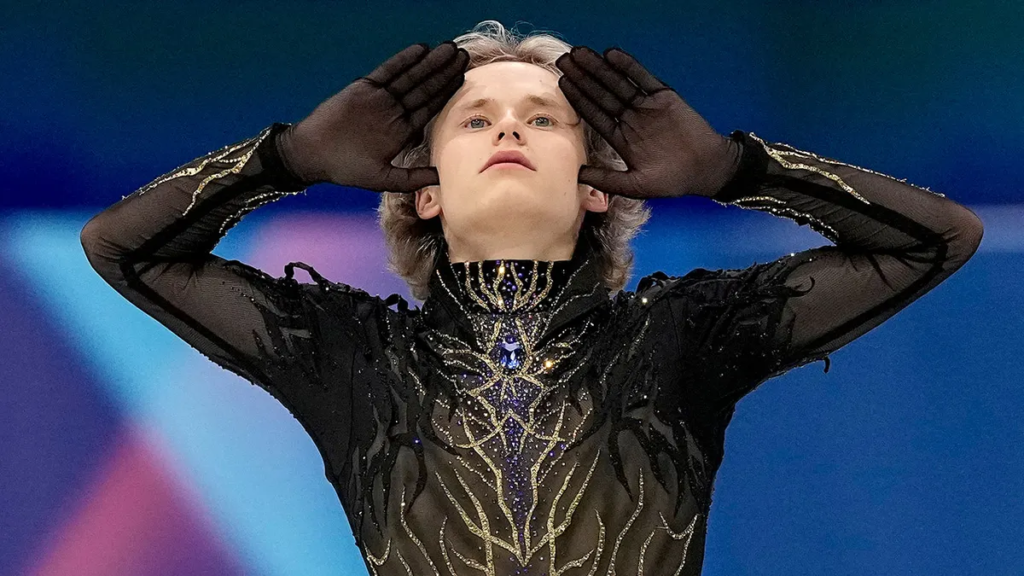
Then the arena broke open.
Applause rolled down from the upper seats like thunder, but he did not lift his arms right away. He stood there, chest rising and falling, eyes fixed on the marks his blades had left behind. The noise around him blurred into something distant, like waves heard from far away. When he finally looked up, there was no triumph in his face, only a quiet understanding, as if he already knew this was the skate he had been carrying with him all along.
Later, when the lights dimmed and the crowd drifted out into the cold night, the ice remained marked with thin white lines that slowly faded as the machine passed over them. By morning, nothing would be left of the performance. No sound, no breath, no trace of the moment when everything finally felt free.
But for those who were there, and for the one who stood alone at center ice, the feeling stayed — the sense that sometimes the skate you wanted most does not come when the world is watching…
It comes when the world has already looked away.