
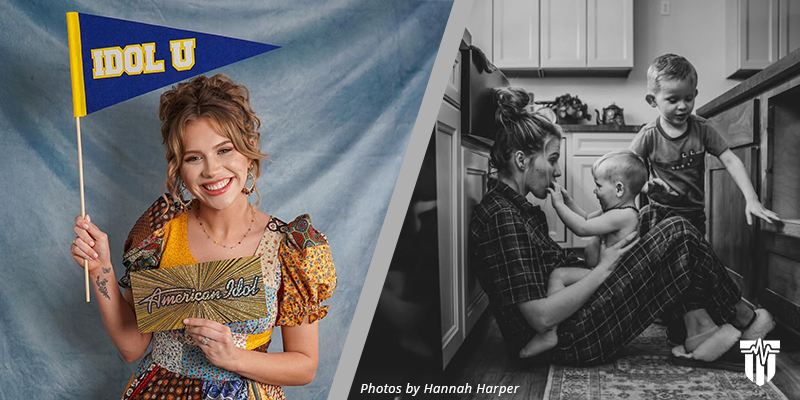
The stage lights in Hawaii felt softer that night, as if even the sky understood that this moment was not meant to be loud. A quiet wind moved through the palm trees beyond the set, and the air held that strange stillness that comes before something unforgettable. When Hannah Harper stepped forward with her guitar, she did not look at the cameras first. She looked down, fingers resting on the strings as if they were holding memories instead of notes. Somewhere in the audience, her grandmother sat with both hands folded tight in her lap, already trembling, already knowing what song was about to fill the night.
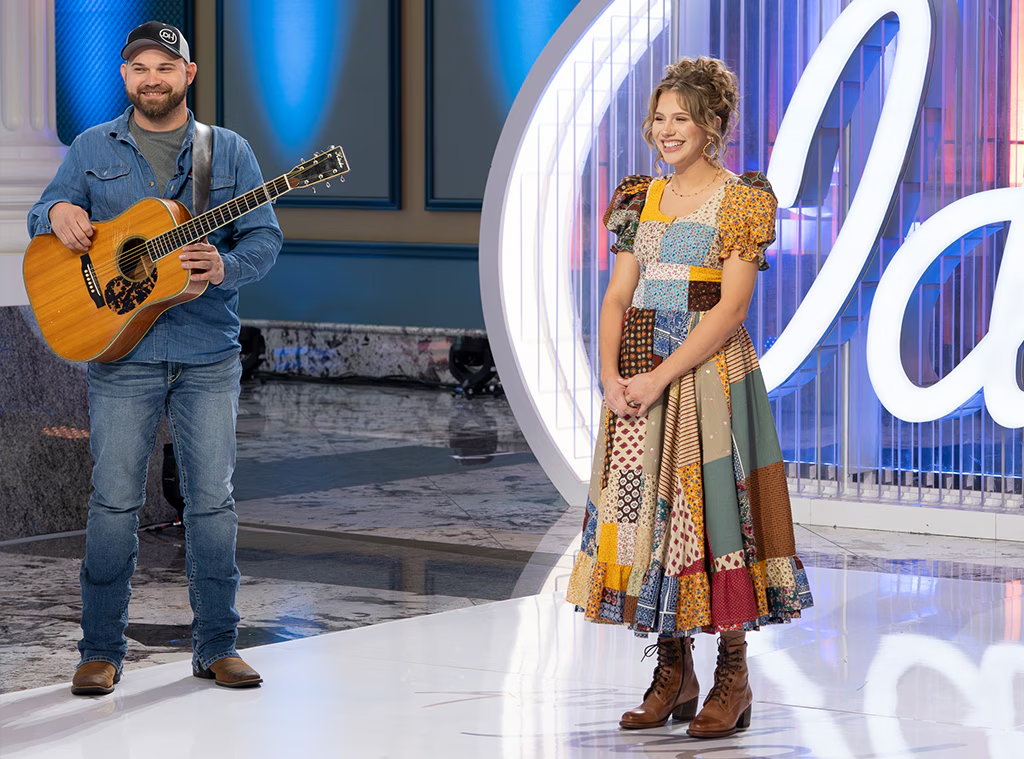
The first chord of Go Rest High On That Mountain did not ring out sharply. It drifted, gentle and careful, like a voice trying not to wake someone sleeping. Hannah’s eyes stayed half-closed as she sang the opening line, and the sound carried across the stage like a prayer spoken too softly for the world but loud enough for the heart. The judges leaned forward without saying a word. No one moved. Even the cameras seemed to slow, as if they did not want to interrupt what was happening.
Her voice did not push. It rose slowly, the way grief rises when you try to hold it back. Each note felt older than the moment itself, as though the song had been waiting years to be sung exactly this way. The Hawaiian night wrapped around the stage, warm and quiet, and for a second it felt less like a television show and more like a small gathering of people standing together under the same sky, listening to someone say goodbye.
In the front row, her grandmother’s shoulders began to shake before the chorus even came. She pressed a hand to her mouth, trying to stay still, but the tears came anyway, heavy and unstoppable. She did not look at the judges. She did not look at the crowd. She watched only Hannah, the way someone watches the last light of a sunset, afraid to blink and miss it.
When the chorus arrived, Hannah lifted her eyes toward the lights, and the sound changed. It was no longer just a performance. It felt like a conversation with someone who wasn’t there anymore. The words carried the weight of kitchens, front porches, long drives, and voices that once filled a house and now lived only in memory. Every note seemed to travel somewhere far beyond the stage.
One of the judges slowly lowered their pen without realizing it. Another leaned back and exhaled, as if the room had suddenly become too full of feeling to breathe normally. No one spoke. No one clapped. The silence between the lines of the song felt just as important as the lines themselves, like pauses where something invisible was being remembered.
Hannah’s hands trembled slightly on the guitar near the end, but she never stopped. Her voice grew thinner, softer, almost fragile, and yet it carried farther than before. It was the sound of someone holding on to the last thread of a story they never wanted to end. Somewhere behind the lights, a crew member wiped their eyes and looked away, forgetting for a moment that they were supposed to be working.
Her grandmother was crying openly now, tears falling without any attempt to hide them. She nodded slowly as Hannah sang the final lines, as if answering someone only she could hear. The camera stayed on her face longer than usual, and in that quiet, the grief in her eyes felt older than the show, older than the stage, older than the song itself.
The last note did not end suddenly. It faded, lingering in the air like the echo of a voice calling from far away. Hannah lowered her head, her fingers still resting on the strings, unwilling to move yet. For a few seconds, no one in the audience remembered to clap. The night held its breath, letting the moment stay exactly as it was.
When the applause finally came, it felt softer than any standing ovation. Not because it was weak, but because no one wanted to break what had just happened. Hannah looked toward her grandmother, and their eyes met through the lights, through the crowd, through the distance. And in that quiet exchange, it felt as if the song had reached exactly where it was meant to go — not to the judges, not to the millions watching, but to the one person who needed to hear it most.