

The memory always seems to begin in a small church, the kind with wooden pews that creak when people shift their weight and sunlight that falls through narrow windows in long, pale lines. Somewhere near the front, a young girl stands beside her family, hands wrapped around a microphone that feels a little too big for her. The air smells faintly of old hymn books and polished floors. No one is in a hurry. No one is watching for fame. They are only listening. And when she sings, the room grows still in the way only certain voices can make it still.

Weekends meant highways that stretched farther than they looked on the map, the family band packed into a car with instrument cases stacked like luggage for a journey no one could quite name. They traveled from one small church to another, living on love offerings and warm handshakes, learning the quiet rhythm of places where music was not performance but prayer. Her voice learned to rise in rooms without spotlights, to reach people sitting only a few feet away, to carry feeling instead of volume.
At night, after the instruments were put away and the house finally went quiet, another sound would fill the room. A radio somewhere, low enough not to wake anyone, but loud enough for a girl lying awake to listen closely. The voices coming through the speakers were different — bright, strong, full of stories about heartbreak and highways and dreams that felt bigger than the towns she knew. She did not understand why those songs felt familiar, only that they did.
Shania Twain. Jo Dee Messina. Voices that carried both strength and softness at the same time. She would listen to the way they held a note, the way a line could sound like a smile and a goodbye all at once. Without realizing it, she began to follow those shapes when she sang, letting the sound bend a little more, letting the emotion stay a little longer. Somewhere between gospel harmonies and country radio, something quietly started to take form.
There was never a moment when anyone said this is who you will become. No speech, no decision, no sudden turning point. Just years that kept moving forward, each one adding another small piece. A church here. A song there. A long drive. A late-night radio. A voice growing without anyone noticing exactly when it changed.
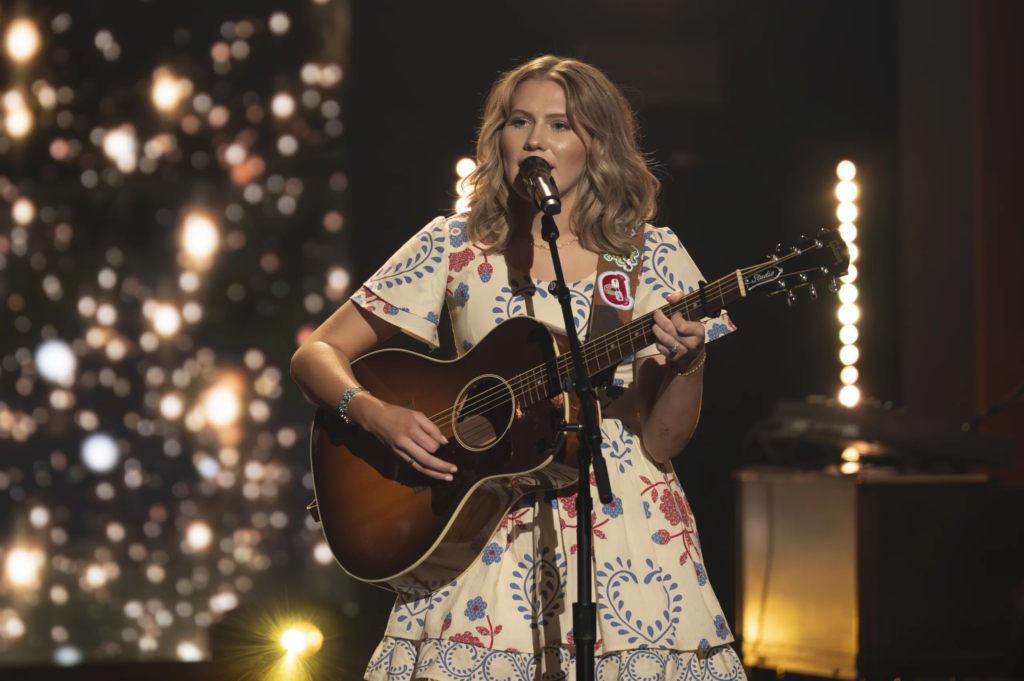
What stayed the same was the way she looked at people when she sang. Not past them. Not over them. At them. As if every song was meant for someone sitting right in front of her. It was something she learned without being taught, the kind of thing that only comes from rooms where the audience knows your name and the music belongs to everyone.
Much later, the stages became larger, the lights brighter, the silence before a note heavier than anything those small churches had ever held. But when she stepped forward, there was a familiar feeling in the air, the same kind of stillness that used to settle over a room before the first chord. The kind of quiet that does not come from fear, but from listening.
People would talk about the voice as if it appeared all at once, as if it arrived the day the world finally heard it. They would try to find the moment when it started, the performance where everything changed. But the truth lived somewhere else, in places without cameras, in songs sung long before anyone thought to remember them.
Because the sound they hear now was not built in one night.
It was carried through years of wooden pews, long roads, and radios playing softly in the dark.
And even now, if you listen closely, you can almost hear those rooms again — the small church, the quiet crowd, the young girl holding a microphone too big for her hands — singing like the world was never meant to be loud, only close enough to feel.