
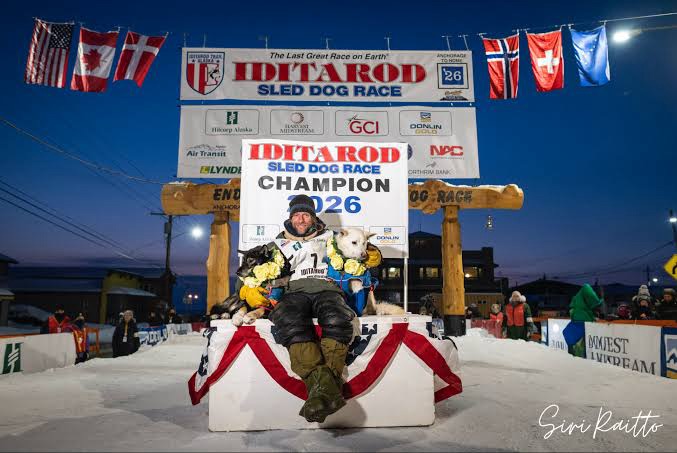
The wind-scoured streets of Nome have seen many champions, but few have carried the quiet, relentless intensity of Jessie Holmes. This March, the world watched as he secured his second consecutive Iditarod title, guiding 12 elite athletes across roughly 1,000 miles of frozen Alaskan wilderness in a staggering 9 days, 7 hours, and 32 minutes. But while the victory lap under the Burled Arch was a moment of pure adrenaline, the true story of this race was written in the quiet miles between checkpoints—and in the ambitious dreams waiting for him back at his homestead.
For Jessie, this wasn’t just a race for a trophy; it was a mission. Throughout the grueling journey from Willow to the Bering Sea coast, he wasn’t just aiming for the finish line—he was hunting every special award available. From the Spirit of Iditarod Award in McGrath to being the first to reach the Yukon and the Gold Coast, Jessie swept nearly every checkpoint prize. To the casual observer, it looked like a display of dominance. To Jessie, it was a practical necessity for the life he has spent years carving out of the raw Alaskan earth.
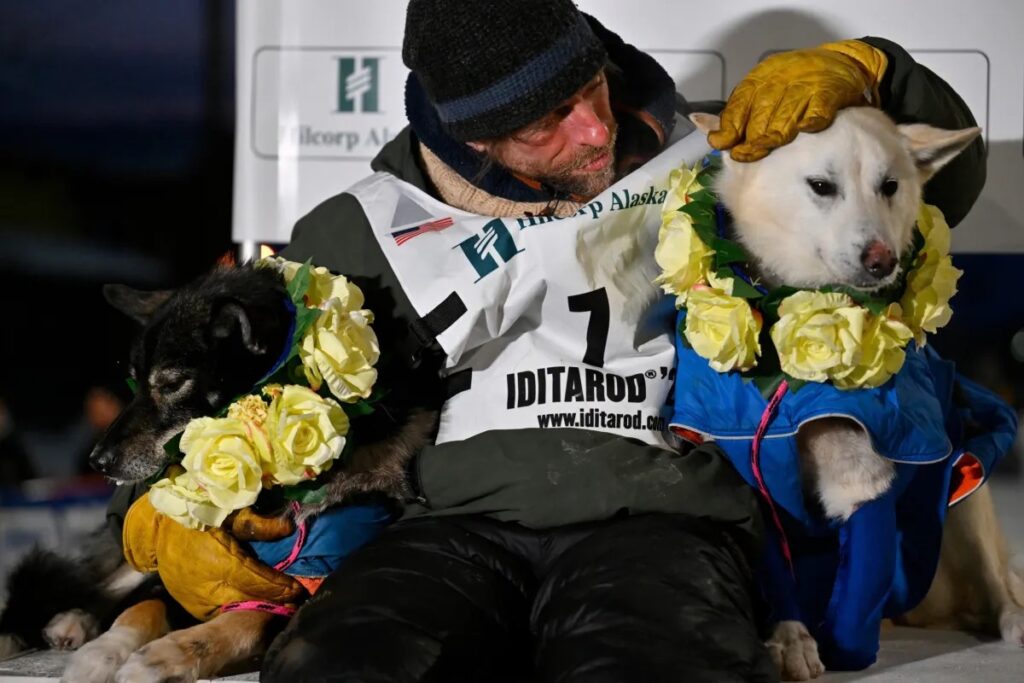
At the finish line, amidst the cheers and the subzero chill, Jessie revealed the “Homestead Dream” that fueled his fire. As a carpenter by trade and a former star of Life Below Zero, his life is inextricably linked to the land he calls home near Denali National Park. He shared that the urgency to arrive first at each checkpoint wasn’t about ego; it was about the prize money and resources attached to those awards—gold nuggets, cash, and supplies that go directly into the expansion of his remote sanctuary.
“I’m a builder,” Jessie has often said, and that philosophy extends far beyond the cabins he constructs. His homestead is a 30-mile trek from his nearest neighbor, a place where survival is an art form. Every dollar earned on the trail represents a new kennel improvement, a more robust garden, or the equipment needed to keep his 40-dog team thriving in one of the harshest environments on the planet. The race is the engine that powers his self-sufficient lifestyle.
The strategy was as much about the dogs as it was about the money. By pushing for those early leads, Jessie was able to dictate the pace of the race, “putting gas in the tank” by resting his team exactly when they needed it. He wasn’t just running away from his rivals; he was running toward a future where his dogs have the best possible care. He noted that the $80,000 winner’s check would be immediately reinvested into high-quality food and gear, ensuring the cycle of excellence continues.
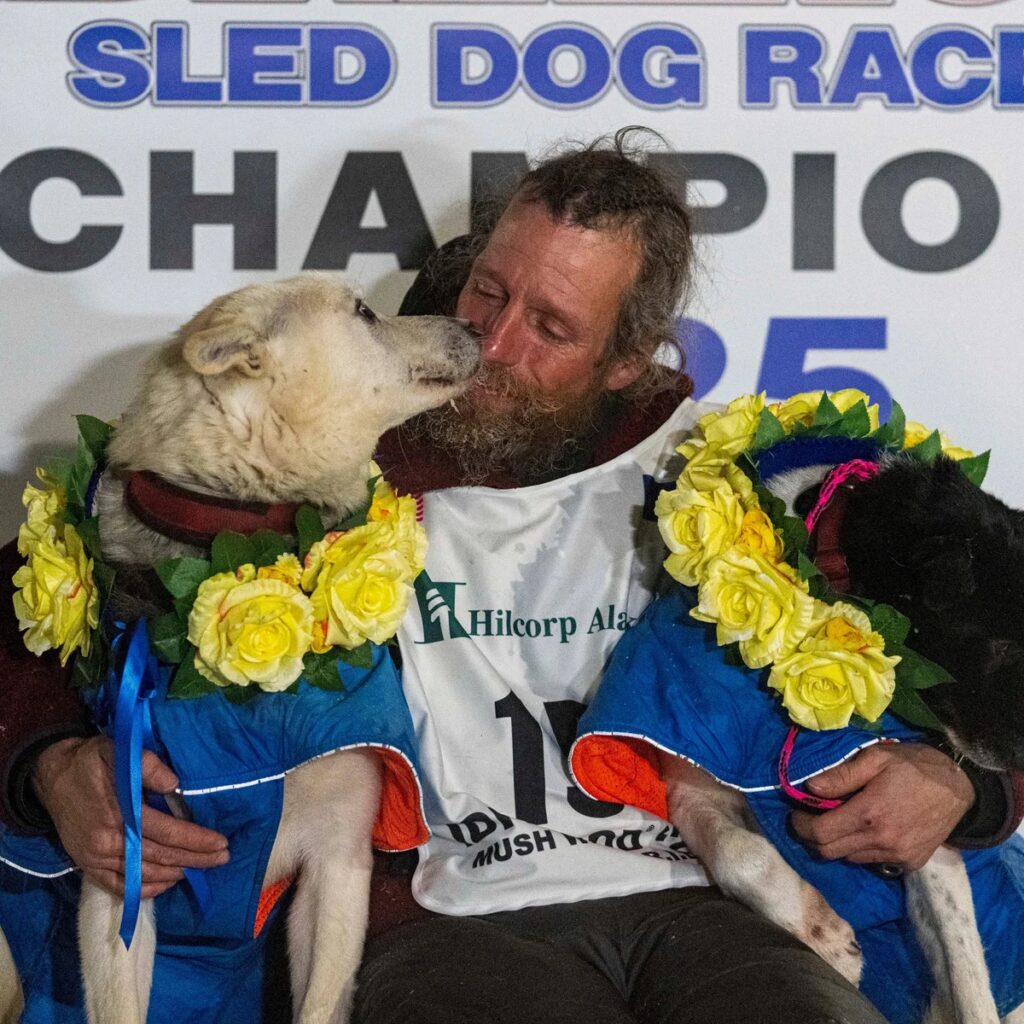
There is a profound humility in a champion who views a world-class victory as a means to buy more dog booties and lumber. Jessie’s “real reason” for the checkpoint sweep resonates with anyone who has ever worked a double shift to provide for their family. His dogs are his family, and the Alaskan wilderness is his home. Winning isn’t the end goal—it’s the fuel for the life he loves.
His lead dogs, the veteran Polar and the young powerhouse Zeus, seemed to understand the mission. They led with a synchronicity that mirrored their musher’s focus. When Jessie looked at them at the finish line, he didn’t see just racing partners; he saw the reason he braves frostbite and exhaustion. They are the heartbeat of the homestead, and every mile they conquered together brought them one step closer to the peace of the Denali wilderness.
The expansion plans Jessie teased in Nome aren’t just about adding square footage to a cabin. They are about strengthening a legacy. By sweeping the 2026 awards, he has solidified his place among legends like Susan Butcher and Lance Mackey. Yet, Jessie remains famously grounded, preferring the title of “carpenter” or “dog man” over “celebrity.” He is a man who finds his greatest joy in the work itself, whether that’s holding a sled handlebar or a hammer.
As the crowds in Nome eventually disperse and the dog trucks head back into the interior, Jessie Holmes returns to the quiet. He heads back to a place where the neighbors are few, but the dreams are vast. The 2026 Iditarod will be remembered for his tactical brilliance and speed, but for Jessie, it will always be the race that helped him lay the next few logs on the home he is building for his team.
In the end, the “Last Great Race” serves as a reminder that the most powerful motivation isn’t what we are running from, but what we are running to. For Jessie Holmes, that destination is a small piece of Alaska where the bond between man and dog is the only currency that truly matters. He didn’t just win a race; he secured the future of the homestead he’s spent a lifetime dreaming of.