

The stage lights never felt harsh when Hannah Harper walked into them. They softened, almost as if the room understood that what was about to happen wasn’t meant to be loud. The band waited in stillness, the audience settled into their seats, and for a moment the studio felt less like a competition and more like a small hall somewhere far from cameras. She stood there the way people do when they carry something real with them, hands relaxed, shoulders quiet, eyes steady. Before she even sang, the air felt different, like everyone sensed the story was already there, waiting to be told.
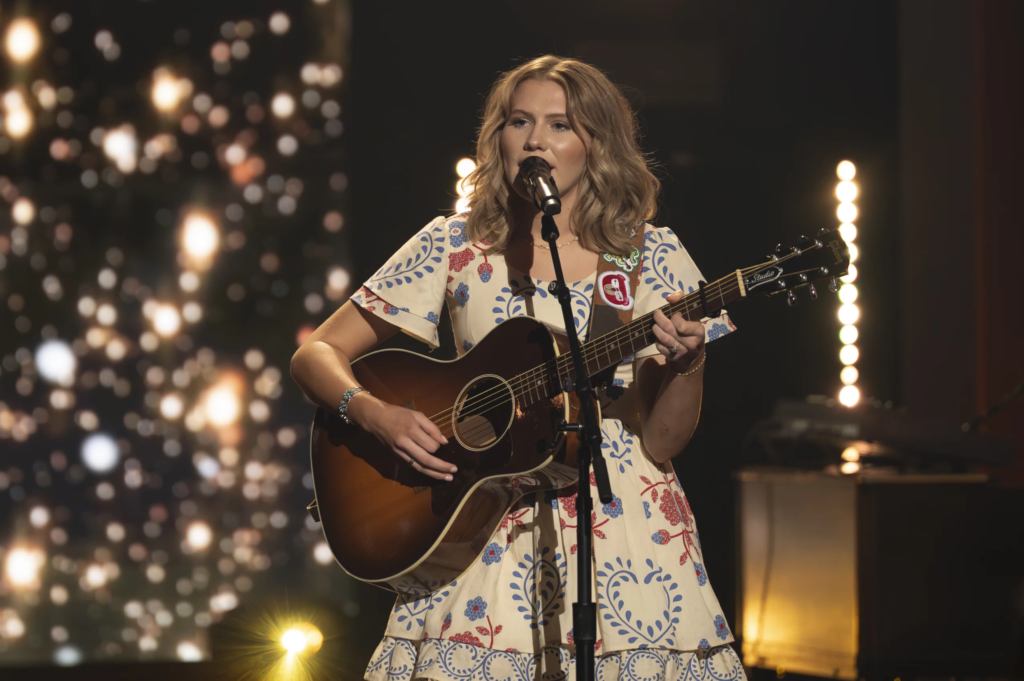
Her voice never rushed to fill the silence. It came slowly, the way a hymn rises in a church where every note matters. There was a softness in the way she sang, but it never felt weak. It felt lived-in, worn at the edges, like a voice that had been used in kitchens, in cars, in late nights after everyone else had gone to sleep. The sound carried the weight of years spent singing for people who knew her name long before the world ever would. Nothing about it felt performed. It felt remembered.
She chose songs that didn’t shine because of the melody alone. They held stories inside them. Country lines about home, about faith, about the kind of love that asks for patience instead of applause. Gospel phrases that felt like they belonged to another time, another room, another life. When she sang, it never sounded like she was reaching for the note. It sounded like the note had always been there, waiting for her to say it out loud.
There was a moment when the cameras moved closer, and she didn’t notice. Her eyes stayed fixed somewhere just beyond the lights, the way people look when they’re thinking of something far away. The words she sang felt heavier then, like they belonged to memories instead of lyrics. You could almost see it in the way she held the microphone, careful, steady, as if the song itself needed to be carried gently.
When the song spoke about family, her voice changed without warning. Not louder, not softer — just deeper. The kind of change that happens when the meaning of the words reaches somewhere personal. It felt less like a performance and more like a confession spoken in front of strangers who suddenly didn’t feel like strangers anymore. Even the room seemed to lean closer, as if afraid to break the moment by breathing too loudly.
She never tried to impress the stage. She let the stage come to her. While other performances chased the crowd, hers waited for the silence to settle first. There was something old-fashioned in the way she sang, something patient, like stories told on a porch long after the sun has gone down. The kind of sound that doesn’t demand attention but keeps it anyway.

When she sang about being a mother, the words didn’t feel written for television. They felt like something spoken quietly at the end of a long day. There was a tremor in her voice then, barely there, the kind you only notice if you’re listening carefully. It carried the feeling of someone standing between two lives at once, holding on to both, afraid to let either one slip away.
The band faded behind her without meaning to. The lights felt dimmer, though they hadn’t changed. All that remained was the sound of her voice moving through the room, steady and honest, as if the song itself knew exactly where it needed to go. No rush. No show. Just the slow unfolding of something real enough that nobody wanted it to end.
When the final note came, it didn’t feel like an ending. It hung in the air for a second longer than expected, the way certain moments do when no one is ready to leave them yet. She lowered her head slightly, not like someone waiting for applause, but like someone letting the story settle before stepping away from it. The silence that followed felt warmer than any cheering could have been.
Long after the lights went dark and the stage returned to being just a stage, the feeling stayed behind. Not because of how high she sang, or how perfect the note was, but because every word sounded like it had belonged to her long before she ever stood there. And when people remembered that night later, they wouldn’t talk about the performance first. They would remember the quiet, the stillness, and the way her voice made the room feel, for a moment, like it was listening to something true.