
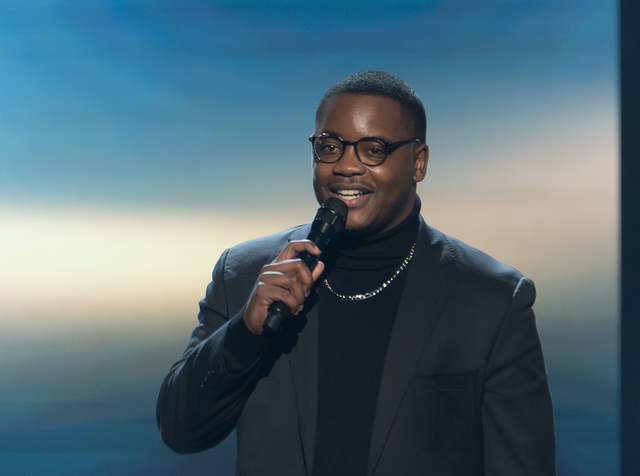
In the hush of a Mississippi pew, worn wood cradling the weight of generations, a young Daniel Stallworth knelt, the air thick with the scent of polished oak and lingering candle wax. Sunlight slanted through stained glass, painting his bowed shoulders in fractured crimson and gold, while the distant hum of a choir’s echo faded into silence. His breath came shallow, ragged against the storm within, fingers tracing the grain as if seeking an anchor in the divine quiet.
A tremor stirred then, deep in his chest—a gospel fire kindling unbidden, soul shudders rippling through like wind over still water. The preacher’s son, his father’s shadow long and loving, felt the heat rise, warming the cool metal of the hymnal in his grip. Eyes closed, he surrendered, the wordless plea hanging in the breathless pause, body softening as invisible flames licked at the edges of his fear.

Years later, in the dim glow of a classroom after hours, chalk dust danced in the slant of desk lamp light. Stallworth stood alone, voice unfolding into “Don’t Stop Believin’,” buttery notes curling like smoke from a hidden ember. His hands hovered over piano keys, knuckles pale with memory, the room holding its breath as the melody bridged pew to something vast, uncharted.
The Idol stage waited, a threshold bathed in velvet shadow, spotlights carving his silhouette sharp against the void. He stepped forward, heart’s rhythm syncing with the low thrum of anticipation, fabric of his simple shirt whispering against skin still marked by church-callused palms. In that suspended breath, the golden ticket gleamed not in hand, but in the quiet fire behind his eyes.
Judges’ faces emerged from twilight, lines softening as his voice bloomed—”Stand By Me,” a sacred tether woven into secular air. The hush deepened, a collective inhale, his chest rising with the note’s sustain, brows knitting in vulnerable release. Sweat beaded at his temple, catching light like a tear held back, the song a bridge from hidden pew to this exposed precipice.
Backstage, in the interlude’s heavy stillness, he paused, palms pressed together, lips moving in silent communion. The roar beyond muffled to a distant sea, his reflection in a darkened mirror revealing eyes alight with that old shudder—gospel embers unquenched amid the glare. A faint smile ghosted his lips, breath steadying into resolve.
On social scrolls under starless skies, fingers tapped verses of choice, “Jesus my choice,” the screen’s glow illuminating a face etched with intimate battles won in shadow. Followers’ echoes faded into night, leaving him alone with the phone’s dim pulse, shoulders easing as faith’s quiet rhythm reclaimed the space.

Now, in the unfolding path, stage lights blur to horizon’s haze, potential tours whispering like wind through pine. He walks it barefoot in spirit, each step a soft echo of pew wood, body language open—arms loose, gaze distant yet anchored. The air tastes of possibility, laced with the faint smoke of inner fire.
Doubt flickers sometimes, a shadow crossing his features in rehearsal silences, jaw tightening against the pull of fame’s undertow. Yet he breathes deep, chest expanding with remembered surrender, the subtle shift in his posture—a straightening, a yielding—turning tide back to source.
In the end, as echoes settle into timeless quiet, Stallworth stands whole, the gospel fire a steady glow within, soul shudders resolved into peace. The stage, the pew, the in-between dissolve into one breath, held and released, a sacred intimacy lingering long after the lights dim.
Sources