
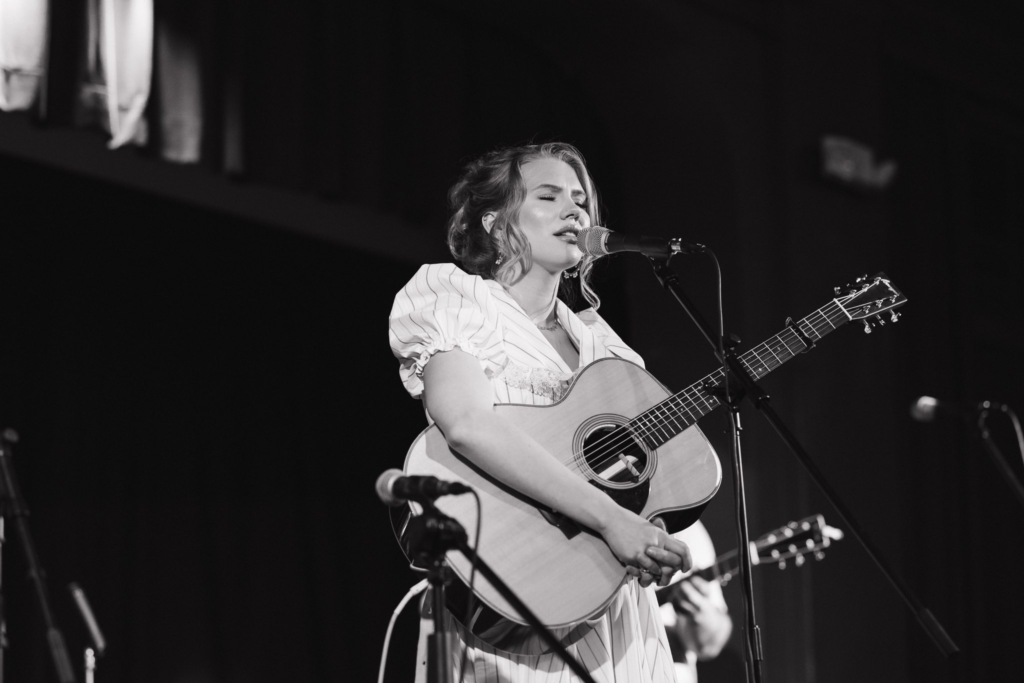
The room never feels loud in the moments people remember the longest. It feels still, almost careful, as if the air itself is waiting to see what will happen next. When Hannah Harper first walked onto the stage of American Idol Season 24, the lights were bright but the space around her felt quiet, the kind of quiet that settles before something honest begins. She stood there with her hands held close, shoulders steady, breathing slowly, like someone who had carried more life than the stage could see.
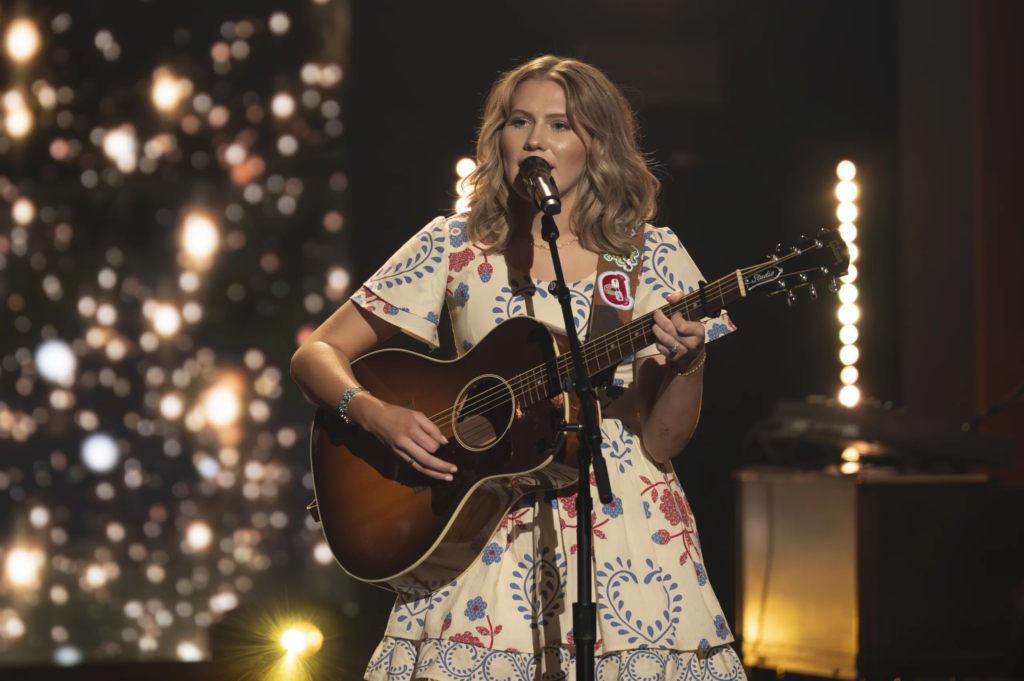
When the first notes of “String Cheese” filled the room, nothing felt rehearsed. Her voice didn’t try to reach the ceiling; it stayed low, close, almost like she was speaking to someone who wasn’t there anymore. The words carried the weight of nights without sleep, of holding children when the world feels uncertain, of learning how to stand up again without anyone watching. The judges didn’t move at first. The audience didn’t either. It felt less like a performance and more like a memory unfolding in real time.
After that night, the conversation started, but it never sounded the way people expect when someone becomes popular. It wasn’t loud praise or quick excitement. It was quieter than that, the kind of talk people have when something feels real and they’re not sure why. Some called her voice familiar, others called it different, and some simply said it felt like the kind of singing you don’t hear anymore.
In Hollywood Week, the stage looked bigger, colder, filled with movement and nerves, yet she stood the same way she always had, as if the noise around her belonged to someone else. When she sang again, the sound didn’t fight for attention. It settled into the room slowly, the way evening settles over a town when the day finally lets go. You could see it in the way people leaned forward without realizing it, the way the judges stopped writing and just listened.
By the time the Ohana Round came, the lights felt softer, warmer, almost like the show itself had begun to understand her rhythm. When she sang “Go Rest High on That Mountain,” the silence afterward lasted longer than the song. No one rushed to speak. One of the judges wiped at the corner of an eye without looking at the camera, and the moment passed the way real emotion always does — quietly, without asking to be noticed.
Online, the reactions spread faster than the episodes themselves, but even there the tone felt different. People didn’t talk about high notes or technique first. They talked about how the songs reminded them of someone they missed, or a time they barely made it through. Clips of her performances played late at night on phones in dark rooms, the glow of the screen lighting faces that stayed still long after the music stopped.

When she sang “Ain’t No Grave,” the sound felt heavier, stronger, like the kind of strength that comes after you’ve already been broken once. Her hands trembled just enough to notice, then steadied again on the microphone. The band faded behind her, the stage lights dimmed at the edges, and for a moment it felt like the entire room had stepped back to give the song space to breathe.
People began to compare her to voices they had grown up with — to the kind of singers who didn’t just perform, but stayed with you. Names like Carrie Underwood, Miranda Lambert, and Dolly Parton were spoken softly, not as predictions, but as memories, as if listeners were trying to explain a feeling they already knew but hadn’t felt in a long time.
As the season moved closer to the later rounds, the stage grew brighter, the audience louder, the stakes heavier, yet something about her never changed. She walked out the same way each time, not like someone chasing a moment, but like someone carrying one with her. Even the cameras seemed to linger a little longer on her face, as if the show understood that not every story on that stage was about winning.
Now, when people look back on the season, they don’t always talk about scores or rankings first. They remember the stillness, the way the room felt when she started to sing, the way the noise disappeared without anyone asking it to. And whether the journey ends with a title, a finale, or a road that leads somewhere far beyond the show, the feeling remains the same — that the love she received was never louder than the truth she carried, and that sometimes the moments that last the longest are the ones that never tried to prove anything at all.