
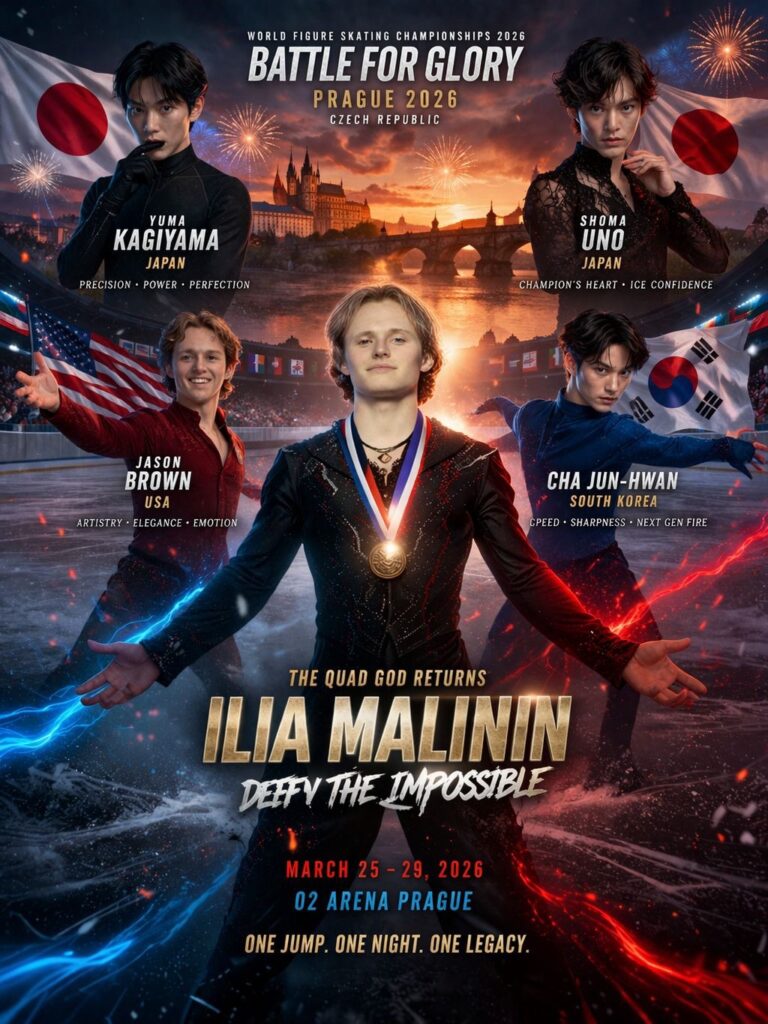
The ice in Prague was never just frozen water; it was a mirror that refused to lie. Under the sharp, clinical glow of the overhead rafters, the white expanse waited like an unwritten page, cold enough to ache through the thin leather of a skate. The air inside the arena held a peculiar stillness, the kind of silence that precedes a storm, heavy with the collective breath of thousands who remembered the shattered grace of Milan.
He stood at the edge of the barrier, a lone figure tracing the scars in the wood with a gloved hand. In that moment, he was not the “Quad God” or a vessel for national hope; he was a young man looking into an abyss he had already fallen into once. The memory of the Olympic ice—hard, unforgiving, and sudden—seemed to hum in his marrow, a ghostly vibration that made his fingers twitch against the rail.
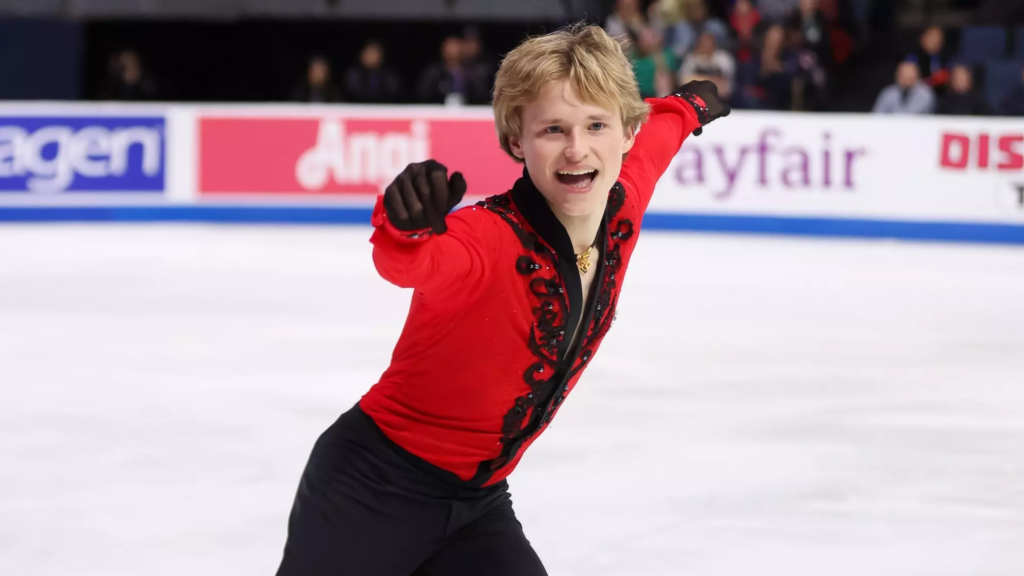
When his name was called, the sound didn’t pierce the air so much as dissolve into it. He stepped onto the surface, the initial scrape of steel against ice sounding like a sharp intake of breath in the hollow quiet. He didn’t look at the judges or the cameras; his eyes were fixed on a point somewhere beyond the rafters, searching for a version of himself that hadn’t yet learned how much it hurt to fail.
The opening notes of the music drifted downward like falling ash. He began to move, not with the explosive arrogance of his youth, but with a tentative, haunting fluidness. Every extension of his arm seemed to pull against an invisible weight, a lingering gravity left over from the Italian winter. His breath came in silver plumes, small ghosts of effort that vanished before they could even settle.
Then came the preparation for the jump that had betrayed him. The world seemed to contract until it was only the width of a blade. The sound of the crowd died away, replaced by the rhythmic, internal thrum of a heart trying to maintain its tempo. He leaned into the curve, his body a taut wire, the tension so thick it felt as though the very molecules of the air were vibrating in sympathy.
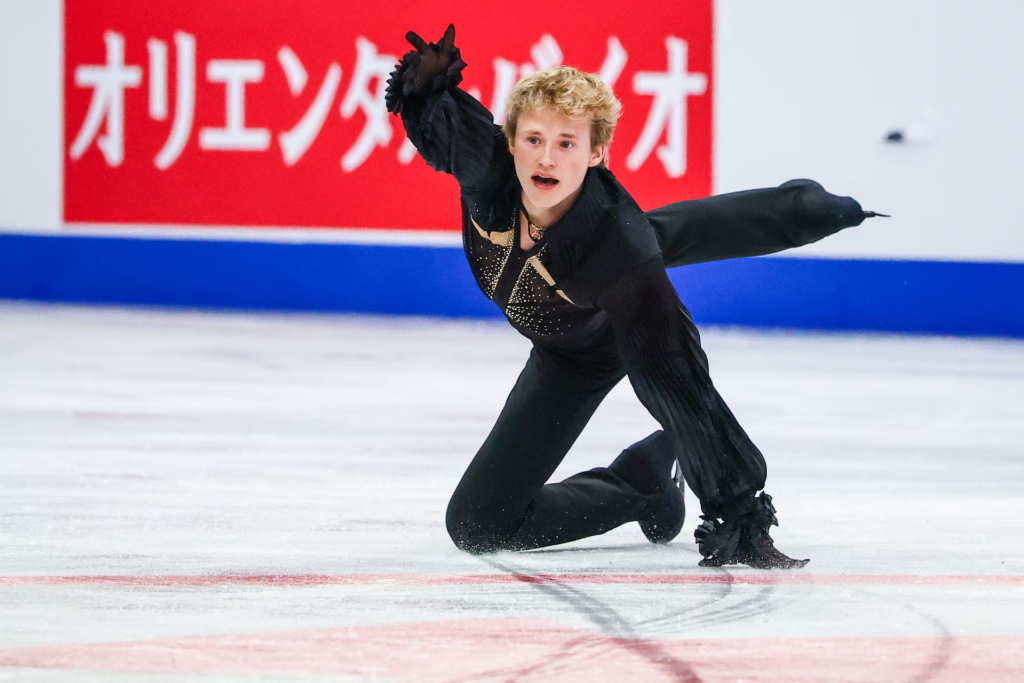
He took flight, and for a fraction of a second, the redemption was complete. It wasn’t about the rotations or the technical base value; it was the way he hung in the air, suspended between what was and what could be. In that blur of motion, the jagged edges of his Milan nightmare seemed to smooth over, polished by the sheer, terrifying velocity of his own resolve.
The landing was not a triumph of ego, but a quiet miracle of balance. As his blade caught the ice, there was no celebratory shout, only a soft, exhaled “ah” that was lost to the rafters. He transitioned into the next movement with a vulnerability that had been missing from his earlier years—a recognition that the ice was both his sanctuary and his judge, and he was finally at peace with its verdict.
By the time the final notes faded into the rafters, the sweat on his brow caught the light like fallen stars. He remained still, his chest heaving, his head bowed as if in prayer to the empty space he had just occupied. The roar of the crowd began as a low rumble, but to him, it must have felt miles away, a distant sea breaking against a shore he had finally reached after a long, cold voyage.
He looked up, and for the first time in months, the tension in his jaw had evaporated. His eyes were clear, reflecting the arena lights without flinching. There was no frantic searching for approval, only the deep, internal quiet of a person who had looked at their own wreckage and decided to build something beautiful from the pieces.
As he skated toward the exit, the shadow he cast on the ice seemed lighter than it had minutes before. He left behind a trail of fine white powder and the ghost of a struggle that had finally been laid to rest. The redemption wasn’t found in a score or a medal, but in the simple, profound act of standing still while the world turned around him, finally whole again.